





Description
Product Introduction & Engineering Value
The Allen-Bradley 1756-IB16D elevates standard 24V DC digital signal monitoring by integrating channel-level diagnostics directly into the ControlLogix I/O architecture. Designed for critical automation loops where sensor wire failure or field supply drops must be detected immediately, the “D” designation signifies hardware-based diagnostic monitoring capabilities.
Each of the 16 channels continuously evaluates field wiring health. The module can detect and report open-wire (wire-off) conditions, field-side power loss, and reverse polarity/short faults per point without requiring external relay logic or additional sensor wiring. This enables predictive maintenance teams to pinpoint failing proximity switches or severed field cables before they cause unmonitored machine stoppages.
Technical Specifications
| Specification | Parameter Value |
| Module Type | Diagnostic Digital Input Module |
| Number of Inputs | 16 Diagnostic Points (4 groups of 4 points) |
| Voltage Category | 12/24V DC Sinking / Sourcing |
| Operating Voltage Range | 10 to 30V DC |
| Input On-State Voltage | 10 to 30V DC |
| Input Off-State Voltage | 0 to 5V DC |
| Wire-Off Detection | Per-channel open-circuit detection (requires > 1 mA off-state current or resistor kit) |
| Backplane Current (5.1V DC) | 120 mA |
| Backplane Current (24V DC) | 2.0 mA |
| Power Dissipation | 4.5 Watts |
| Removable Terminal Block (RTB) | 1756-TBCH or 1756-TBS6H (36-pin) |
| Operating Temperature | 0°C to 60°C (32°F to 140°F) |
Field Application & The “Trench” Experience
In a robotic welding cell, vibration repeatedly fractured the internal copper conductors inside a flexible cable track supplying safety door interlock proximity switches. On standard input modules, a broken wire simply appears as an “OFF” state, leaving operators guessing whether the guard door was physically open or if the wiring was damaged.
After upgrading to 1756-IB16D diagnostic cards, a broken conductor instantly flagged a channel-specific Wire-Off Fault in Studio 5000 and triggered a precise alarm on the HMI (Cell 3 - Interlock Line 4 Wire-Off). Maintenance technicians pinpointed the broken conductor immediately, replacing the cable bundle and restoring the robot cell without hours of manual continuity testing.
- High-Vibration & Flex-Cable Monitoring: Detecting broken field sensor wires in cable carriers, robotic arms, and gantry pick-and-place equipment.
- Safety & Interlock Circuitry: Monitoring emergency stop pushbuttons, safety gate switches, and door interlocks where field wiring integrity is vital.
- Critical Process Valves & Limits: Tracking discrete position limit switches on chemical batching valves and high-temperature actuators.
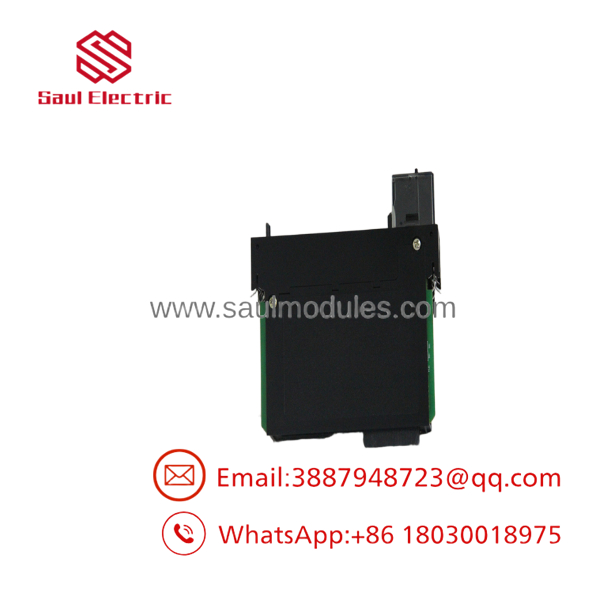
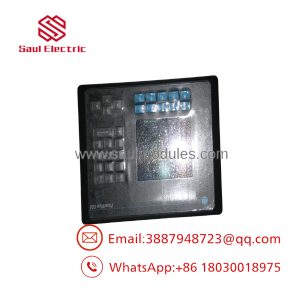
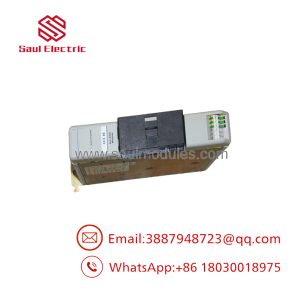
- 1756-IB16D
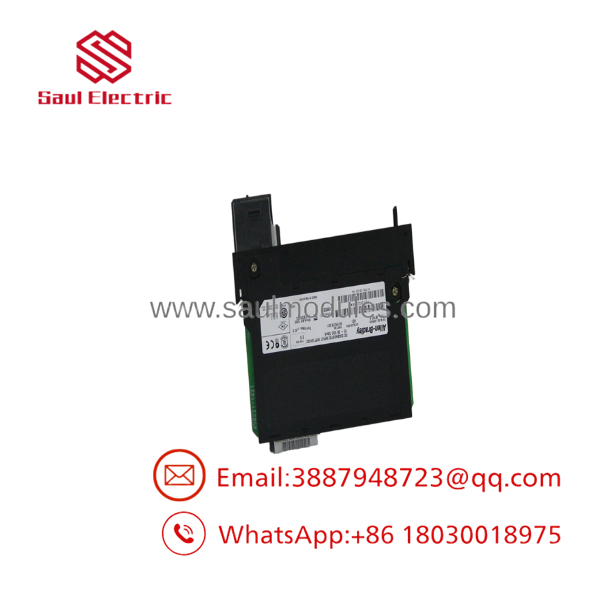
- 1756-IB16D
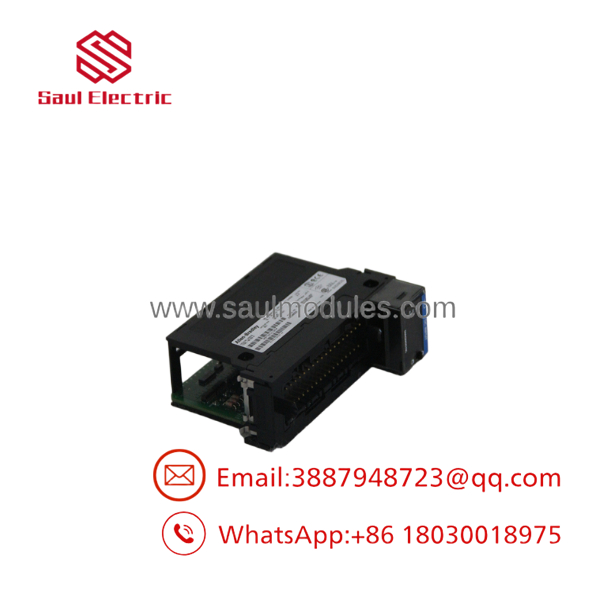
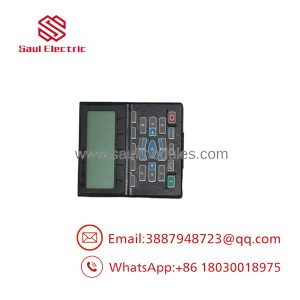
- 1756-IB16D
Transparency SOP: QA & Testing
- Terminal Block & Hardware Audit: Inspecting 36-pin RTB connection guides, front status LEDs (OK, Yellow Channel LEDs, Red Fault LEDs), and backplane gold edge connectors.
- 16-Channel Voltage Threshold Verification: Applying variable DC voltage inputs (0–30V DC) across all 16 channels to confirm precise On-State (≥10V) and Off-State (≤5V) switching thresholds.
- Wire-Off & Diagnostic Fault Test: Simulating open-wire conditions on active input points to verify that the channel fault LED turns red and the CPU tag (
.Faultbit) reports correctly in Studio 5000. - Thermal Chamber Burn-In: Running continuous 16-channel switching cycles under full field load in a 60°C environmental test chamber for 12 hours while checking thermal dissipation and backplane power draw.
The Veteran’s Tech Trap Guide
- ⚠️ Wire-Off Detection Resistor Requirement for Dry Contacts: When using the 1756-IB16D with standard “dry” mechanical contacts (like simple pushbuttons or relay contacts), the module requires a 10 kΩ parallel resistor installed across the contact terminals. Without this resistor providing a tiny off-state trickle current (~1 mA), the card will mistakenly treat an open contact as a broken wire (
Wire-Offfault). - PRO TIP: 1756-IB16 vs. 1756-: A standard 1756-IB16 card is a non-diagnostic 16-point input module. Replacing a 1756- with a standard 1756-IB16 will cause I/O configuration mismatch errors in Studio 5000 unless electronic keying is altered and diagnostic tags are removed from the PLC logic.
- ⚠️ Group-to-Group Isolation: The 16 input channels are arranged into 4 isolated groups of 4 points each. Ensure field power supply wiring respects group isolation boundaries to prevent cross-channel ground loops or blown field power fuses.
Dynamic FAQ
Q: Can I turn off the Wire-Off diagnostic feature on specific channels of a 1756-?
A: Yes. You can individually enable or disable channel diagnostic features (including Wire-Off detection) through the module properties tab in Studio 5000 / RSLogix 5000.
Q: Which removable terminal block (RTB) is required for the 1756-?
A: The 1756- requires a 36-pin terminal block—either the 1756-TBCH (cage-clamp) or 1756-TBS6H (spring-clamp).
Q: Does the 1756- support sinking or sourcing field wiring?
A: The module supports both sinking and sourcing field configurations, depending on how field power and common references are wired to the 4 isolated channel groups.
Q: Are replacement 1756- modules fully tested before shipping?
A: Yes. Every 1756- module undergoes individual 16-channel threshold checks, open-wire fault diagnostic testing, backplane communication verification, and 12-hour thermal burn-in on a live ControlLogix test rack.

 Start Chat


