





Description
Product Introduction & Engineering Value
The Allen-Bradley 1756-IB32 delivers maximum discrete signal capacity for ControlLogix chassis layouts where cabinet space is at a premium. Providing 32 digital input points in a single standard slot, this module doubles the point density of standard 16-channel cards (like the 1756-IB16), reducing the required number of chassis slots and backplane power draw per I/O point.
Operating across a 10 to 31.2V DC range, the 1756-IB32 supports both sinking and sourcing field configurations arranged into two independent 16-point groups. Built-in software configurable input filter times (off-to-on and on-to-off delays) allow control engineers to eliminate contact bounce and electrical noise from field limit switches, photoelectric sensors, and operator control stations.
Technical Specifications
| Specification | Parameter Value |
| Module Type | High-Density Digital Input Module |
| Number of Inputs | 32 Points (2 isolated groups of 16 points) |
| Voltage Category | 12/24V DC Sinking / Sourcing |
| Operating Voltage Range | 10 to 31.2V DC |
| Input On-State Voltage | 10 to 31.2V DC |
| Input Off-State Voltage | 0 to 5V DC |
| Input Current (Nominal) | 5.5 mA @ 24V DC |
| Hardware Delay Times | Off-to-On: 1 ms max + filter time / On-to-Off: 1 ms max + filter time |
| Backplane Current (5.1V DC) | 120 mA |
| Backplane Current (24V DC) | 2.0 mA |
| Power Dissipation | 6.2 Watts |
| Removable Terminal Block (RTB) | 1756-TBCH or 1756-TBS6H (36-pin) |
| Operating Temperature | 0°C to 60°C (32°F to 140°F) |
Field Application & The “Trench” Experience
In a high-speed beverage canning and packaging facility, an expansion project required adding 28 new proximity sensors and photoeyes to monitor can accumulation queues across three conveyor lanes. Space inside the existing ControlLogix enclosure was limited to a single unused backplane slot.
Installing a high-density 1756-IB32 module allowed technicians to terminate all 28 new sensor points into the single slot using a 36-pin spring-clamp terminal block (1756-TBS6H) and IFM pre-wired breakout cables. Rather than installing an additional expansion chassis or remote I/O rack, the entire upgrade was completed within the primary control cabinet—saving significant hardware cost and panel installation labor.
- High-Density Packaging & Conveyors: Monitoring dozens of photoelectric sensors, zone photoeyes, and position limit switches across material handling lines.
- Assembly & Stamping Machines: Gathering part-present verification signals, pneumatic cylinder reed switches, and operator safety interlocks into a compact enclosure footprint.
- Motor Control Centers (MCC): Reading auxiliary status contacts, thermal overload trip signals, and run/stop status from multiple motor starters.
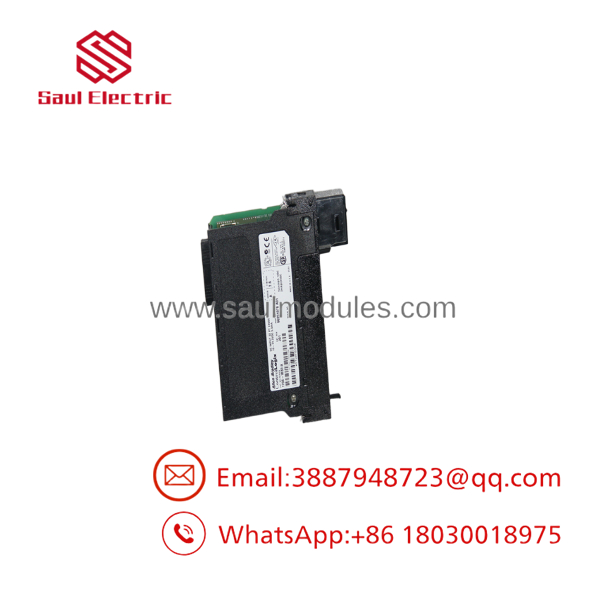
- 1756-IB32
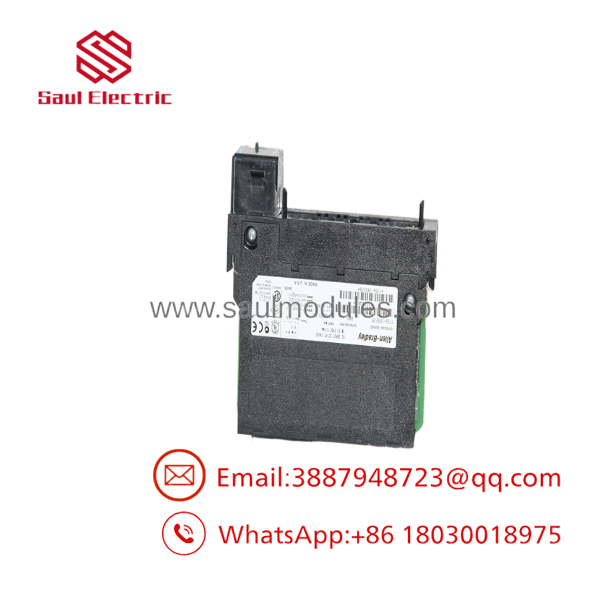
- 1756-IB32
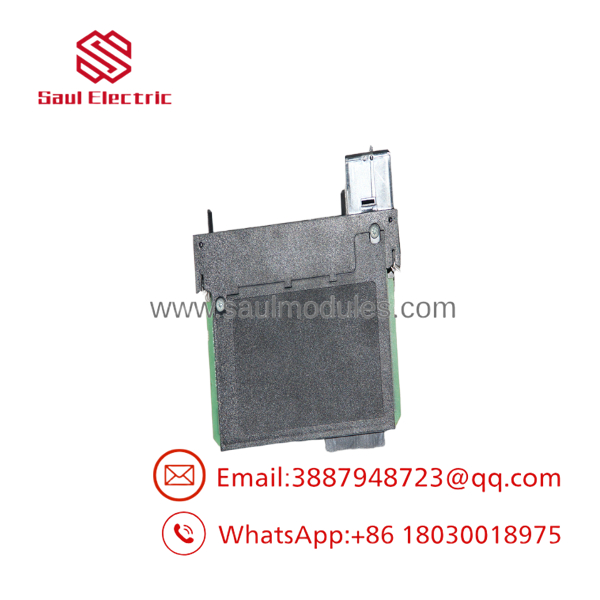
- 1756-IB32
The Veteran’s Tech Trap Guide
- ⚠️ High-Density Wiring & IFM Cable Recommendation: Wiring 32 individual field conductors directly to a 36-pin terminal block (1756-TBCH) can become extremely tight and prone to strain relief failure. For clean panel installation, use Allen-Bradley 1792 / 1492 Interface Modules (IFMs) with pre-formed wiring cables (e.g., 1492-CABLExxx) to break the 32 channels out to DIN-rail mounted terminal blocks.
- PRO TIP: 1756- vs. 1756-IB16 Grouping: A 16-point card (1756-IB16) offers 4 points per group (4 groups), while the 32-point card (1756-) offers 16 points per group (2 groups). Ensure your field power supply distribution aligns with 16-point common groupings to avoid breaking isolation zones across different power supplies.
- ⚠️ Input Filter Delay Settings in Studio 5000: Default input filter times in Studio 5000 / RSLogix 5000 are often set to 1 ms or 2 ms. If capturing ultra-fast pulses (such as high-speed sensor flags on fast conveyor belts), adjust the software filter delay down to 0 ms (or hardware minimum) to prevent missing short duration input pulses.
Dynamic FAQ
Q: Which removable terminal block (RTB) does the 1756- require?
A: The 1756- requires a 36-pin terminal block—either the 1756-TBCH (cage-clamp) or 1756-TBS6H (spring-clamp). Standard 20-pin RTBs (like 1756-TBNH) are not compatible.
Q: Can I mix sinking and sourcing sensors on the same 1756- module?
A: Yes, but only across separate groups. Group 1 (Points 0–15) can be wired for sinking or sourcing, and Group 2 (Points 16–31) can be wired independently for sinking or sourcing based on how Common (DC-) and Supply (DC+) are connected to each group.
Q: Can I replace a 1756-IB16 with a 1756- in the same slot?
A: Physically yes, but you must update the module type in the Studio 5000 / RSLogix 5000 I/O configuration tree and modify terminal block wiring, as pinouts differ between 16-point and 32-point modules.
Q: Are replacement 1756- modules fully tested before shipment?
A: Yes. Every 1756- module undergoes a full 32-point switching threshold audit, dual-group isolation verification, backplane logic communication testing, and 12-hour thermal burn-in on a live ControlLogix test rack.

 Start Chat


