





Description
Product Introduction
The Allen-Bradley 1756-L73 is an 8 megabyte programmable automation controller in the ControlLogix 5570 family. Designed for complex process control, high-density I/O handling, and multi-axis coordinated motion control, it serves as the core processing engine for demanding industrial automation cells.
Unlike legacy 5560 series processors (such as the 1756-L63), the 1756-L73 eliminates the need for lithium batteries by using an energy storage module (1756-ESMCAP or 1756-ESMNSE) to save RAM to nonvolatile memory during power loss. Combined with an onboard USB 2.0 port for rapid firmware flashing and programming, it delivers significantly faster execution speeds and doubled I/O processing performance.
Key Technical Specifications
| Parameter | Value |
| User Memory | 8 MB |
| I/O Memory | 0.98 MB |
| Built-in Communication Ports | Full-Speed USB 2.0 (programming, logging, online editing) |
| Digital I/O (Max) | 128,000 |
| Analog I/O (Max) | 4,000 |
| Total I/O (Max) | 128,000 |
| Energy Storage Module | 1756-ESMCAP (Capacitor) or 1756-ESMNSE (No-Capacitor for hazardous environments) |
| Optional Storage | 1784-SD1 (1 GB) or 1784-SD2 (2 GB) Secure Digital Card |
| Backplane Current | 800 mA @ 1.2V DC, 5 mA @ 5.1V DC |
| Power Dissipation | 2.5 W |
| Operating Temperature | 0 °C to 60 °C (32 °F to 140 °F) |
Application Scenarios & The “Trench” Experience
Picture this: It’s 1:00 AM on a holiday weekend, and a main CPU fault brings a high-speed bottling line to a grinding halt. The legacy battery on an old L63 controller failed during a power blip, completely wiping the controller’s memory. Rebuilding that setup with a 1756-L73 solves the problem for good: the cap-based energy storage module automatically dumps the user program straight to onboard nonvolatile flash whenever power cuts out.
- High-Speed Packaging Lines – Coordinated Motion Control – Runs complex CIP Motion axes over EtherNet/IP with microsecond-level synchronization across servos.
- Oil & Gas Processing – Distributed Process Loops – Manages large PID loop arrays and extensive HART analog inputs with fast routine execution times.
- Metals & Heavy Manufacturing – Hot Strip Rolling Mills – Handles massive I/O counts and high-speed task execution without stretching scan times.
- Pharmaceutical Batching – Regulated Batch Systems – Utilizes SD card storage for firmware backups and recipe storage to enforce strict audit trail compliance.
Field Case Study: A tire manufacturing facility in Indiana suffered a catastrophic main cabinet short, frying the primary 1756-L73 controller. The line was losing $22,000 an hour in lost output. We pulled a bench-tested 1756-L73 from stock, verified the firmware version over USB, loaded their customer backup via the SD card, and shipped it overnight. The plant was back up and curing rubber by noon the next day.
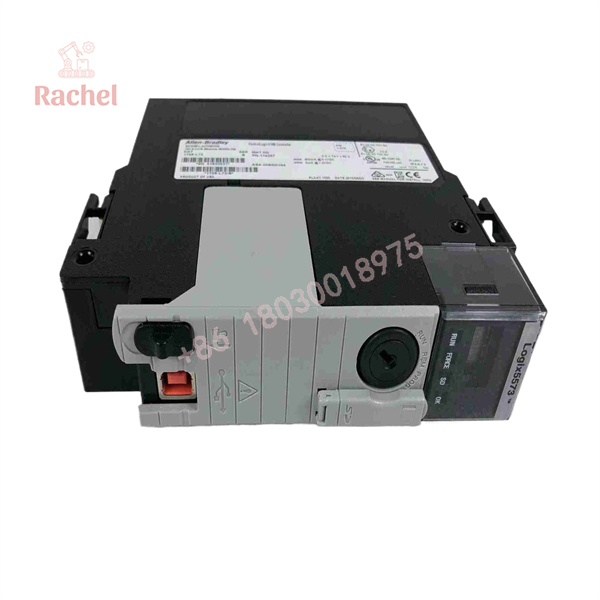
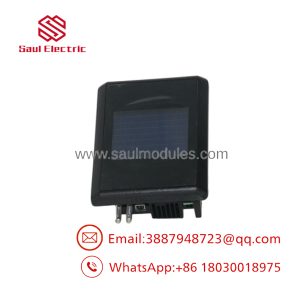
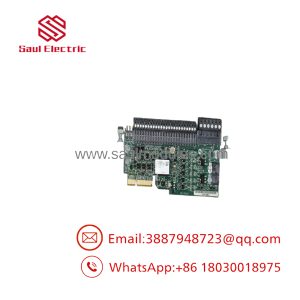
1756-L73
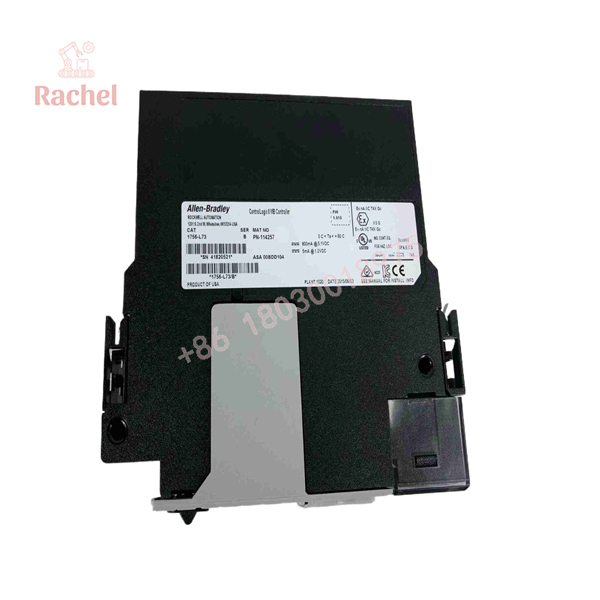
1756-L73
Transparency SOP: Quality Assurance & Testing
We don’t just ship boxes; we test them on actual Allen-Bradley ControlLogix racks. Every 1756-L73 undergoes our strict 5-stage bench verification process:
- Inbound Physical Inspection: Inspect edge connectors, locking tabs, side casing integrity, housing status, and confirm OEM anti-counterfeit markings.
- Live Rig Power-On Testing: Install the CPU into a 1756-A7 chassis with an ESM module attached. Power up and verify LED diagnostic routines (OK status LED transitions from red to solid green).
- USB & Backplane Communication Audit: Connect via Studio 5000 over the front USB 2.0 port. Verify CPU logic execution, backplane handshakes with adjacent network/IO modules, and clear fault logs.
- Energy Storage Module & SD Card Check: Execute a simulated line power drop test to confirm the Energy Storage Module correctly triggers nonvolatile memory backup. Check SD card read/write cycles.
- ESD Cleaning & Static Packaging: Clean all surfaces with ESD-safe isopropyl solution, insert into static-shielding bags, and pack inside heavy-duty custom foam enclosures.
The Veteran’s Tech Trap Guide (Crucial Value-Add)
- ⚠️ Don’t Forget the Energy Storage Module (ESM)! The 1756-L73 does NOT use a battery. It requires a removable Energy Storage Module (usually the 1756-ESMCAP) to hold memory during power-down. If you plug in a new L73 without an ESM installed, the processor will fault immediately upon power loss and clear your program!
- ❗ USB Port Is for Maintenance, Not Control: That front panel USB 2.0 port is awesome for quick Studio 5000 connections or firmware updates, but it is not galvanically isolated. Do not run a permanent USB cable across the panel to an HMI—ground loops can damage the controller’s main board.
- ⚠️ SD Card Load Modes: Check the load settings on the 1756-SD card before cycling power. If the card is set to “Load on Power Up,” it will overwrite whatever logic you just modified in RAM with the old program stored on the SD card!
- ❗ Firmware Compatibility: The 1756-L73 requires Studio 5000 Logix Designer v20 or higher. You cannot program an L73 using old RSLogix 5000 v19 or lower. If you’re replacing an old L63 running v16, you will need to upgrade your project file to at least v20.
Frequently Asked Questions (FAQ for Conversion)
Q: Does the 1756-L73 come with an Energy Storage Module (ESM)?
A: Standard original factory packaging usually includes the 1756-ESMCAP. However, when buying surplus or replacement units, double-check that the ESM is included. We supply an ESM with our 1756-L73 modules so they are plug-and-play out of the box.
Q: Can I use a 1756-L73 to replace an older 1756-L63?
A: Yes. The 1756-L73 fits into the exact same ControlLogix slot. However, you must update your software project in RSLogix 5000 / Studio 5000 to reflect the new CPU hardware, convert your controller type, and ensure software compatibility (v20+ required for L73).
Q: What is the difference between the 1756-L73 and the 1756-L73S?
A: The “S” designation stands for GuardLogix Safety Controller. The 1756-L73S is a safety-rated controller designed for SIL 3 / PL e applications and requires a partner safety partner module (1756-L7SP). The standard 1756-L73 is a standard automation PAC.
Q: How do I flash firmware on the 1756-L73?
A: You can easily flash firmware using ControlFLASH or ControlFLASH Plus over the front panel USB 2.0 port or across an EtherNet/IP network card (like a 1756-EN2T) sitting in the backplane.
Q: Is the 1756-L73 hot-swappable (RIUP)?
A: Yes. Like most ControlLogix modules, the 1756-L73 supports Removal and Insertion Under Power. However, pulling the main CPU will immediately halt all task execution, motion control, and I/O scanning across that chassis.
Q: Why buy New Surplus from you instead of direct OEM channels?
A: OEM distributor backorders on 5570 controllers can run weeks or even months. We keep genuine, fully bench-tested Allen-Bradley processors on the shelf ready for immediate shipment, cutting downtime to zero at a fraction of factory list price.
Q: What warranty comes with this processor?
A: We provide a full 12-month replacement warranty on every 1756-L73 module (New Surplus and Refurbished). If the unit develops hardware faults within a year of purchase, we replace it right away.

 Start Chat


