





Description
Product Introduction
The Allen-Bradley 1756-L75 stands at the top of the ControlLogix 5570 controller series, packing a massive 32 megabytes of user memory. Designed for high-density plant operations, complex DCS batch routines, and multi-axis coordinated motion, this module handles heavy processing loads that would starve smaller PAC units. Communication passes seamlessly to field devices through dedicated EtherNet/IP, ControlNet, or DeviceNet bridge modules mounted in the same chassis.
Carrying four times the application memory of the baseline 1756-L73, this processor executes massive tag databases and complex PlantPAx process strategies without requiring segmented racks. It relies on a capacitor-based energy storage module (1756-ESMCAP) to persist volatile memory contents onto an onboard SD card during unexpected power loss, eliminating lithium battery maintenance across your facility.
Key Technical Specifications
| Parameter | Value / Specification |
| User Memory | 32 MB |
| I/O Memory | 0.98 MB |
| Max Digital I/O | 128,000 points |
| Max Analog I/O | 4,000 points |
| Backplane Current (1.2V DC) | 5 mA |
| Backplane Current (5.1V DC) | 800 mA |
| Power Dissipation | 2.5 W |
| Thermal Dissipation | 8.5 BTU/hr |
| Onboard Interfaces | USB 2.0 (Full Speed, 12 Mbps) |
| Non-Volatile Storage | 1784-SD1 (1 GB Secure Digital card included) |
| Energy Storage Module | 1756-ESMCAP (Removable capacitor assembly) |
| Task Structure | 32 Tasks (Up to 100 Programs per task) |
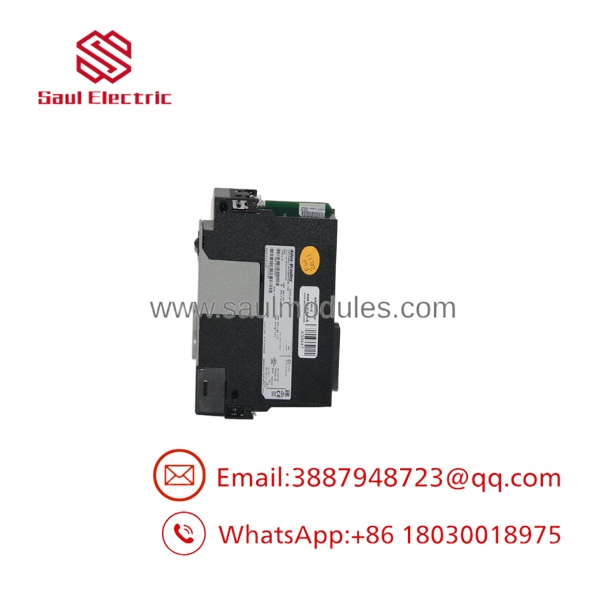
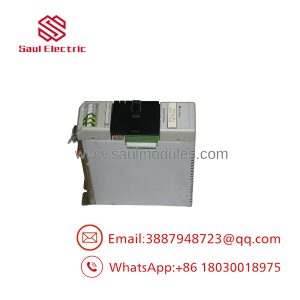
- 1756-L75
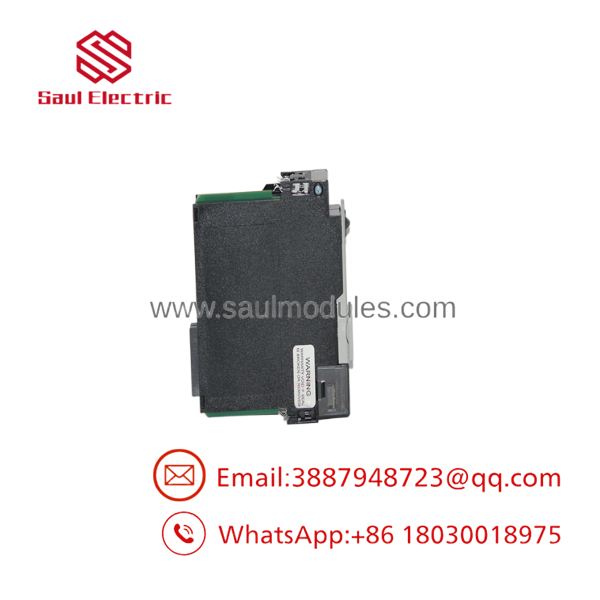
- 1756-L75
Application Scenarios & The “Trench” Experience
A main continuous chemical reactor trips at 3:30 AM due to a backplane communication lockup on an aging main CPU. The whole refining train halts. Downstream tanks are overfilling, safety valves are cycling, and flare stack rates are spiking. The local distributor gives you a 16-week lead time quote for a replacement high-memory processor. Every hour of lost production costs the facility $45,000 in raw material degradation. Having an exact 1756-L75 drop-in replacement on hand turns a full plant disaster into a standard two-hour maintenance turnaround.
Target Application Scenarios
- PlantPAx Distributed Control Systems: Runs heavy add-on instructions (AOIs) and complex continuous function block loops across large process plants.
- High-Speed Beverage & Bottling Lines: Coordinates dozens of CIP motion axes, high-speed vision triggers, and filler head synchronization.
- Refinery & Petrochemical Processing: Manages massive tag counts, extensive alarm logging, and redundant communication topologies across hazardous areas.
- Large-Scale Water Reclamation: Controls complex pump stations, chemical dosing sequencing, and remote telemetry nodes spanning entire municipalities.
Field Case Study
An enterprise pulp and paper mill lost its primary 1756-L75 CPU during a severe lightning strike that bypassed the local surge suppression array. The line ran a legacy v20 Studio 5000 project with over 25,000 active tags and heavy motion control. Rather than attempting a complete controller platform rebuild to newer hardware—which would require weeks of code validation and software upgrading—the team sourced a bench-tested, new-surplus 1756-L75. They inserted the original 1784-SD1 memory card, restored power, verified the ESM charge cycle, and restored full production in under four hours.
Transparency SOP: Quality Assurance & Testing
We don’t just ship boxes; we test them on actual Allen-Bradley racks. Every 1756-L75 unit undergoes a strict 5-step verification protocol:
- Inbound Inspection: Detailed physical check for bent edge connector pins, damaged faceplate retention clips, thermal discoloration, and anti-counterfeit label integrity.
- Live Rig Testing: Insertion into an active 1756-A10 chassis powered by a 1756-PA75 supply. We cycle power, monitor boot diagnostics, and verify the scrolling alphanumeric display.
- Communication Handshake: Connecting through the front panel USB 2.0 port using RSLinx/Studio 5000 to verify channel hardware health, port speed, and firmware accessibility.
- Firmware & Memory Verification: Exercising all 32 MB of onboard RAM, clearing residual user project data, verifying non-volatile SD card read/write cycles, and logging the base firmware revision.
- Final QC & ESD Packaging: Neutralizing static charges at an ESD-certified workstation before sealing the CPU in heavy-duty static shielding bags with fresh desiccant packs.
The Veteran’s Tech Trap Guide (Crucial Value-Add)
⚠️ Watch Out for Memory Usage Misconceptions: Switching from an older 1756-L65 to a 1756-L75 gives you 32 MB of memory, but be careful with task execution execution times. Large projects migrated to 5570 controllers consume memory differently due to altered instruction execution structures. Verify your free memory in Logix Designer post-download.
❗ The Energy Storage Module (ESMCAP) Trap: Never ship or store a 1756-L75 without checking the status of the 1756-ESMCAP unit mounted on the side. If you pull the controller from power before the ESM charges completely, the processor cannot write volatile RAM to the SD card, causing a total loss of un-restored tag data on the next boot.
⚠️ SD Card Locking Switches: Check the physical write-protect tab on the 1784-SD1 card before installing it behind the door. If the switch is locked, the CPU cannot save user diagnostics, force states, or updated tag values during an emergency power-down sequence.
Frequently Asked Questions (FAQ for Conversion)
Q: Can I replace a 1756-L73 directly with a 1756-L75 without changing code?
A: Yes. You only need to open your project in Studio 5000 / Logix Designer, change the Controller Type in the Controller Properties dialog from 1756-L73 to 1756-L75, re-compile, and download to the processor. No logic changes are required.
Q: Does the 1756-L75 require a battery like the older 1756-L65 controllers?
A: No. The 5570 series uses a capacitor-based Energy Storage Module (1756-ESMCAP). When power dies, the capacitor provides just enough energy for the CPU to dump RAM onto the included SD card. No routine battery maintenance is required.
Q: Can I hot-swap this processor out of a live chassis?
A: The hardware supports RIUP (Removal and Insertion Under Power). However, pulling the main CPU stops all controller logic immediately, sending field I/O into fault states. Only pull a live processor if the machinery is stopped and in a verified safe state.
Q: What firmware versions does the 1756-L75 support?
A: The 1756-L75 supports major firmware revisions starting from v20 up through v33+. You can flash it via ControlFLASH or ControlFLASH Plus over the front USB port or across an EtherNet/IP bridge card like the 1756-EN2T.
Q: Why buy a New Surplus 1756-L75 instead of migrating to a ControlLogix 5580 processor?
A: Migrating to a 5580 (L8 series) processor requires updating software licenses, altering network configurations, and potentially replacing incompatible legacy remote I/O hardware. Replacing your dead processor with an identical 1756-L75 lets you restore plant operations in minutes without expensive re-engineering or re-validation.
Q: What warranty coverage do you provide on this module?
A: All New Surplus and fully tested replacement 1756-L75 modules carry our standard 12-month operational warranty. If the unit fails under normal operating conditions within one year, we replace it immediately or issue a full credit.

 Start Chat


