





Description
Product Introduction
The Allen-Bradley 1757-SRC1 is a 1-meter (3 ft) factory-terminated fiber-optic cable assembly specifically designed for ControlLogix redundancy systems. It links pair-matched 1757-SRM (System Redundancy Modules) across primary and secondary PAC chassis to maintain real-time memory synchronization, task cross-loading, and bumpless state switching.
Constructed with dual 62.5/125 micron multi-mode optical fibers operating at a 1300 nm wavelength, the 1757-SRC1 provides complete immunity to high-voltage ground loops and electromagnetic interference (EMI). Factory-installed, keyed ST-type optical connectors ensure low insertion loss (< 7 dB) and prevent pin misalignments during installation.
Key Technical Specifications
| Parameter | Value / Specification |
| Cable Length | 1.0 Meter (approx. 3.28 Feet) |
| Cable Type | 62.5 / 125 \mum Multi-Mode Fiber-Optic |
| Connector Type | Keyed ST-Type Optical Connectors (Transmit & Receive) |
| Operating Wavelength | 1300 nm |
| Maximum Light Loss | \le 7.0 dB across total cable length |
| Channel Count | 1 Transmit and 1 Receive Optical Channel |
| Galvanic Isolation | 100\% Electrical Isolation (Fiber-Optic Interface) |
| Compatible Modules | 1757-SRM (System Redundancy Module) |
| Minimum Bend Radius | 30 mm (1.18 in) static / 50 mm (1.97 in) dynamic |
| Operating Temperature | 0°C to 60°C (32°F to 140°F) |
Application Scenarios & The “Trench” Experience
When commissioning redundant ControlLogix systems, field technicians often attempt to substitute generic commercial ST fiber patch cables between 1757-SRM modules. Commercial grade fibers often lack the strict jacket strain relief or precise core alignment required for industrial enclosures, leading to intermittent signal loss during panel vibration. These minute optical drops break module synchronization, causing the secondary rack to drop out of sync or trigger false failovers. Swapping in a factory-tested 1757-SRC1 cable resolves optical power margin issues, restoring stable cross-loading synchronization.
Target Application Scenarios
- High-Availability PAC Systems: Connects primary and redundant 1757-SRM modules mounted in adjacent racks within the same control enclosure.
- Critical Continuous Processes: Applied in power generation, oil & gas refining, and water treatment plants where unexpected CPU downtime is intolerable.
- High-EMI Control Enclosures: Provides noise-free optical data transfer inside cabinets housing large variable frequency drives (VFDs) or medium-voltage switchgear.
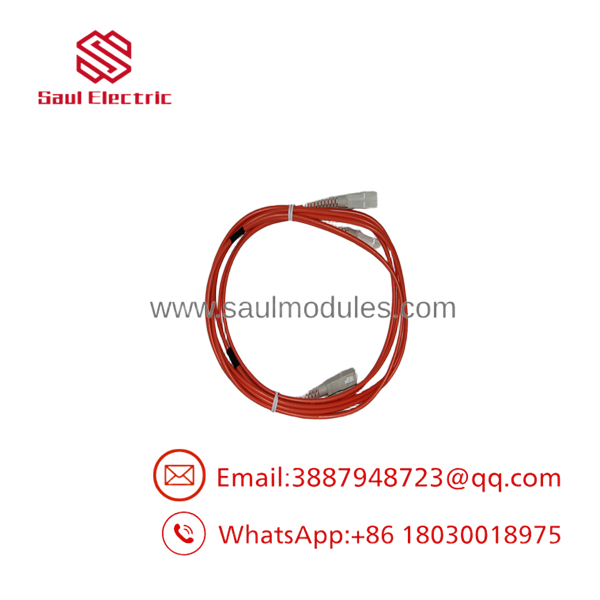
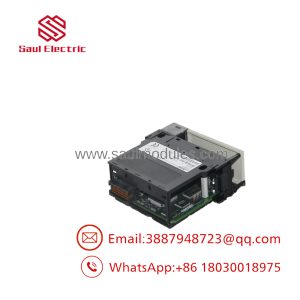
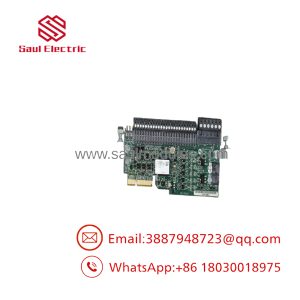
- 1757-SRC1
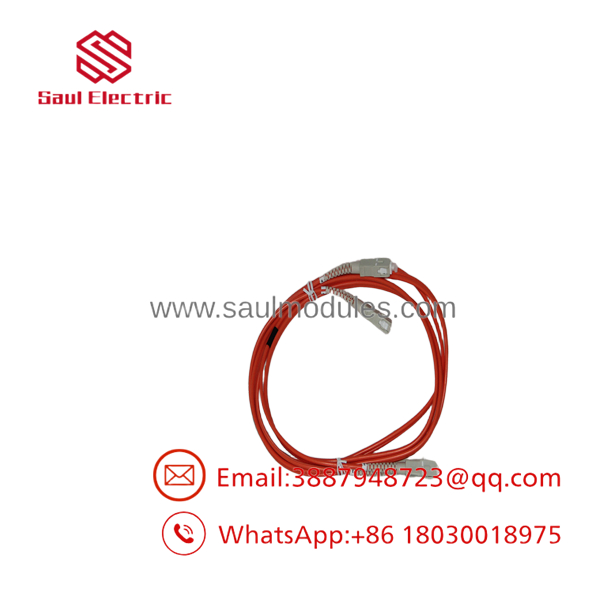
- 1757-SRC1
Transparency SOP: Quality Assurance & Testing
We inspect and test every 1757-SRC1 cable assembly prior to shipment:
- Physical & Fiber Inspection: Checking outer jacket integrity, connector boots, ST bayonet keys, and inspecting fiber end-faces under a fiber microscope for scratches, micro-cracks, or debris.
- Optical Attenuation & Loss Testing: Measuring optical insertion loss using a calibrated 1300 nm light source and power meter to ensure signal loss remains well below the 7.0 dB threshold.
- Live Chassis Sync Test: Connecting the 1757- between two powered 1757-SRM modules in a live test rack to verify full
SYNCstatus and cross-loading communication. - Protective Packaging: Installing protective dust caps over both optical ferrule tips and sealing the assembly in static-shielding bags with protective padding.
The Veteran’s Tech Trap Guide (Crucial Value-Add)
⚠️ Keep the Dust Caps On: Never remove the protective rubber dust caps from the ST connectors until the cable is ready to be plugged into the 1757-SRM port. Airborne dust or oily fingerprints on the ceramic ferrule tip can absorb 1300 nm light, causing high optical loss and constant redundancy link faults.
❗ Mind the Cable Length Family: The 1757- is 1 meter long. If your redundant ControlLogix chassis are mounted in separate cabinets or spaced further apart, you must select the appropriate length variant:
- 1 Meter (3 ft)
- 1757-SRC3: 3 Meters (10 ft)
- 1757-SRC10: 10 Meters (33 ft)
- 1757-SRC50 / SRC100: 50m / 100m for long-distance runs
⚠️ Avoid Tight Bend Radii: Fiber-optic cores break or suffer high light attenuation when bent too sharply. Do not zip-tie this cable tightly against structural cabinet rails or force it into tight 90^\circ turns inside wire ducting.
Frequently Asked Questions (FAQ for Conversion)
Q: Can I use the 1757- cable with newer 1756-RM or 1756-RM2 redundancy modules?
A: No. The 1757- cable uses ST-style fiber connectors meant specifically for the legacy 1757-SRM module. Newer 1756-RM and 1756-RM2 modules require LC-to-LC fiber cables (such as 1756-RMC1 or 1756-RMC3).
Q: Does one 1757- cable complete the redundancy connection between two 1757-SRM modules?
A: Yes. A single 1757- cable contains both the transmit and receive fibers required to link a pair of 1757-SRM modules together.
Q: Is this an active or passive cable assembly?
A: The 1757- is a passive fiber-optic cable assembly. It requires no external power; optical signals are driven directly by the transceivers inside the 1757-SRM modules.
Q: What warranty is included with this cable?
A: Every New Surplus 1757- fiber redundancy cable is backed by our full 12-month operational warranty.

 Start Chat


