





Description
Product Introduction & Engineering Value
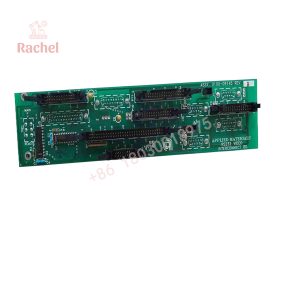
The important detail with 0100-71271 is not simply that it is an I/O board. Current parts records specifically identify it as a 16-channel PMC card, while other listings classify it as a VMEbus digital I/O module. That makes the exact board revision and host configuration important when replacing a failed card.
This is a legacy semiconductor-equipment component, so generic PMC compatibility is not enough. The host controller, firmware, signal mapping, connector arrangement, and AMAT machine configuration determine whether a nominally similar card will actually work.
Technical Specifications
| Specification | 0100-71271 |
|---|---|
| Manufacturer | Applied Materials (AMAT) |
| Part Number | 0100-71271 |
| Board Description | 16-Channel PMC Card PCB |
| Alternate Description | VMEbus Digital I/O Module |
| Interface Type | PMC |
| Channel Count | 16 |
| Primary Function | Digital I/O interfacing |
| Equipment Association | AMAT / AKT semiconductor equipment |
| Known Revision | Rev. 03 / Rev. 04 |
| Reported Condition | 100% new inventory and used/tested stock |
| VME Association | Reported |
| Exact I/O Voltage | Must be verified by revision/tool |
| Exact Input/Output Direction | Configuration-dependent |
| Exact Connector Pinout | Must be verified against AMAT documentation |
Recent trade records provide unusually useful revision evidence: shipments in 2025 identify 0100-71271 Rev. 03, Rev. 04, and describe the assembly as a 16-channel PMC card PCB.
One current supplier lists the board as New with Original Package, with a 12-month seller warranty.
Specification caution
There is a significant difference between what can be verified and what some reseller pages claim.
The 16-channel PMC identity is supported by recent trade records. However, public sources do not establish reliable OEM values for:
- Input voltage
- Output voltage
- Per-channel current
- Isolation voltage
- Logic thresholds
- PMC register map
- Connector pinout
Those values should therefore not be copied into an engineering specification without the applicable AMAT/AKT documentation.
Field Application & the “Trench” Experience
A legacy AKT tool begins producing intermittent interlock and actuator faults. The PLC-style diagnostic screen shows several apparently unrelated digital signals changing state together.
The maintenance team checks the individual sensors first. They test correctly.
The technician then looks upstream.
Multiple channels terminate through the same 0100-71271 I/O assembly. The board is marked Rev. 03, while the available spare is Rev. 04. Before installing it, the technician compares the board layout, revision marking, connectors, and machine configuration rather than assuming the newer revision is automatically interchangeable.
After installation, every affected channel is checked individually. The fault disappears.
That is the practical lesson with legacy I/O cards: a board-level fault can look like several independent field-device failures at once.
Specific Application Scenarios
- AKT equipment digital signal acquisition — collecting discrete status signals from sensors and machine subsystems.
- Actuator/interlock control — handling digital signals associated with equipment sequencing and permissive logic.
- Legacy VME/PMC control cabinets — maintaining original AMAT electronics without redesigning the controller architecture.
- Semiconductor equipment spare inventory — holding an exact replacement for a board whose failure can affect multiple machine functions simultaneously.
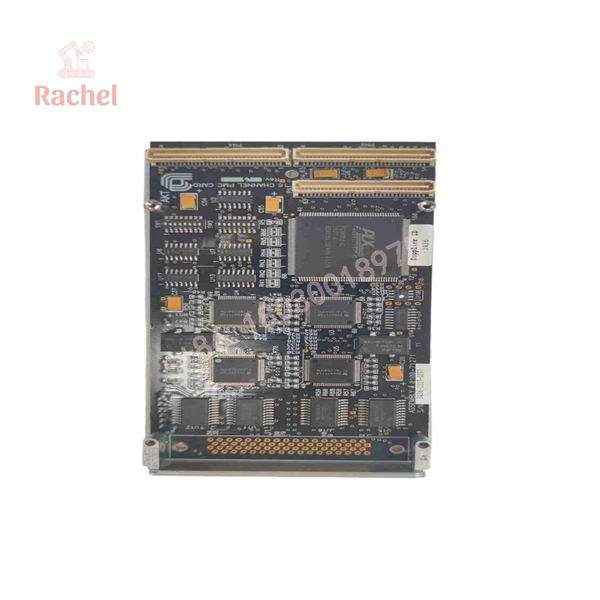
0100-71271
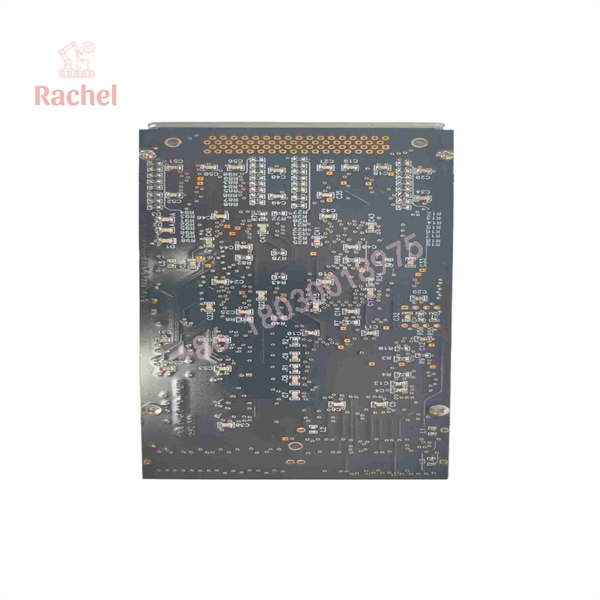
0100-71271
Transparency SOP: QA & Testing
For 0100-71271, the test procedure should be channel-oriented.
1. Part-number verification
Confirm 0100-71271, board revision, serial number, and any AMAT/AKT labels.
2. Physical inspection
Check the PMC connector, PCB edge contacts, components, solder joints, and any external I/O connectors for damage or contamination.
3. Power-up test
Install the card in an appropriate test chassis or compatible equipment and verify normal initialization.
4. Channel test
Exercise each of the 16 channels individually using an appropriate digital I/O test fixture.
5. Signal-level verification
Measure the actual input/output behavior rather than relying only on software status indications.
6. Host recognition
Confirm that the AMAT controller recognizes the card and maps the expected I/O resources.
7. Extended test
Run repeated I/O cycles and thermal soak where practical. Intermittent digital I/O faults can be much harder to reproduce than complete board failures.
Recent trade records are particularly useful here because they demonstrate that Rev. 03 and Rev. 04 units have both entered the supply chain as new assemblies, rather than the revision numbers being purely reseller-generated descriptions.
The Veteran’s Tech Trap Guide
⚠️ Trap #1 — Confusing the board with a generic VME digital I/O card
The VME description is useful, but the more specific records identify this part as a 16-channel PMC card.
PRO TIP: Specify both:
AMAT 0100-71271 — 16-Channel PMC Card — exact revision required
⚠️ Trap #2 — Ignoring Rev. 03 vs. Rev. 04
This is not theoretical. Current trade records explicitly document both revisions.
Do not assume that Rev. 04 is automatically a drop-in replacement for Rev. 03 without checking the machine documentation.
⚠️ Trap #3 — Testing only the card’s power
Sixteen I/O channels give you sixteen opportunities for a partial failure.
A board can initialize normally while one or more channels have degraded thresholds, intermittent outputs, or damaged interface components.
PRO TIP: Require a documented 16-channel functional test.
⚠️ Trap #4 — Trusting the photograph instead of the part number
A supplier page may display a visually similar PMC/VME board. The part number and revision should control procurement—not the photograph alone.
Dynamic FAQ
What is AMAT 0100-71271?
It is an Applied Materials 16-channel PMC card / digital I/O module associated with legacy AMAT/AKT semiconductor equipment. Recent trade records specifically describe it as an ASSY 16 CHANNEL PMC CARD PCB.
Is 0100-71271 a VME card?
It is described by several suppliers as a VMEbus digital I/O module, while other records identify the assembly more specifically as a 16-channel PMC card. The exact bus/PMC implementation should be confirmed against the host AMAT system.
How many channels does it have?
The strongest recent part-specific evidence identifies 16 channels.
What revisions are available?
At least Rev. 03 and Rev. 04 are documented in recent component trade records. Always match the installed revision before substitution.
Is New Surplus 0100-71271 available?
Yes. Recent trade records show units described as 100% new, including Rev. 03 and Rev. 04 assemblies. One current supplier also advertises the unit as new with original package.
How do I verify New Surplus authenticity?
Request photographs of the actual board showing the 0100-71271 part number, revision, serial/barcode label, PMC connector, PCB markings, and original packaging. The supplier should explicitly distinguish New OEM, New Surplus/NOS, Refurbished, and Used-Tested stock.
What warranty should I request?
Get the warranty in writing and make sure it covers functional operation. One current listing specifies a 12-month warranty and states that the unit is new with original packaging. For a production spare, also require the supplier to state whether all 16 channels were functionally tested.

 Start Chat


