





Description
Product Introduction & Engineering Value
The 100-1551-54 should be treated as a board-level component rather than as a complete APS power supply. The clearest physical evidence identifies it as a Gate Digital Integrated Circuit Board, with Rev L visible on the assembly.
That distinction matters during procurement. A gate-control board is part of the switching/control chain of a power system; it is not interchangeable merely because another board belongs to the same 100-1551 family. Match the complete part number, revision, board markings, and host power-system configuration.
Technical Specifications
| Specification | 100-1551-54 |
|---|---|
| Manufacturer/Family | APS / Applied Power Systems |
| Part Number | 100-1551-54 |
| Board Description | Gate Digital Integrated Circuit Board |
| Series | 100-1551 |
| Documented Revision | Rev L |
| Associated Board Marking | 100-1551 |
| Additional Marking | 3-0 |
| Date/Code Marking | 0409 |
| Associated Circuit Marking | AP-2161A |
| Temperature-Sense Marking | TMPSNS |
| Associated Part | 100-2160A |
| Reported Weight | 160 g |
| Exact Input Voltage | Not reliably established |
| Exact Gate-Drive Voltage | Not reliably established |
| Switching Frequency | Not reliably established |
| Connector Pinout | Verify from board and host-equipment documentation |
The 160 g weight and the board markings above come directly from a current physical-unit listing.
What can be stated with confidence?
The strongest available evidence supports:
APS / Applied Power Systems 100-1551-54 → Gate Digital Integrated Circuit Board → Rev L.
The public evidence does not establish reliable values for gate-drive voltage, maximum current, switching frequency, semiconductor topology, or connector pinout. Those should not be invented for an engineering product listing.
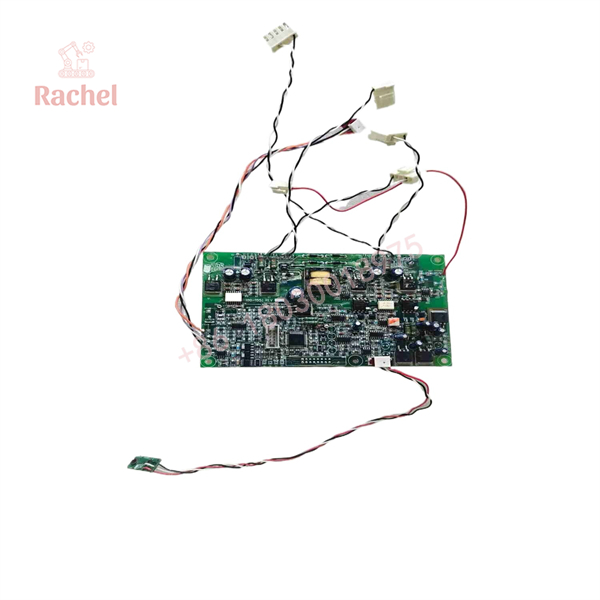
100-1551-54
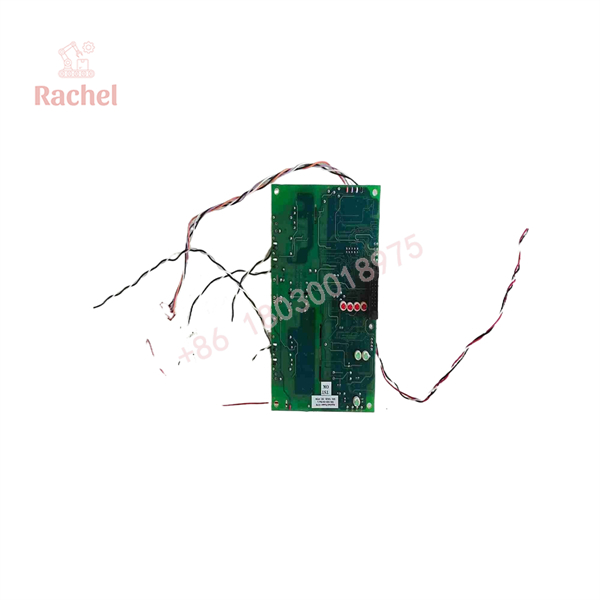
100-1551-54
Field Application & the “Trench” Experience
A plasma power system begins showing inconsistent output behavior. The DC supply itself appears to start normally, but the switching waveform is abnormal and the power stage occasionally trips.
The maintenance team initially suspects the main power semiconductors.
That is not unreasonable—but it is also not where the investigation should stop.
The gate-control circuitry sits directly upstream of the switching devices. A damaged gate-control board can produce symptoms that look like failed IGBTs or MOSFETs: incorrect switching, asymmetric drive, nuisance trips, or complete loss of power conversion.
A technician identifies the installed board as 100-1551-54 Rev L and compares it against the replacement, including the board markings and associated AP-2161A / TMPSNS identifiers visible on the assembly.
The replacement is then validated with the appropriate low-energy gate-drive and waveform checks before the complete power stage is returned to service.
Specific Application Scenarios
- APS power-conversion equipment where gate-control circuitry drives the primary switching stage.
- Plasma power systems where abnormal switching can manifest as output instability or protection trips.
- Gate-drive troubleshooting where technicians need to distinguish a control-board fault from a failed power semiconductor.
- Legacy APS equipment maintenance where the original board-level architecture must be retained.
Transparency SOP: QA & Testing
For a 100-1551-54, simply powering the PCB is not an adequate functional test.
1. Identity check
Verify:
100-1551-54Rev L100-1551AP-2161ATMPSNS- Other visible board identifiers
The actual physical listing documents these markings.
2. Visual inspection
Look for:
- Burned components
- Cracked solder joints
- Damaged connectors
- Carbon tracking
- Electrolytic capacitor leakage
- Previous repair work
- Contamination
3. Low-energy power test
Power the control board using an appropriate test fixture. Monitor current consumption and startup behavior before connecting it to a high-energy switching stage.
4. Gate-signal verification
Where the correct test equipment and procedure are available, inspect gate-drive outputs with an oscilloscope and appropriate differential/isolated probing.
5. Timing comparison
Check the relevant switching timing against a known-good reference board. Do not rely only on the presence of a pulse.
6. Thermal observation
Run the board for an extended period and monitor temperature-sensitive components and abnormal current draw.
7. System-level test
Only after the board passes low-energy testing should it be returned to the complete APS power assembly.
The Veteran’s Tech Trap Guide
⚠️ Trap #1 — Buying the complete “100-1551” family instead of the exact board
The family number is not enough.
The physical evidence specifically identifies 100-1551-54 Rev L.
PRO TIP: Put the complete part number and revision on the purchase order.
⚠️ Trap #2 — Testing a gate board at full system power first
This is a poor troubleshooting sequence.
A suspected gate-control board should be characterized at low energy before it is connected to a high-power switching stage.
A bad gate signal can destroy otherwise-good power semiconductors.
⚠️ Trap #3 — Assuming every online description is technically correct
One reseller describes 100-1551-54 as an APS atmospheric plasma treatment system, complete with 220 VAC, 1 kW, and process-gas specifications. That description is not consistent with the physical board evidence.
Another listing identifies it as an APS high-power DC power-supply product.
PRO TIP: For this part number, the physical PCB label wins.
⚠️ Trap #4 — Ignoring the associated markings
The physical board carries additional identifiers such as AP-2161A and TMPSNS.
Photograph these before ordering a replacement. They can help establish whether two apparently identical 100-1551-54 boards actually belong to the same hardware configuration.
Dynamic FAQ
What is APS 100-1551-54?
The strongest available physical-unit evidence identifies it as an APS / Applied Power Systems Gate Digital Integrated Circuit Board, marked Rev L.
Is 100-1551-54 a complete plasma power supply?
No. The specific physical-board evidence identifies it as a gate-control PCB, not a complete power-supply system. Some reseller pages incorrectly or ambiguously describe the part as a complete APS system.
What revision is documented?
Rev L is explicitly visible in the physical-unit listing.
What other markings are on the board?
The documented assembly shows 100-1551, 3-0, 0409, AP-2161A, TMPSNS, and 100-2160A markings.
Is New Surplus 100-1551-54 available?
Current online evidence confirms availability of the part as a used physical board. Other reseller pages advertise the model as in stock, but their technical descriptions are inconsistent.
For procurement, do not classify the part as New Surplus/NOS unless the seller can document the actual condition and provide photographs of the original packaging and untouched board.
How do I verify New Surplus authenticity?
Request photographs of the actual 100-1551-54 board, including the part-number label, Rev L marking, PCB markings, connectors, components, and original packaging. Ask the supplier to state explicitly whether it is New OEM, New Surplus/NOS, Refurbished, or Used-Tested.
What warranty should I request?
One current reseller advertises a 12-month warranty, but that is seller-backed coverage rather than an OEM warranty.

 Start Chat


