





Description
Product Introduction
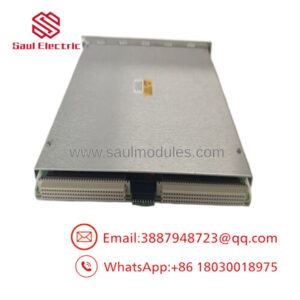
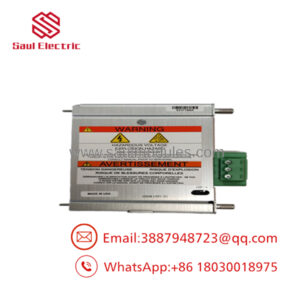
The Bently Nevada 146031-01 is the 10Base-T/100Base-TX Rear I/O Module designed for the 3500/22M Transient Data Interface (TDI). Installed behind the TDI module in Slot 1 of the 3500 rack, it provides the physical Ethernet connection between the machinery protection system and host applications such as System 1 Machinery Health Management Software.
To be honest, this part is one of the most frequently misidentified components in the 3500 family. The 146031-01 is not the communication processor. It is only the rear I/O module. The communication intelligence resides in the 3500/22M TDI (138607-01 or 138607-02). If the front module has failed, replacing only the rear I/O will not restore communications.
Key Technical Specifications
| Parameter | Value |
|---|---|
| Manufacturer | Bently Nevada |
| Part Number | 146031-01 |
| Product Type | Transient Data Interface Rear I/O Module |
| Compatible Front Module | 3500/22M TDI (138607-01 / 138607-02) |
| System Platform | 3500 Machinery Protection System |
| Ethernet Interface | 10Base-T / 100Base-TX |
| Connector Type | RJ-45 |
| Installation Position | Rear I/O, Slot 1 |
| Primary Function | Ethernet communication interface |
| Host Software | System 1 Machinery Health Management |
| Configuration Software | 3500 Rack Configuration Software |
| Operating Temperature | -30°C to +65°C |
Application Scenarios & The “Trench” Experience
The rack was healthy.
Every monitor reported OK.
Yet the control room couldn’t communicate with the machinery protection system.
The maintenance crew replaced the network switch.
Then the Ethernet cable.
Finally, someone inspected the rear of the rack.
The actual failure was a damaged 146031-01 rear I/O module. Years of vibration had weakened the RJ-45 connector solder joints. A fifteen-minute replacement restored communications immediately.
Typical Applications
Power Generation – Steam and Gas Turbine Protection –
Provides Ethernet communication between the 3500 rack and System 1 for turbine condition monitoring.
Oil & Gas – Compressor Protection Systems –
Transfers steady-state and transient vibration data to predictive maintenance software.
Petrochemical Plants – API 670 Machinery Protection –
Supports rack configuration, diagnostics, event logging, and waveform acquisition through Ethernet.
Pipeline Compressor Stations – Remote Asset Monitoring –
Allows centralized engineering workstations to monitor compressor health over industrial Ethernet.
Industrial Manufacturing – Predictive Maintenance Networks –
Connects multiple 3500 racks to plant-wide machinery health management systems.
Field Replacement Example
A petrochemical facility lost communication with three compressor monitoring racks after an electrical surge.
The 3500/22M TDI completed self-diagnostics successfully.
Every vibration monitor remained operational.
Inspection identified a damaged Ethernet interface on the 146031-01. Replacing only the rear I/O module restored network communication without replacing the much more expensive TDI processor, reducing repair costs and shortening the outage.
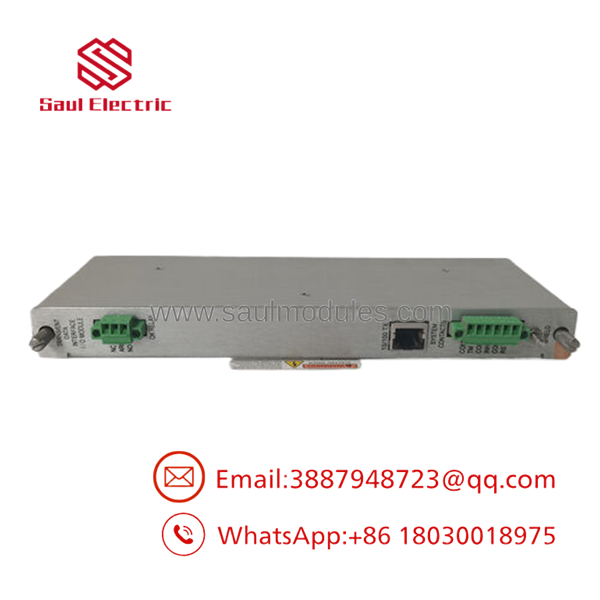
- 146031-01
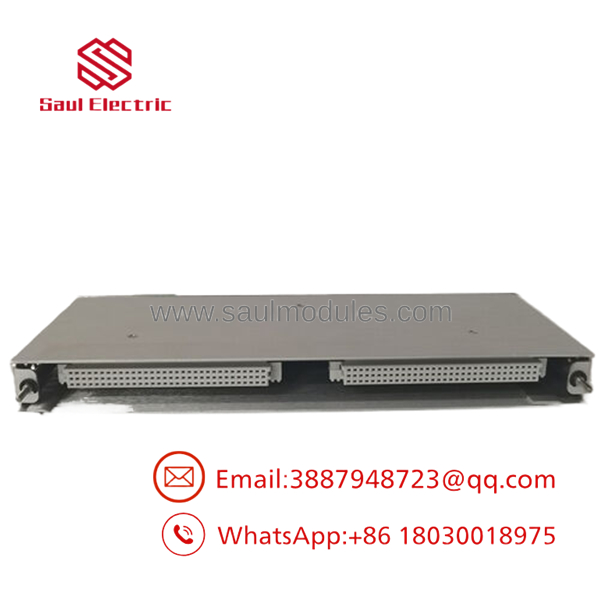
- 146031-01
Transparency SOP: Quality Assurance & Testing
We don’t just ship boxes; we test them on actual Bently Nevada 3500 racks.
1. Inbound Inspection
- Verify OEM labels, serial numbers, and hardware revision.
- Inspect the RJ-45 connector for wear, bent contacts, or cracked solder joints.
- Examine the PCB for overheating, corrosion, or unauthorized repairs.
2. Live Rig Testing
- Install the module with a compatible 3500/22M TDI.
- Verify successful rack initialization.
- Confirm Ethernet link status.
- Test communication with 3500 Rack Configuration Software and System 1.
3. Electrical Parameter Checks
- Verify Ethernet signal integrity.
- Check communication LEDs.
- Perform continuous data transmission testing.
4. Hardware Verification
- Record hardware revision.
- Verify compatibility with the installed TDI module.
- Archive communication test results.
5. Final QC & Anti-Static Packaging
- Complete a full communication test.
- Package in ESD-safe materials.
- Protect the RJ-45 connector during shipment.
- Maintain complete inspection records.
The Veteran’s Tech Trap Guide
⚠️ Don’t confuse the rear I/O module with the TDI.
The 146031-01 provides the physical Ethernet connection. The 3500/22M TDI performs all communication processing. Replacing the wrong component wastes both time and budget.
❗ The module always belongs in Slot 1.
The 3500/22M TDI and 146031-01 are installed adjacent to the rack power supplies. Installing the assembly elsewhere in the rack will prevent normal operation.
⚠️ Inspect the RJ-45 connector carefully.
Repeated cable changes and cabinet vibration can crack solder joints or loosen the connector. Many “network failures” originate at the connector—not inside the TDI.
❗ Check grounding before replacing hardware. Trust me.
Communication failures after thunderstorms are often caused by poor cabinet grounding or Ethernet surge damage rather than a defective I/O module.
Frequently Asked Questions (FAQ)
Q1: What is the primary function of the 146031-01?
A: It is the 10Base-T/100Base-TX Rear I/O Module used by the 3500/22M Transient Data Interface, providing Ethernet connectivity between the 3500 rack and external software.
Q2: Can the 146031-01 operate without a 3500/22M TDI?
A: No. It is only the rear interface assembly. It must be installed together with a compatible 3500/22M TDI front module.
Q3: Which communication interface does this module provide?
A: The module supports 10Base-T and 100Base-TX Ethernet through an RJ-45 connector, allowing communication with System 1 Machinery Health Management Software and the 3500 Rack Configuration Software.
Q4: Is it interchangeable with the fiber-optic version?
A: No. The 146031-01 is the copper Ethernet version. Applications requiring fiber networking use the 146032-01 100Base-FX Fiber Optic I/O Module instead.
Q5: Is the module hot-swappable?
A: No. Replacement should be performed during a planned maintenance outage. Removing the rear I/O module while the rack is operating interrupts communications and may require the TDI to reinitialize after installation.
Q6: Why is surplus inventory less expensive than buying directly from the OEM?
A: Most surplus modules come from plant expansions, modernization projects, or unused maintenance inventory. The lower cost reflects procurement channels rather than reduced functionality. The important questions are whether the module has passed communication testing, whether the hardware revision is documented, and whether the supplier provides traceability.
Q7: What warranty is typically available?
A: Most reputable industrial automation suppliers provide a 12-month warranty on professionally tested surplus or refurbished Bently Nevada 146031-01 modules. Before purchasing, request the Ethernet communication test report, hardware revision record, and serial-number verification.

 Start Chat


