





Description
Product Introduction & Engineering Value
For engineers integrating machinery protection racks with legacy distributed control systems (DCS), running long serial communication lines through noisy industrial spaces is a familiar pain point. Standard RS-232 connections drop signal strength quickly over short distances and are highly susceptible to electromagnetic interference (EMI).
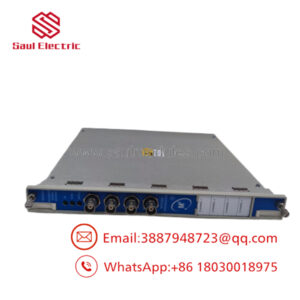
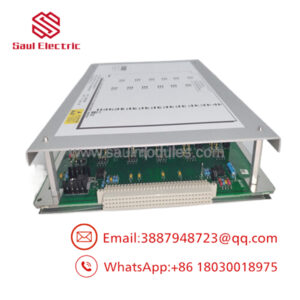
The Bently Nevada 133323-01 I/O module solves this distance and noise vulnerability by bringing rugged RS-485 physical layer communication to the 3500/92 gateway platform. Slotted directly into the rear of the 3500 rack behind the 3500/92 main module, this card provides a multi-drop RS-485 Modbus serial connection. It allows you to daisy-chain multiple racks over long distances directly to your master control terminal, maintaining clean data transmission without requiring external serial signal converters.
Technical Specifications
- Module Interface Type: Serial RS-485 Modbus I/O Module
- Host Compatibility: Exclusively mounts behind the Bently Nevada 3500/92 Gateway Module
- Physical Communication Port: 9-pin D-SUB serial connector (Modbus port)
- Supported Protocol: Modbus RTU (Serial) protocol
- Typical Power Consumption: 5.6 Watts when mated with the 3500/92 main processor card
- Operating Temperature: -30°C to +65°C (-22°F to +150°F)
- Status Indicators: LED indicators (on matching front module) for Transmit (TX) and Receive (RX) diagnostics
- Configuration Utility: Uses the 3500 Configurable Modbus Register Utility to map specific register coordinates
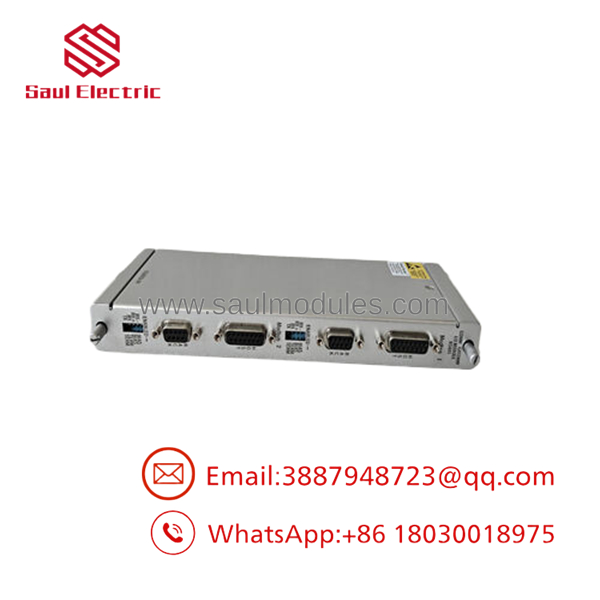
- 3500/92 133323-01
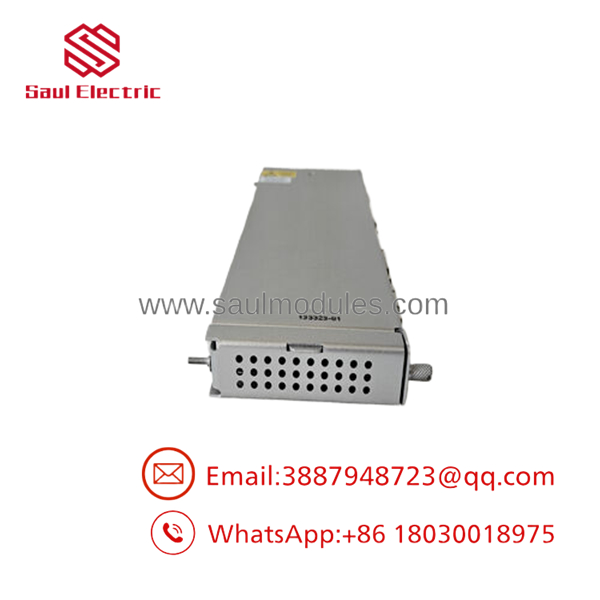
- 3500/92 133323-01
Field Application & The “Trench” Experience
The “Trench” Story
A regional water treatment facility had an older 3500 protection rack sitting next to a massive, high-voltage variable frequency drive (VFD) enclosure. The system used an RS-232 serial module to stream bearing temperatures back to the main control room. The high-frequency noise from the VFD constantly corrupted the serial packets, showing false “communication fail” faults on the SCADA screen. We removed the RS-232 card and slid in the 133323-01 RS-485 I/O module in its place. Because RS-485 uses differential signaling, it successfully rejected the EMI from the VFD. The serial link cleared up immediately, and the plant was able to run clean Modbus telemetry over 800 feet of twisted-pair cable without a single dropped packet.
Specific Niche Applications
- Remote Gas Pipeline Compressor Stations: Transmitting multi-point vibration and status registers over long-distance serial links back to remote terminal units (RTUs).
- High-Noise Offshore Drilling Platforms: Routing critical alarm status points from thruster-room 3500 racks to central monitoring hubs over shielded RS-485 networks.
- Hydroelectric Generator Bearing Thermal Scans: Collecting high-channel static temperature data and feeding it directly into PLC register maps over multi-drop Modbus lines.
Transparency SOP: QA & Testing
Before this 133323-01 module leaves our facility, our testing technicians put it through a complete functional verification protocol:
- Visual Pin Verification: We inspect the backplane connector pins under a 10x microscope to ensure zero physical alignment issues or cold solder joints.
- RS-485 Differential Voltage Test: The card is paired with a master 3500/92 module in our live test rack. We run an active diagnostic sweep to verify that the differential voltages on the A and B communication lines conform strictly to RS-485 standards.
- Loopback & Packet Stress Test: We run continuous Modbus query loops at multiple baud rates (up to 19.2 kbps) using a dedicated simulator. The card must achieve a 100% packet transmission success rate over a simulated 24-hour run before packaging.
- Bypass and OK Relaying: We verify that diagnostic register updates propagate through the backplane cleanly and match the front-facing LED statuses.
The Veteran’s Tech Trap Guide
- ⚠️ The Configuration Registration Lock: When you replace an older 3500/90 serial card with the 3500/92 using this 133323-01 I/O card, your old Modbus registers will not map automatically. The 3500/92 requires you to explicitly configure registers using the Configurable Modbus Register Utility in the 3500 Rack Configuration Software. Skipping this step means your host DCS will read zero values or throw address errors immediately after installation.
- PRO TIP (Line Termination): Because RS-485 is a differential daisy-chain network, you must terminate the end of the physical line. If the 133323-01 sits at the physical end of your serial run, you must enable the onboard termination resistors (typically a 120-ohm resistor switched on via the terminal jumpers). Leaving the line unterminated causes signal reflection, which triggers random packet corruption.
- ⚠️ Do Not Hot-Plug the Rear Card: While the front-facing 3500/92 module can technically be pulled under rack power, you should never hot-swap or pull the rear 133323-01 I/O module while the 3500 rack is powered on. Doing so risks shorting the raw power lines on the backplane connector, which can blow the internal fuses on your rack’s power supply.
Dynamic FAQ
- Q: Is the 133323-01 a standalone module?
- A: No. The 133323-01 is strictly the rear-insertable I/O card. It must be paired with the front-facing 3500/92 Communication Gateway processor module to work.
- Q: Can I run Ethernet through this specific I/O module?
- A: No. The 133323-01 only provides the serial RS-485 Modbus interface on the 9-pin D-SUB port. If your plant network requires Modbus TCP over Ethernet, you must use a different version of the I/O card (such as the 136188-02, which features both Ethernet and serial ports).
- Q: What cable do I need to connect to the 9-pin serial port?
- A: This module uses a standard RS-485 serial connection via a 9-pin D-SUB connector. If your field wiring uses bare, twisted-pair cables, you will need a 9-pin D-SUB serial connector adapter (or a “Y” serial converter, Bently part number 139036-01) to break out the connections.
- Q: How many RS-485 devices can I daisy-chain using this module?
- A: The standard RS-485 protocol allows up to 32 unit loads on a single network segment without a repeater. Your host PLC or DCS can easily poll multiple 133323-01 cards sequentially on the same serial loop using unique Modbus node IDs.

 Start Chat


