





Description
Product Introduction
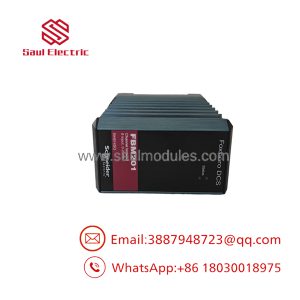
The Foxboro FBM203 (P0914SV) is an 8-channel Resistance Temperature Detector (RTD) input module designed for the Foxboro I/A Series 200 Field Control Processor (FCP) architecture. Operating within Foxboro DCS enclosures, it converts low-level micro-ohm resistance variations from field-mounted RTD sensors directly into high-accuracy digital temperature values used in real-time control loops.
Engineered with individual channel conditioning and delta-sigma A/D conversion, the FBM203 accepts inputs from standard 2-wire, 3-wire, or 4-wire Platinum, Nickel, or Copper RTD configurations. Its rugged hardware design features channel-to-ground isolation to eliminate common-mode noise, shielding sensitive DCS processor logic from severe industrial electromagnetic interference.
Key Technical Specifications
| Parameter | Specification / Value |
| Part Numbers | P0914SV (Base Module), P0914TG (RoHS Compliant) |
| Input Channels | 8 Analog Input Channels |
| Supported Sensors | Platinum (100Ω, 200Ω, 500Ω, 1000Ω), Nickel (120Ω), Copper (10Ω) |
| Wiring Configurations | 2-wire, 3-wire, or 4-wire RTD input wiring |
| A/D Conversion | Delta-Sigma 15-bit resolution per channel |
| Update Rate | 250 ms for all 8 channels |
| Power Consumption | 1.5 W maximum from 24V DC Fieldbus Power |
| Channel Isolation | 1500V AC Galvanic Isolation (Channel-to-Bus / Channel-to-Earth) |
| Operating Temperature | -20°C to +70°C (-4°F to +158°F) |
Application Scenarios & The “Trench” Experience
When an analog input card drops offline in a 24/7 continuous process unit, boiler or reactor temperature loops instantly fall back to manual control or trip process safety limits. In our field experience, RTD module failures on Foxboro racks stem from field cable lightning surges, ground loops from corroded thermowell shields, or thermal fatigue after 15+ years of continuous operation.
- Oil & Gas Distillation Columns – Overhead Temperature Monitoring – Tracks multi-point RTD arrays inside fractionation towers to regulate reflux valve positioning.
- Power Generation Steam Boilers – Bearing & Turbine Temp Sensing – Monitors multi-wire Platinum RTDs embedded in heavy rotating equipment housings.
- Chemical Batch Reactors – Exothermic Temperature Interlocks – Feeds high-precision temperature measurements to Field Control Processors (FCP270/FCP280) for feed interlock execution.
Field Replacement Case: A coastal refinery experienced an emergency alarm cascade when an aging FBM203 card in an outdoor termination enclosure lost two RTD channels due to a severe salt-air moisture ground fault. The controller flagged a bad I/O status, freezing a critical heat exchanger bypass loop. Dropping in a fully bench-tested surplus FBM203 replacement card onto the baseplate restored full 8-channel RTD scanning in under 10 minutes without shutting down the rack or restarting the FCP.
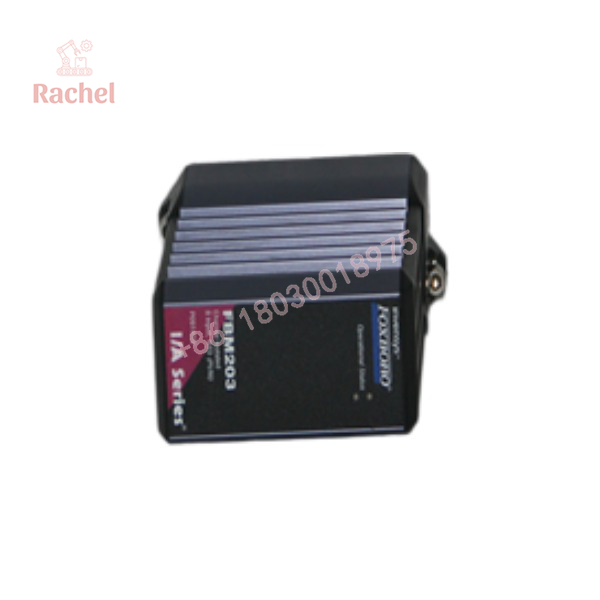
FBM203
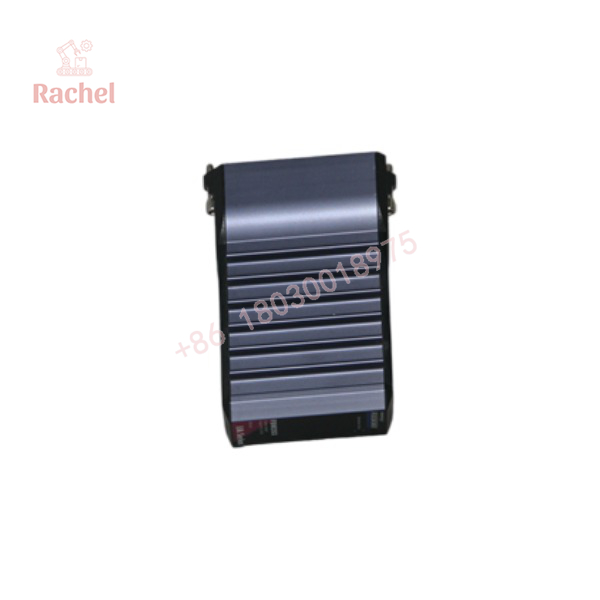
FBM203
Transparency SOP: Quality Assurance & Testing
We do not just check for power LEDs; every Foxboro FBM module undergoes strict validation on genuine Foxboro I/A Series testing rigs:
- Inbound Visual & Pin Check: Inspect baseplate connector contacts, guide rails, and PCB trace lands for physical corrosion or heat stress.
- Backplane Bus Handshake: Seat card in a Fieldbus Baseplate connected to a live Control Processor to confirm successful hardware address assignment and bootup.
- 8-Channel Resistance Precision Test: Inject calibrated precision resistance values across all 8 channels simultaneously to verify A/D conversion accuracy against OEM tables.
- Wire-Fault & Open-Circuit Audit: Simulate broken RTD lead wires and shorted sensor terminals to confirm immediate diagnostic status reporting in software.
- Final Clean & Anti-Static Packaging: Wrap in static-shielding bags with custom foam casing for safe global transport.
The Veteran’s Tech Trap Guide (Crucial Value-Add)
- ⚠️ Verify Termination Assembly (TA) Cable Match: Ensure your field wiring connects through the correct Termination Assembly (such as the P0916BX or P0916BY). Mixing up TA cable types or using non-isolated cable assemblies will introduce lead-wire resistance errors on 3-wire RTD channels.
- ❗ Check 2-Wire vs. 3-Wire DIP Settings / Software Config: Ensure the software block configuration in ICC or IEE matches the physical wiring on the field terminals. Configuring a channel for 4-wire RTD in software while wiring it as a 2-wire sensor will output a perpetual out-of-range high error code.
- ⚠️ Never Force Module Insertion: Baseplate DIN connectors can be damaged if misaligned. Align the card rails smoothly into the Foxboro baseplate and push firmly until the top and bottom mounting screws engage hand-tight.
- ❗ Check Shield Grounding at the TA: Always terminate sensor cable shields strictly at the Termination Assembly ground bar. Double-grounding shields at both the thermowell head and the TA creates ground loops that introduce thermal reading drift.
Frequently Asked Questions (FAQ for Conversion)
Q: Is the Foxboro FBM203 hot-swappable in an active baseplate?
A: Yes. The FBM203 supports hot-swapping (online replacement) while the 24V DC Fieldbus power is active, provided you follow proper DCS ESD safety procedures.
Q: What is the primary difference between P0914SV and P0914TG?
A: P0914SV is the standard original manufacturer part number, while P0914TG designates the RoHS-compliant version of the FBM203 module. Both perform identically in system racks.
Q: Does the FBM203 require separate external power for field sensors?
A: No. The FBM203 supplies its own low-level current excitation signals directly through its input channels to power the connected RTD elements.
Q: Can I mix different types of RTDs (e.g., Pt100 and Cu10) on the same FBM203 module?
A: Yes. Each of the 8 channels can be individually configured in software for different RTD types and temperature ranges.
Q: Why buy pre-tested surplus Foxboro modules over long factory lead times?
A: Factory lead times for DCS hardware can extend for weeks or months. Sourcing tested surplus FBM203 modules provides an immediate drop-in replacement, preventing costly plant downtime during unplanned hardware outages.

 Start Chat


