





Description
Product Introduction & Engineering Value
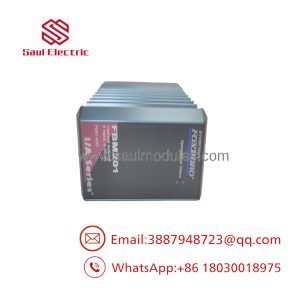
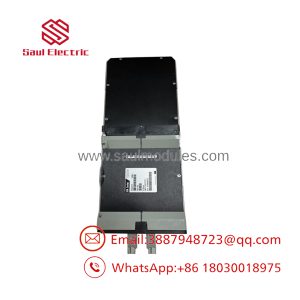
Running short on reliable analog inputs during a planned outage is a common headache in process plants. The FBM211 solves that by packing sixteen group-isolated 0-20 mA channels into a single DIN-rail or baseplate slot that talks directly to the FCP270/FCP280 over the 2 Mbps Module Fieldbus.
Each channel accepts 2-wire transmitters, self-powered 20 mA sources, or line-monitored discrete signals with end-of-line resistors. Isolation between groups of eight channels and the module logic keeps ground loops and noise from propagating into the control system. The module is a direct drop-in for existing 200 Series installations and requires no field calibration.
Technical Specifications
| Parameter | Value |
|---|---|
| Number of Channels | 16 (group isolated, 8 + 8) |
| Input Range | 0 to 20.4 mA DC (current limited to 33 mA) |
| Accuracy (incl. linearity) | ±0.03% of span |
| Temperature Coefficient | ±50 ppm/°C |
| A/D Conversion | Multiplexed Sigma-Delta |
| Update Rate | New readings every 100 ms (configurable integration period) |
| Input Impedance | 61.9 Ω nominal |
| Common Mode Rejection | >100 dB at 50/60 Hz |
| Normal Mode Rejection | >35 dB at 50/60 Hz |
| Power Supply | 24 V DC +5% / –10% (redundant) |
| Power Consumption | 7 W max (11 W max with internal transmitter power) |
| Operating Temperature | –20 to +70 °C (–4 to +158 °F) |
Field Application & The “Trench” Experience
Last year a Gulf Coast refinery lost two consecutive FBM211 modules on a crude unit preheat train during a thunderstorm. The modules were feeding 16 flow and level transmitters into an FCP280. Overnight we staged a New Surplus pair, verified the Termination Assembly part numbers matched the existing field cables, and hot-swapped both cards during a brief controlled hold. All 32 channels came back within the same scan cycle; the only follow-up was confirming the Rate-of-Change limits still matched the original configuration.
Typical niche uses include:
- Multi-point differential pressure monitoring across catalyst beds in a hydrocracker
- Dense 4-20 mA transmitter banks on a continuous polymerization reactor train
- Line-monitored discrete status inputs from safety interlock panels that still need to share the same Fieldbus segment
Transparency SOP: QA & Testing
- Visual and mechanical inspection for bent pins, cracked housings, and label integrity.
- Full power-up on a test baseplate with dual 24 V supplies; verify both power LEDs and Fieldbus communication.
- Channel-by-channel current injection from 0 to 20.4 mA using a calibrated source; confirm readings stay inside ±0.03% of span.
- Isolation resistance check between channel groups and logic ground.
- Extended burn-in under elevated temperature while monitoring for any drift or communication dropouts.
- Final functional verification against the original Foxboro application program settings (conversion time and rate-of-change limits).
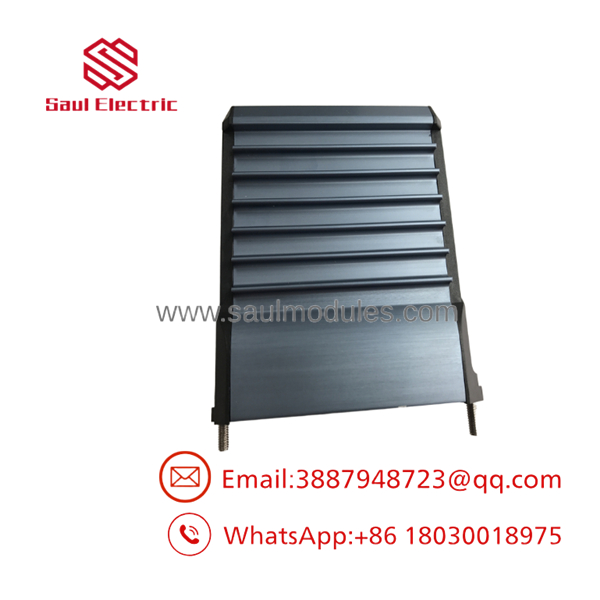
FBM211
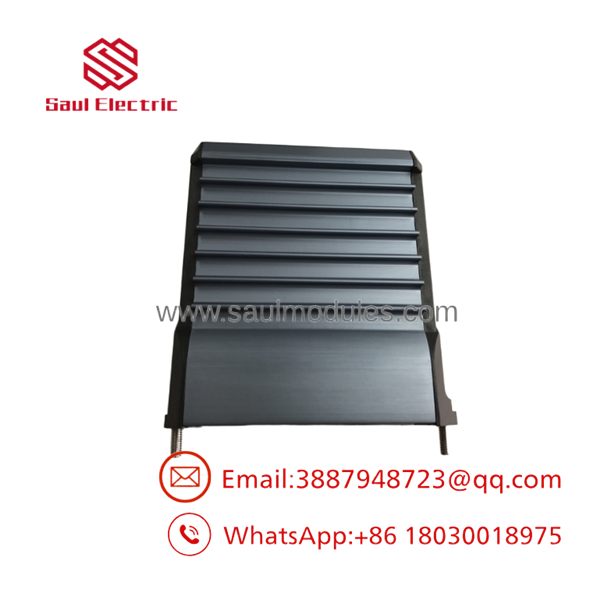
FBM211
The Veteran’s Tech Trap Guide
⚠️ Termination Assembly mismatch – The FBM211 is not pin-compatible with every TA. Confirm the exact part number (commonly P0916BT / P0916BU family) before you cut or re-terminate field wires. A wrong TA can leave you with open circuits or reversed polarity that only shows up after the unit is online.
PRO TIP: Group isolation means the first eight channels share a common reference and the second eight share another. If you mix transmitter power sources across the group boundary without checking the TA wiring diagram, you can create a ground loop that looks like random noise on half the module.
⚠️ Firmware / application program version – Older FBM211 units may carry an earlier analog-input application program. After installation, always compare the configured Conversion Time and Rate-of-Change Limits against the plant’s standard; a mismatch can cause unexpected filtering or rate-limit trips that are hard to diagnose under load.
Dynamic FAQ
Q: Is the FBM211 still supported on current Foxboro Evo / FCP280 systems? A: Yes. It runs on the standard 2 Mbps Module Fieldbus and is fully compatible with FCP270, FCP280, and later Foxboro Evo control processors when the correct application program is loaded.
Q: Can I use the same Termination Assembly that was wired for an older FBM01? A: No. The FBM211 requires its own specific TAs. Using a legacy 100-Series TA will result in incorrect channel mapping or open inputs. Always match the TA part number listed for the .
Q: Does the module require periodic calibration? A: Factory calibration is permanent. No field calibration of the module or Termination Assembly is required or possible.
Q: What is the difference between a standard and the Compact ? A: Functionally identical analog performance. The Compact version has a smaller form factor and is intended for denser DIN-rail installations with the Compact 200 Series subsystem; the electrical and isolation specifications remain the same.
Q: Are New Surplus units genuine Schneider Electric / Foxboro product? A: Yes. Every unit we supply is original OEM material that has passed the full functional and environmental test sequence described above and carries the original labeling and serial number.
Q: What warranty coverage applies? A: Standard 12-month warranty against defects in material and workmanship from the date of shipment, covering both New Surplus and fully tested refurbished units.

 Start Chat


