





Description
Product Introduction
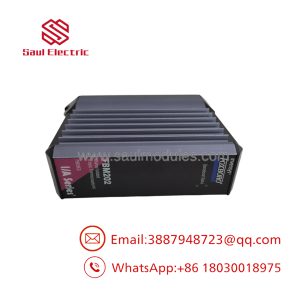
The Foxboro FBM224 (Part Number P0926GG) is a 4-port serial communication Fieldbus Module engineered for Foxboro I/A Series and EcoStruxure DCS platforms. Rather than interfacing raw analog or discrete field wiring, the FBM224 serves as an intelligent subsystem bridge, bringing serial data from third-party PLCs, Variable Frequency Drives (VFDs), weigh scales, power monitors, and gas chromatographs directly into the DCS database.
Each of the 4 ports operates independently and can be software-configured for RS-232, RS-422, or RS-485 physical communication standards using Modbus RTU, Modbus ASCII, or custom serial driver protocols. Onboard processing buffers the host Control Processor (CP) from managing serial polling overhead, while heavy-duty optical isolation protects host 200 Series baseplate backplane electronics from severe ground potential differences and field line noise.
Key Technical Specifications
| Parameter | Value |
| Manufacturer | Foxboro (Invensys / Schneider Electric) |
| Part Number | FBM224 / P0926GG (RoHS Equivalent: RH926GG) |
| Series | Foxboro 200 Series Subsystem |
| Communication Ports | 4 independently isolated serial ports |
| Physical Interfaces | RS-232, RS-422, or RS-485 (Software/TA selectable per port) |
| Supported Protocols | Modbus RTU Master/Slave, Modbus ASCII, Custom Serial Drivers |
| Baud Rates | Configurable up to 38.4 kbps per port |
| Isolation Voltage | 1500V AC port-to-bus and port-to-port isolation |
| Power Dissipation | 4.5W maximum from baseplate power rails |
| Operating Temp Range | -20°C to +70°C (-4°F to +158°F) |
Application Scenarios & The “Trench” Experience
The Trench Story
It is 02:50 AM during a plant restart at an oil refinery. A critical bank of 12 VFDs governing crude charge pumps loses communication with the DCS main console. The pump motors are running locally, but speed reference and trip feedback show “COMM TIMEOUT” on the operator graphics. Field checks show the VFDs are healthy, but Port 1 on an aging FBM224 serial module suffered an RS-485 transceiver latch-up after a lightning strike nearby, killing Modbus polling to the drive line. Replacing the module with a bench-tested FBM224 (P0926GG) unit restores Modbus RTU polling instantly, allowing the operator to adjust charge pump speeds and stabilize crude feed.
Target Application Scenarios
- Motor & Drive Integration: Polls speed, current, torque, and fault diagnostics from VFD banks and intelligent Motor Control Centers (MCCs) via RS-485 Modbus RTU.
- Analyzer & Subsystem Data Acquisition: Ingests complex multi-variable data streams from field gas chromatographs, tank gauging systems, and mass flowmeters.
- Package Unit PLC Interfaces: Connects packaged equipment controllers (skid-mounted compressors, water treatment systems, chillers) running Modbus serial directly to DCS control logic.
Field Case Study
A glass manufacturing facility in Pennsylvania experienced chronic serial line lockups between their Foxboro 200 Series DCS and a furnace temperature controller package. Diagnostic traces revealed damaged optocoupler stages on Port 2 of the installed serial card. A pre-tested replacement FBM224 module was delivered via morning express. The site engineer put the serial software driver blocks into manual bypass, hot-swapped the module on the live baseplate, and re-established stable 19.2k baud Modbus polling in under 15 minutes.
Transparency SOP: Quality Assurance & Testing
We don’t just ship boxes; we test them on actual Foxboro 200 Series racks. Every / P0926GG module undergoes a strict 5-stage workbench validation process prior to dispatch:
- Inbound Visual & Mechanical Inspection: Detailed inspection under high magnification to check PCB traces, edge-connector gold plating, housing latch mechanisms, and inspect for thermal stress on RS-485 driver chips.
- Cold Power Rail Diagnostics: Resistance checks across internal bus rails, power conversion circuitry, and serial transceiver ICs to rule out hidden component shorts.
- Live Baseplate Bus Handshake: Module is slotted into a live Foxboro 200 Series baseplate connected to a Control Processor to confirm bus address recognition, module handshake, and proper status LED routines.
- 4-Port RS-232 / RS-485 Modbus Loopback Test: Dedicated Modbus slave simulators are wired to all 4 ports simultaneously. We run high-rate polling scripts across RS-232, RS-422, and RS-485 configurations, verifying zero packet loss, correct baud rate negotiation, and error-free register updates in Foxboro I/A system software.
- Anti-Static ESD Packaging: Cleared modules receive contact cleaning, thorough drying, and are sealed in heavy-duty anti-static ESD shielding bags prior to custom foam packaging.
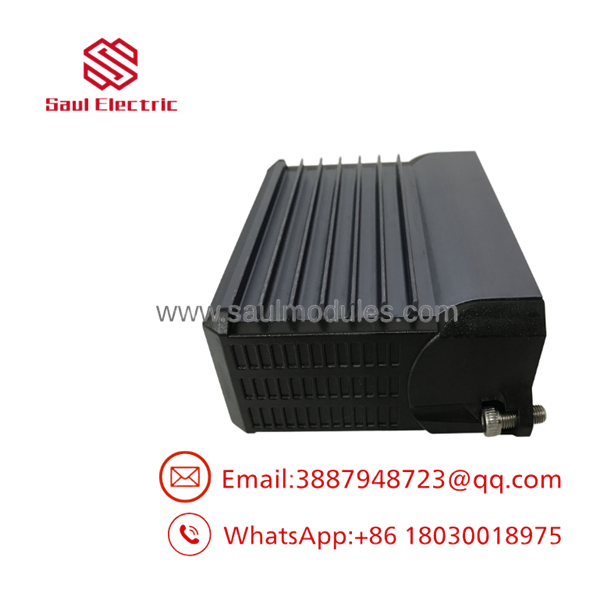
FBM224
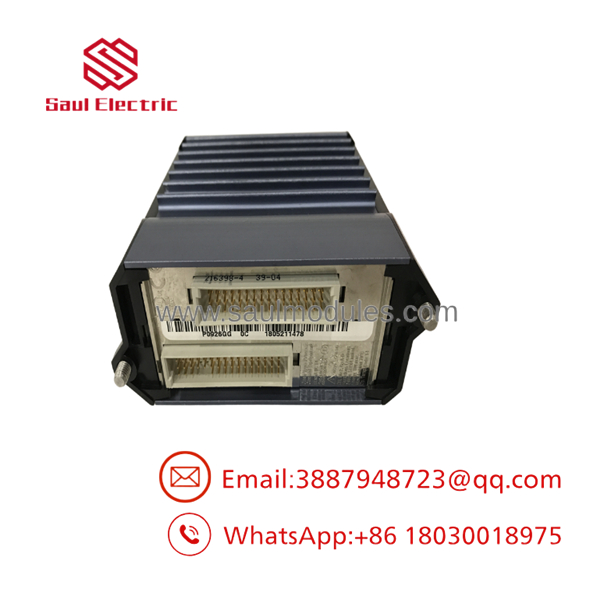
FBM224
The Veteran’s Tech Trap Guide
- ⚠️ Do Not Confuse (4-Port Serial) with FBM230 / FBM231 (Ethernet / Fieldbus Interfaces)!
While all sit in standard 200 Series slots, the is strictly a Serial (RS-232/422/485) interface card. Attempting to use an slot for Modbus TCP/IP or Ethernet communication will fail—Ethernet-based integration requires an FBM230/FBM232 card instead.
- ❗ Verify Termination Assembly (TA) & Pinout Matching.
RS-232, RS-422, and RS-485 modes require the correct matching Termination Assembly (such as P0926HJ or equivalent) and proper jumper/wiring configurations. Always verify RS-485 2-wire vs. 4-wire termination jumper settings on the TA before powering the loop.
- ⚠️ Always Install RS-485 Line Termination Resistors.
When running long RS-485 serial buses (up to 4,000 ft), line reflections can corrupt data frames. Ensure a 120 Ω termination resistor is installed at both physical ends of the RS-485 bus to maintain clean waveform edges at higher baud rates (19.2k / 38.4k).
- ❗ Bypass Serial Driver Software Blocks Before Hot-Swapping.
While Foxboro 200 Series baseplates fully support Live Insertion and Removal (Hot Swap), pulling an module immediately halts serial polling across all 4 ports, setting all linked database tags to “BAD” quality status. Always disable or bypass associated ECB (Equipment Control Block) drivers prior to card extraction.
Frequently Asked Questions (FAQ)
Q: Can I hot-swap the Foxboro module while the baseplate is powered?
A: Yes, Foxboro 200 Series baseplates support Hot Swap (Live Insertion and Removal). However, pulling the module halts serial communication on all 4 ports immediately. Place all affected ECB device driver blocks into manual bypass prior to extracting the module.
Q: What is the exact difference between part numbers , P0926GG, and RH926GG?
A: “” is the functional model designation used in DCS engineering documentation, “P0926GG” is the standard Foxboro hardware part number, and “RH926GG” is Schneider Electric’s RoHS-compliant (lead-free) hardware equivalent. and RH926GG are 100% functionally and mechanically interchangeable.
Q: Can each of the 4 ports run different baud rates and protocols simultaneously?
A: Yes. Each of the 4 ports on the operates as an independent serial channel. You can run Port 1 as RS-485 Modbus RTU at 19,200 baud, Port 2 as RS-232 ASCII at 9,600 baud, etc., depending on software configuration and TA wiring.
Q: What warranty covers these pre-tested modules?
A: Every ( / RH926GG) module sold includes a full 12-Month Functional Warranty. If the card experiences hardware failure under normal operating parameters within 365 days, we provide an immediate unit replacement or full credit.
Q: Why buy pre-tested surplus stock instead of ordering directly from Schneider Electric?
A: Factory lead times for specialized Foxboro 200 Series communication modules can stretch into weeks or months, and factory list pricing for mature hardware is high. Pre-tested surplus stock allows you to restore critical serial communication interfaces and plant subsystem links immediately at a fraction of the cost.

 Start Chat


