





Description
Core Product Summary
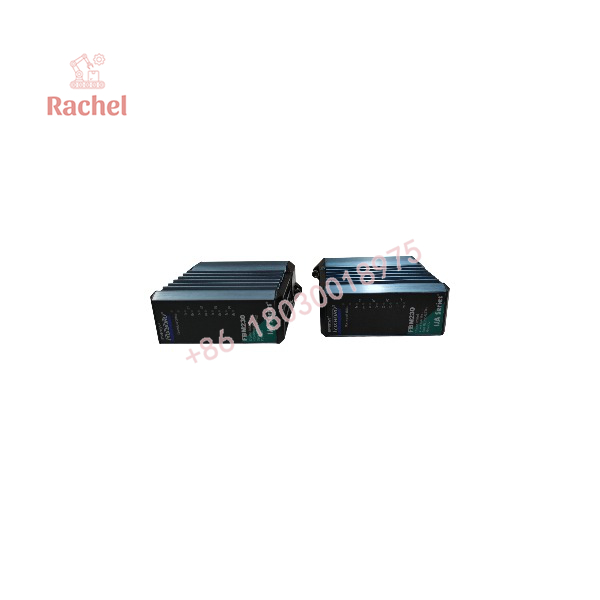
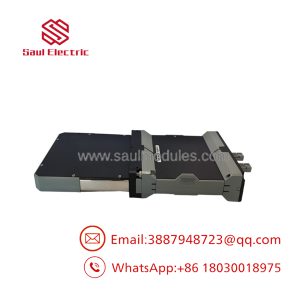
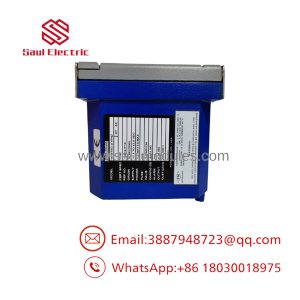
The FOXBORO FBM230 P0926GU is a Field Device System Integrator (FDSI) module designed to connect single-ported serial field devices to compatible Foxboro distributed control systems. It provides four independently configurable serial communication ports, each supporting RS-232, RS-422, or RS-485 physical interfaces.
The module acts as a bridge between third-party field devices and the Foxboro DCS database. Depending on the software driver installed, it can acquire field-device data, convert supported data types, and make the information available to control-system functions and operator displays. Supported configurations can also write data from the DCS to the connected devices.
The FBM230 is designed for integration with the Foxboro I/A Series and Foxboro Evo control architecture. It communicates with an associated Fieldbus Communication Module (FCM100E or FCM100Et) or Field Control Processor (FCP270 or FCP280) through the redundant 2 Mbps module Fieldbus.
Product identification
- Manufacturer: Foxboro, Schneider Electric
- Model: FBM230
- Manufacturer-listed module part number: P0926GU
- Product category: Field Device System Integrator module
- Number of serial ports: 4
- Physical interfaces: RS-232, RS-422, RS-485
- Communication driver: Downloadable, protocol-specific software driver
- System family: Foxboro I/A Series / Foxboro Evo
- Module architecture: Standard 200 Series Fieldbus Module
Key Technical Specifications
| Parameter | Manufacturer specification |
|---|---|
| Module model | FBM230 |
| Module part number | P0926GU |
| Product type | Field Device System Integrator (FDSI) module |
| Serial communication ports | 4 |
| Supported physical interfaces | RS-232, RS-422, RS-485 |
| Interface configuration | Independently configurable for each port |
| RS-232 / RS-422 direct connections | Up to 4 devices |
| RS-485 device capacity | Up to 64 devices across four ports, up to 16 per port |
| Maximum DCI data connections | 2,000 |
| Maximum ECB block period | 500 ms |
| Supported serial baud rates | 300, 600, 1,200, 2,400, 4,800, 9,600, 19,200, 38,400, 57,600, 115,200 baud |
| Serial framing | 8-bit characters; odd, even, or no parity; 1 or 2 stop bits |
| Data types | Signed/unsigned 2-byte or 4-byte integers, 4-byte IEEE single-precision floating point, binary values |
| Communication configuration | FDSI configurator and XML device configuration files, where required |
| Fieldbus communication | Redundant 2 Mbps module Fieldbus |
| Compatible communication interfaces | FCM100E, FCM100Et, FCP270, FCP280 |
| Redundant supply input | 24 VDC, +5% / −10% |
| Maximum power consumption | 7 W |
| Maximum heat dissipation | 7 W |
| Channel isolation | Galvanic isolation between each communication channel and earth |
| Isolation withstand test | 600 VAC for one minute, channel-to-earth test rating |
| Operating temperature, revisions A–L | −20 to +70°C |
| Operating temperature, revision M and later | 0 to +70°C |
| Storage temperature | −40 to +70°C |
| Relative humidity | 5–95%, non-condensing |
| Environmental classification | ISA S71.04 Class G3 |
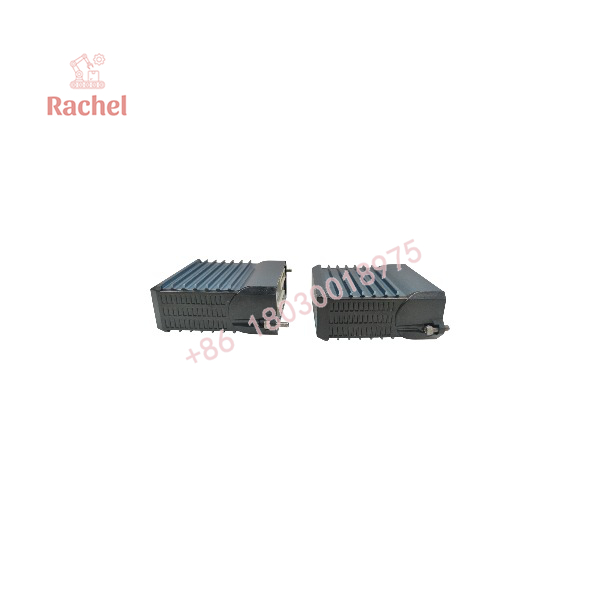
| Module dimensions | 102 × 45 × 104 mm |
| Height including mounting lugs | 114 mm |
| Approximate module weight | 284 g |
| Module mounting | Modular baseplate |
| Termination cable length | 1–5 m, depending on cable selection |
| Calibration | Module and termination assembly calibration not required |
Important: Device capacity and communication performance depend on the installed driver, device response times, data layout, and control-processor sizing. The 600 VAC withstand value is an isolation test rating, not a permissible operating voltage. The manufacturer’s safety guidance prohibits connecting the communication channels to circuits above 30 VAC or 60 VDC.
FBM230
FBM230
Engineering Selection Highlights
Four independently configurable serial ports
Each port can be configured for RS-232, RS-422, or RS-485. This enables a single module to interface with different compatible devices without requiring all four ports to use the same physical standard.
The interface must match the connected device’s electrical specification and wiring arrangement. The module does not automatically convert an unsupported protocol simply because the physical interface is compatible.
Support for multidrop RS-485 networks
The FBM230 can communicate with up to 16 devices per RS-485 port, for a stated maximum of 64 devices across four ports. The actual supported device count depends on the driver, polling requirements, network layout, and system performance.
RS-485 networks require suitable twisted-pair cabling, correct termination, and appropriate signal wiring. The termination assembly includes selectable termination resistors for RS-422 and RS-485 operation.
Downloadable protocol drivers
The FBM230 is a general-purpose hardware platform. A downloadable software driver configures the module to recognize the communication protocol used by the connected field device.
Standard drivers are available for supported integrations, and custom drivers may be developed for specific requirements. Driver availability and configuration must be confirmed for the intended device and system software release.
Bidirectional data exchange
The module can collect data from supported devices, convert it to Foxboro DCI data types, and store it for use by control-system functions and operator displays. Supported drivers can also write data to connected devices.
The specific read/write operations, data types, and addressing methods depend on the installed driver.
Channel isolation
Each serial communication channel is galvanically isolated and referenced to earth. This architecture helps separate field communication circuits electrically, but it does not authorize connection to hazardous voltages or replace proper wiring protection.
Redundant Fieldbus connectivity
The FBM230 communicates through the redundant 2 Mbps module Fieldbus. It can communicate over either path A or path B, allowing communication to continue over the active path if the other path fails or is switched at the system level.
This is Fieldbus-path redundancy; the FBM230 itself is the single-module variant. Applications requiring redundant serial interface modules should evaluate the FBM231.
System Compatibility and Integration Requirements
Foxboro control-system compatibility
The FBM230 integrates with compatible Foxboro I/A Series and Foxboro Evo architectures. The manufacturer’s specification identifies FCM100E, FCM100Et, FCP270, and FCP280 as the associated Fieldbus interface or processor options.
Before purchasing a replacement, verify the installed system release, module revision, baseplate, and controller configuration.
Serial interface matching
Select the physical interface for each connected device according to its documentation:
- RS-232: Direct point-to-point connection, typically through a DB-25 interface or suitable device cable.
- RS-422: Four-wire serial communication, with the appropriate transmit and receive wiring.
- RS-485: Twisted-pair serial communication, supporting multidrop networks within the specified device capacity.
Do not treat RS-232, RS-422, and RS-485 as interchangeable wiring standards. A device may require a converter or a specific cable arrangement even when the communication protocol is supported.
Protocol-driver requirements
The FBM230 requires a compatible driver for the target device’s protocol. Driver selection determines how the module interprets addresses, registers, data types, scan intervals, and read/write operations.
For Modbus or another third-party protocol, confirm that the required driver is available for the installed system and that the intended device is supported. Do not assume that every FBM230 installation includes the same protocol package.
Termination assembly
The manufacturer’s specification lists the following termination assemblies:
- P0926PA: Ring-lug termination assembly.
- RH926GH: Compression-screw termination assembly, superseding P0926GH.
The termination assembly provides the physical interface between the serial field wiring and the module’s termination cable. It includes RS-232 DB-25 connectors and configurable signal-routing switches, plus terminal connections and selectable termination resistors for RS-422/RS-485 wiring.
Confirm the termination assembly type and cable before ordering replacement parts.
Dimensions, Mounting, and Connection Notes
Module dimensions
| Parameter | Specification |
|---|---|
| Height | 102 mm |
| Height including mounting lugs | 114 mm |
| Width | 45 mm |
| Depth | 104 mm |
| Approximate weight | 284 g |
| Mounting platform | Standard 200 Series modular baseplate |
| Baseplate capacity | Four- or eight-module arrangement, depending on baseplate |
| Baseplate installation | DIN rail or supported 19-inch rack mounting |
| Termination assembly mounting | DIN rail, 32 or 35 mm |
| Termination cable lengths | 1, 2, 3, or 5 m options |
Termination cable part numbers
The manufacturer’s specification lists the following LSZH Type 5 termination cables:
| Cable length | Part number |
|---|---|
| 1 m | RH928AW |
| 2 m | RH928AX |
| 3 m | RH928AY |
| 5 m | RH928AZ |
These part numbers supersede P0928AW, P0928AX, P0928AY, and P0928AZ respectively.
Serial cable limits
- RS-232: Up to 15 m (50 ft) for custom cables compliant with the EIA RS-232 standard.
- RS-422 / RS-485: Up to 1,200 m (3,937 ft), subject to the applicable electrical and network conditions.
- Module-to-termination cable: 1–5 m, depending on the selected cable.
These distances describe different cable segments. Do not confuse the termination cable between the module and termination assembly with the field cable connecting the termination assembly to a device.
Installation checklist
- Confirm the module part number and revision.
- Verify the compatible baseplate and Fieldbus interface.
- Identify the serial standard required by each field device.
- Confirm the protocol driver and device configuration requirements.
- Select the correct termination assembly and termination cable.
- Configure RS-232 signal routing or RS-422/RS-485 termination as required.
- Verify baud rate, parity, stop bits, device addressing, and data mapping.
- Test communication and read/write behavior before returning the system to service.
Detailed Product Overview
How the FBM230 works
The FBM230 establishes serial communication with connected field devices through four configurable ports. The selected physical interface determines the electrical wiring standard, while the installed driver determines the protocol and data interpretation.
The driver retrieves supported device data, converts it to Foxboro DCI data types, and makes it available to the control station. Depending on the driver’s capabilities, the control system can also write values or commands to the connected device.
The manufacturer specifies up to 2,000 DCI data connections. These may represent analog values, individual digital points, or packed digital values, subject to the control-processor sizing guidelines and the capabilities of the driver. A control station may access FBM230 data as quickly as every 500 ms, but actual performance depends on the device type and data layout.
Port configuration and network topology
Each port is configured independently. Direct RS-232 and RS-422 connections support up to four devices in total when one device is connected to each port. RS-485 supports multidrop arrangements, with up to 16 devices per port and a stated maximum of 64 devices per module.
For RS-232, the termination assembly provides DB-25 connectors and signal-routing switches. These switches allow the signal pinout to be matched to different device requirements. For RS-422 and RS-485, the termination assembly provides terminal connections and selectable termination resistors.
Correct configuration requires more than matching the baud rate. Device addressing, parity, stop bits, register mapping, scan rate, and protocol-specific settings must also match the connected equipment.
Diagnostic indicators
LEDs on the module provide an indication of overall operational status and transmit/receive activity for each of the four serial ports. These indicators help distinguish a module-level issue from a port-level communication problem.
For troubleshooting, check module status, port activity, serial wiring, device power, interface configuration, and driver diagnostics. A lack of transmit/receive activity may indicate incorrect settings, wiring faults, an inactive driver, or an unresponsive field device.
Module replacement and maintenance
The FBM230 can be removed or replaced without removing the field-device termination cabling, power, or communication cabling, subject to the system’s approved maintenance procedure. The module and termination assembly do not require calibration according to the manufacturer’s specification.
Before replacement, record the module revision, driver configuration, port settings, and device mappings. After installation, verify communication on every used port and confirm that the control database receives the expected values.
Applications and System Role
The FBM230 is intended for applications that need to integrate serial field devices into a Foxboro DCS.
Typical applications include:
- Power and motor equipment: Integrating compatible protection relays, motor controllers, and equipment monitoring devices.
- Process instrumentation: Connecting supported serial instruments and analyzers.
- Flow and weighing systems: Acquiring data from compatible flow computers, weighing instruments, and related equipment.
- Packaged machinery: Integrating vendor-supplied controllers and serial device interfaces.
- Plant utility systems: Collecting data from supported auxiliary equipment.
- Third-party subsystem integration: Exchanging data between serial devices and the Foxboro control database.
- Legacy serial networks: Maintaining serial-device connectivity where compatible drivers and hardware remain supported.
The module’s role is communication and data integration. Process control logic, interlocks, alarms, and operator displays are configured within the wider Foxboro system.
Frequently Asked Questions
What is the FOXBORO FBM230?
The FBM230 is a four-port Field Device System Integrator module that connects compatible serial field devices to a Foxboro DCS. It supports RS-232, RS-422, and RS-485 physical interfaces.
What is the part number for the FBM230?
The manufacturer’s current product specification lists P0926GU as the module part number.
How many serial ports does the FBM230 have?
It has four independently configurable serial ports. Each port can be configured for RS-232, RS-422, or RS-485.
How many field devices can it support?
The specification states up to 64 devices across four RS-485 ports, with up to 16 devices per port. For direct RS-232/RS-422 connections, it supports up to four devices. Actual capacity depends on the driver, device response, data requirements, and control-system sizing.
Does the FBM230 support Modbus?
The FBM230 supports protocols through downloadable software drivers. Modbus support depends on the appropriate driver being available and configured for the target device and system release. Verify driver compatibility before ordering for a specific Modbus application.
What baud rates are supported?
The published serial rates are 300, 600, 1,200, 2,400, 4,800, 9,600, 19,200, 38,400, 57,600, and 115,200 baud. The usable rate also depends on the connected device and driver.
Which termination assembly is compatible?
The manufacturer lists P0926PA for ring-lug connections and RH926GH for compression-screw connections. The correct choice depends on the field wiring and installation arrangement.
What is the maximum communication cable distance?
The specification gives up to 15 m for compliant RS-232 custom cables and up to 1,200 m for RS-422/RS-485 field connections, subject to applicable electrical conditions. The module-to-termination cable has separate 1–5 m options.
Does the FBM230 support redundancy?
The FBM230 can use either path of the redundant module Fieldbus. However, the FBM230 is the single-module variant. For redundant serial integration hardware, evaluate the FBM231 and verify the system architecture.
Does the module require calibration?
No periodic calibration of the FBM230 module or termination assembly is required according to the manufacturer’s specification. Functional communication testing should still be included in maintenance and commissioning procedures.
What should be checked before ordering a replacement?
Verify the P0926GU module identification, hardware revision, baseplate compatibility, serial protocol driver, port settings, termination assembly, and termination cable. If the installation requires redundant serial hardware, confirm whether the FBM231 is the correct module instead.

 Start Chat


