





Description
Core Product Summary (Brand / Model / Key Attributes)
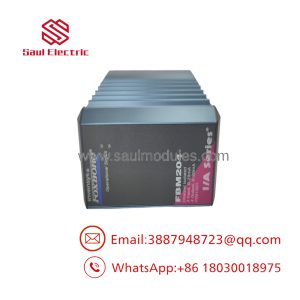
The Foxboro FBM241c is a channel-isolated Discrete I/O Module for the Foxboro I/A Series and EcoStruxure Foxboro DCS 200 Series subsystem. It provides eight discrete input channels and eight discrete output channels and can be used as a single module or as a redundant pair.
Inputs are configured for contact sensing (15–60 VDC, unprotected or fused). Outputs are externally powered switches rated 15–60 VDC at 2 A or 240 VAC at 5 A (via appropriate termination assembly). Channels are galvanically isolated. The module executes Discrete I/O or Ladder Logic application programs with configurable filtering, fail-safe options, and sustained or momentary outputs. It is rated for Class G3 harsh environments.
Key Technical Specifications
| Parameter | Specification |
|---|---|
| Product Type | Channel-Isolated Discrete I/O Module (Redundant-capable) |
| Input Channels | 8 discrete inputs (contact sense) |
| Output Channels | 8 discrete outputs (external-source switch) |
| Input Type | 15–60 VDC Contact (unprotected or protected/fused) |
| Contact Sensor – Open-Circuit Voltage | 24 VDC ±15 % |
| Contact Sensor – Short-Circuit Current | 2.5 mA maximum |
| Contact Sensor – On-State Resistance | 1.0 kΩ maximum |
| Contact Sensor – Off-State Resistance | 100 kΩ minimum |
| Output Type | Switch, external power source |
| Output Ratings (via TA) | 15–60 VDC at 2 A or 240 VAC at 5 A |
| Output Applied Voltage (DC) | 60 VDC maximum |
| Output Load Current | 2.0 A maximum |
| Output Off-State Leakage | 0.1 mA maximum |
| Isolation | Galvanic isolation, channel-to-channel and channel-to-ground (group isolation with external excitation) |
| Filter / Debounce Time | Configurable: None, 4 ms, 8 ms, 16 ms, or 32 ms |
| Application Programs | Discrete I/O or Ladder Logic |
| Configurable Options | Input Filter Time, Fail-Safe Configuration, Fail-Safe Fall-Back, Sustained or Momentary Outputs |
| Redundancy | Single module or redundant pair with common termination assembly |
| Environmental Rating | Suitable for Class G3 (harsh) environments |
| Typical Part Number | RH914WM / P0914WM |
Detailed Product Overview
The Foxboro FBM241c combines eight contact-sense discrete inputs with eight externally powered discrete outputs in a single channel-isolated module. Each input channel detects the open or closed state of a dry contact or solid-state switch. The module supplies a 24 VDC open-circuit wetting voltage and limits short-circuit current to 2.5 mA. On-state resistance must be ≤ 1 kΩ and off-state resistance ≥ 100 kΩ for reliable detection.
The eight output channels function as switches powered from an external source. Depending on the termination assembly, they support loads up to 2 A at 15–60 VDC or 5 A at 240 VAC. Channels are galvanically isolated from one another and from system ground, providing high noise immunity and protection against ground loops.
The module can operate as a standalone unit or as one half of a redundant pair. In redundant configuration the two modules share a single common termination assembly; control software manages failover. It executes the Discrete I/O or Ladder Logic application program, offering configurable input filtering, fail-safe behavior, fall-back values, and sustained or momentary output modes. The design is rated for Class G3 harsh industrial environments and communicates over the standard module Fieldbus.
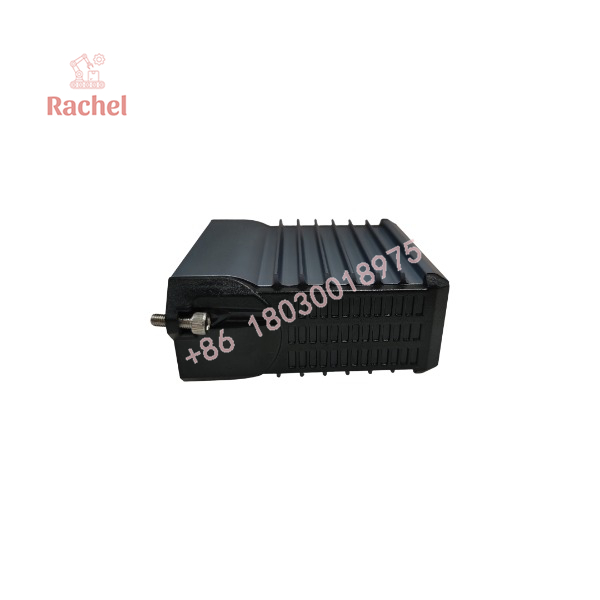
FBM241c
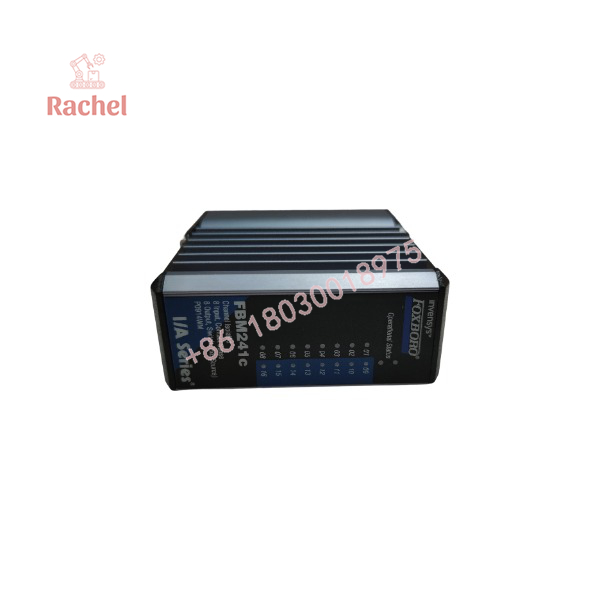
FBM241c
System Compatibility & Integration Requirements
| Item / Dependency | Verified Compatibility or Requirement | Practical Note |
|---|---|---|
| System Family | Foxboro I/A Series / EcoStruxure Foxboro DCS | 200 Series Fieldbus Module subsystem |
| Fieldbus | Module Fieldbus (redundant 2 Mbps) | Connects to FCM or FCP |
| Power Supply | Redundant 24 V DC (standard baseplate) | Module power only; field power is external for outputs |
| Termination Assembly | Contact-sense input + external-switch output TA (fused or non-fused options) | Determines protection and voltage/current ratings |
| Isolation Scheme | Channel isolation (group isolation with external excitation) | High noise immunity |
| Redundancy | Optional redundant pair | Requires redundancy adapter and common TA |
| Application Programs | Discrete I/O or Ladder Logic | Configurable filter, fail-safe, and output mode options |
| Environmental | Class G3 (harsh) | Suitable for industrial process areas |
Engineering Selection Highlights
- Choose FBM241c when contact-sense inputs and externally powered switch outputs are required in an 8+8 channel package.
- Confirm whether fused (protected) or non-fused input termination assemblies are needed for the application.
- Match the output termination assembly to the required voltage and current (DC 2 A or AC 5 A).
- Use the configurable filter times to balance noise rejection against response speed.
- Configure fail-safe and fall-back options to meet process continuity requirements.
- Select sustained or momentary output modes according to the actuator or interlock logic.
- For critical loops, install as a redundant pair sharing a common termination assembly.
- Verify that the control software is set for the Discrete I/O or Ladder Logic application program.
Dimensions, Mounting & Connection Notes
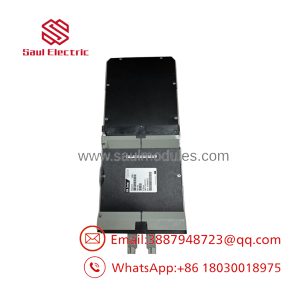
The FBM241c is a standard 200 Series Fieldbus Module form factor. It mounts on a DIN-rail or modular baseplate. Field wiring is terminated on a dedicated termination assembly that may be local or remote. Input TAs provide contact wetting and optional fusing; output TAs support the external power source and the required current rating. When used in a redundant pair the two modules share one common termination assembly. Installation follows normal 200 Series practices and must remain within Class G3 environmental limits.
FAQ
What is the Foxboro FBM241c?
The Foxboro FBM241c is a channel-isolated Discrete I/O Module that provides eight contact-sense inputs and eight externally powered switch outputs for the I/A Series and EcoStruxure Foxboro DCS.
How many channels does it have?
Eight discrete inputs and eight discrete outputs.
What type of inputs does it support?
Contact sensing (dry contacts or solid-state switches) at 15–60 VDC, with optional fused protection.
What are the output ratings?
Externally powered switches rated 15–60 VDC at 2 A or 240 VAC at 5 A, depending on the termination assembly.
Can the module be used redundantly?
Yes. It can be installed as a single module or as a redundant pair sharing a common termination assembly.
What filtering options are available?
Input filter/debounce time is configurable: none, 4 ms, 8 ms, 16 ms, or 32 ms.
What application programs does it support?
Discrete I/O or Ladder Logic, with options for input filter time, fail-safe configuration, fail-safe fall-back, and sustained or momentary outputs.
Verification & Troubleshooting Notes
- Confirm module identity by the FBM241c designation and part number (e.g., RH914WM / P0914WM) on the label and by successful recognition on the Fieldbus.
- Verify that the termination assembly matches the required input protection (fused/non-fused) and output voltage/current rating.
- Check that the 24 V DC redundant baseplate power is present and within tolerance.
- Observe channel status in the control system; incorrect contact detection usually indicates source-resistance or wiring issues.
- Review the configured filter time if contact bounce or noise is observed.
- Confirm fail-safe and output-mode settings match process requirements.
- For redundant installations, ensure both modules of the pair are online and that control software is using the corresponding redundant discrete I/O blocks.
- Module replacement should be performed only after verifying power, Fieldbus integrity, and correct termination-assembly matching.

 Start Chat


