





Description
Product Introduction
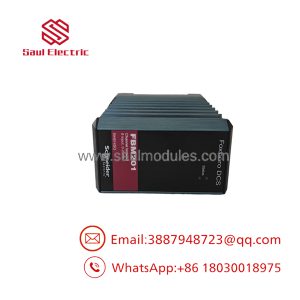
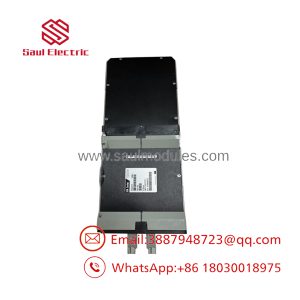
The Foxboro FEM100 (Part Number P0928AB) is a Fieldbus Expansion Module designed for the Foxboro I/A Series and EcoStruxure DCS platforms. Built to enhance network topology flexibility, the FEM100 functions as an expansion interface that enables host Control Processors (like the FCP280 or FCP270) to manage additional downstream Fieldbus Module (FBM) baseplate lines.
By acting as a fieldbus expansion hub, the FEM100 allows system architects to distribute 200 Series FBM baseplates across multiple equipment cabinets without overloading primary baseplate fieldbus ports. Featuring dual redundant communication paths, the FEM100 maintains continuous signal routing to upstream controllers and downstream I/O cards, ensuring zero disruption to critical process loops.
Key Technical Specifications
| Parameter | Value |
| Manufacturer | Foxboro (Invensys / Schneider Electric) |
| Part Number | FEM100 / P0928AB (RoHS Equivalent: RH928AB) |
| Series | Foxboro 200 Series Subsystem |
| Function | Fieldbus Port Expansion & Signal Distribution |
| Communication Protocol | 2 Mbps Redundant HDLC Fieldbus |
| Redundancy Support | Dual Redundant Channels (Bus A and Bus B) |
| Power Dissipation | ~3.0W maximum from baseplate power rails |
| Mounting | Foxboro 200 Series Baseplate Slot (P0926KE / RH931RQ or equivalent) |
| Operating Temp Range | -20°C to +70°C (-4°F to +158°F) |
Application Scenarios & The “Trench” Experience
The Trench Story
It is 03:15 AM during a expansion phase at a power station. Commissioning teams are bringing two new secondary water treatment skids online. The local FCP280 controller rack had exhausted its direct baseplate fieldbus port connections for additional FBM baseplates. Rather than installing an additional, expensive Control Processor node, the project engineer slotted a bench-tested FEM100 (P0928AB) module into the existing baseplate rack. Connecting the new FBM baseplates to the expanded the local fieldbus topology immediately, bringing 32 new instrument channels online without requiring software reconfiguration of the primary CP node.
Target Application Scenarios
- Cabinet Expansion Projects: Allows engineers to add new 200 Series FBM baseplates in adjacent enclosures without adding extra Control Processors.
- High-Density Control Racks: Aggregates multi-baseplate fieldbus loops back to central control processor nodes.
- Redundant System Extensions: Provides redundant fieldbus extension pathways for critical safety interlock and continuous process units.
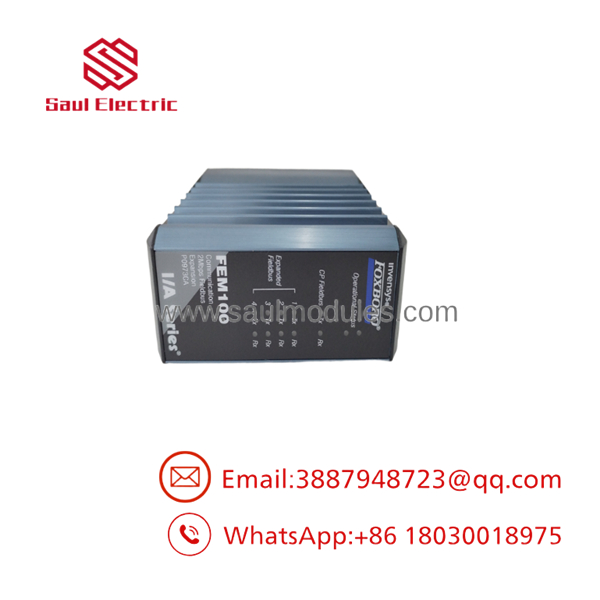
FEM100
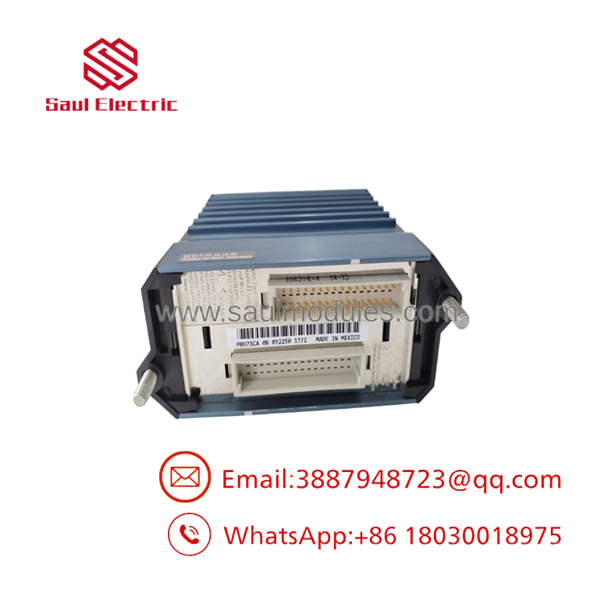
FEM100
Transparency SOP: Quality Assurance & Testing
We don’t just ship boxes; we test them on actual Foxboro 200 Series test racks. Every / P0928AB module undergoes a strict 5-stage workbench validation process prior to dispatch:
- Inbound Visual & Mechanical Inspection: High-magnification check of PCB traces, backplane gold connector pins, side latching levers, and housing integrity.
- Cold Power Rail Diagnostics: Multi-point resistance checks across internal power conversion rails and bus driver ICs to rule out component shorts.
- Live Baseplate Bus Handshake: Module is mounted on a live Foxboro 200 Series baseplate connected to a Control Processor to verify bus address recognition and proper LED status routines.
- Fieldbus Pass-Through & Load Test: Downstream FBM baseplates are connected through the . We execute heavy I/O data traffic and cycle redundant fieldbus cables (Bus A / Bus B) to verify zero packet loss and seamless redundancy switching.
- Anti-Static ESD Packaging: Cleared modules receive solvent contact cleaning, thorough drying, and are sealed in heavy-duty anti-static ESD shielding bags prior to custom foam packaging.
The Veteran’s Tech Trap Guide
- ⚠️ Do Not Confuse (Fieldbus Expander) with FCM Modules (Media Converters)!
The is designed for fieldbus expansion, whereas FCM modules (like FCM2F2 or FCM2E4) convert copper HDLC signals to fiber or Ethernet. Ensure you are deploying the correct module type based on your topology needs.
- ❗ Verify Baseplate Slot Configuration.
Make sure the slot assigned to the in the system configuration software (Equipment Control Blocks / System Manager) matches its physical placement on the baseplate to avoid configuration mismatch errors.
- ⚠️ Maintain Fieldbus Cable Segment Lengths.
When extending fieldbus chains through the , ensure overall cable lengths strictly adhere to Foxboro 200 Series fieldbus length specifications to avoid signal attenuation or reflections.
- ❗ Bypass Active Loops Before Hot-Swapping:
While Foxboro 200 Series baseplates fully support Live Insertion and Removal (Hot Swap), pulling an active module will break communication to all downstream FBM baseplates connected through it. Always verify downstream process loops are in a safe condition or manually bypassed.
Frequently Asked Questions (FAQ)
Q: What is the main purpose of the Foxboro module?
A: The is a Fieldbus Expansion Module that expands the fieldbus connectivity of Foxboro Control Processors (like the FCP280 or FCP270), allowing additional 200 Series FBM baseplates to be added to the control node.
Q: What is the exact difference between part numbers , P0928AB, and RH928AB?
A: “” is the functional model designation used in DCS software engineering, “P0928AB” is the standard Foxboro hardware part number, and “RH928AB” is Schneider Electric’s RoHS-compliant (lead-free) hardware equivalent. and RH928AB are 100% functionally and mechanically interchangeable.
Q: Can I hot-swap the module while the baseplate is powered?
A: Yes, Foxboro 200 Series baseplates support Hot Swap (Live Insertion and Removal). However, removing the will temporarily interrupt fieldbus communication to all downstream FBM baseplates routed through that module.
Q: What warranty covers these pre-tested modules?
A: Every ( / RH928AB) module sold includes a full 12-Month Functional Warranty. If the hardware experiences failure under normal operating parameters within 365 days, we provide an immediate unit replacement or full credit.

 Start Chat


