





Description
Product Introduction
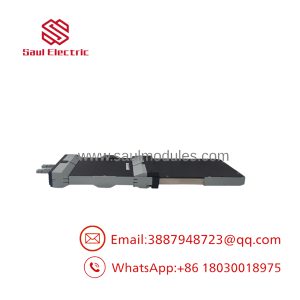
The Foxboro FBM217 RH914TR is a 32-channel discrete input interface module engineered for the Foxboro I/A Series and Foxboro Evo Distributed Control Systems (DCS). It mounts on a Compact 200 Series baseplate, taking raw binary signals from field switches, contact closures, and proximity sensors and piping them directly to Field Control Processors (FCPs) or Z-form Control Processors (ZCPs).
Unlike standard single-density I/O cards, the RH914TR packs 32 inputs into a single compact slot while maintaining strict electrical isolation through specialized Terminal Assemblies (TAs). You can deploy it solo or run it as a redundant pair with a dedicated adapter. This hardware-level redundancy lets you pull a faulted card under live system conditions without dropping critical field interlocks.
Key Technical Specifications
| Parameter | Value |
| Module Part Number | FBM217 RH914TR / P0914TR |
| Input Channels | 32 group-isolated discrete channels |
| On-State Voltage Range | 15 to 30 VDC |
| Off-State Voltage Range | 0 to 5 VDC |
| Input Current (Typical) | 2.2 mA @ 30 VDC |
| Configurable Filter Time | No filter, 4 ms, 8 ms, 16 ms, or 32 ms |
| Maximum Pulse Rate | 250 Hz (for pulse counting tasks) |
| Harsh Environment Rating | ISA S71.04 Class G3 (Severe) |
| Power Dissipation | ~3.0 W maximum |
| Status LEDs | Module status (Red/Green), 32 Channel states (Blue) |
| Mounting | Compact 200 Series Baseplate (Dual screw retention) |
Application Scenarios & The “Trench” Experience
It is 2 AM on a humid July night in an ethylene plant. A legacy digital input card on a cracker unit trips intermittently due to field contact chatter, triggering an un-commanded trip valve movement. The DCS displays a comm fault, alarms blare across the operator room, and the plant manager is already on the phone asking why throughput just plummeted to zero. Moments like this remind you that reliable field I/O is not optional.
- Oil & Gas Refinery – Compressor Trip Valve Monitoring – Fast response time and configurable filter debouncing prevent nuisance shutdowns from field switch bounce.
- Chemical Processing – Batch Reactor Interlocks – Redundant pairing ensures continuous field state tracking even during an active card swap.
- Power Generation – Steam Turbine Limit Switch Interface – ISA G3 conformal coating resists corrosive atmospheric sulfur around cooling towers.
- Water Treatment Plants – Sludge Pump Status Verification – High-density 32-channel layout cuts required baseplate real estate in half.
Field Case Study: Emergency Swap at a Gulf Coast Petrochemical Facility
A Gulf Coast reformer unit lost one side of a redundant FBM217 pair during a lightning storm surge. The secondary unit immediately picked up the 32 discrete inputs with zero interruption to active logic blocks. The plant maintenance team sourced a pre-tested RH914TR unit from our surplus inventory. Within 4 hours of arrival, the technician unfastened the top and bottom retention screws, pulled the dead module from the live baseplate, clicked the fresh card into place, and tightened the screws. The Foxboro Evo system auto-configured the new card, restored dual-redundancy, and avoided a estimated $180,000 unit shutdown.
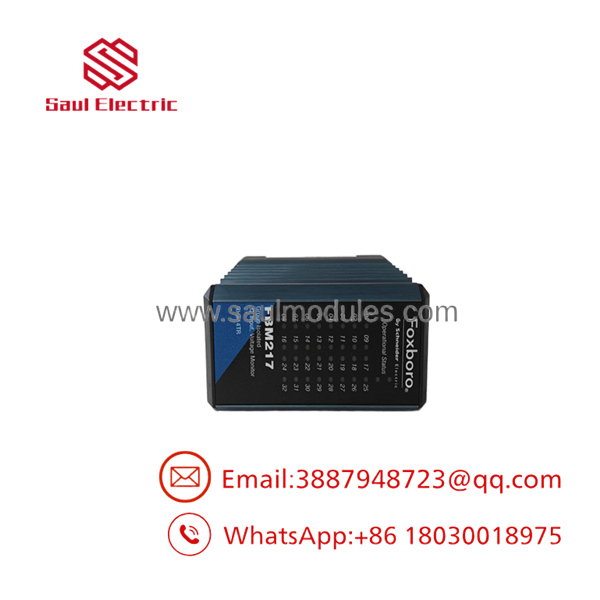
RH914TR
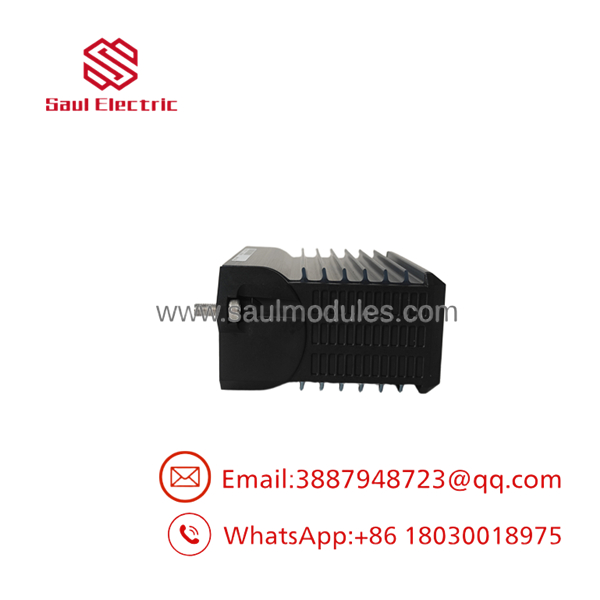
RH914TR
Transparency SOP: Quality Assurance & Testing
We do not just ship boxes; we test them on actual Foxboro 200 Series baseplates under real operating loads.
- Inbound Visual & Anti-Counterfeit Audit: Inspection of module housing, backplane connector pins, label font integrity, and OEM factory seals.
- Live Rack Power-On Self-Test (POST): Insertion into a energized Foxboro Compact 200 baseplate powered by a dual FE20 24VDC supply.
- Channel-by-Channel Signal Injection: Applying 24 VDC across all 32 channels sequentially to verify on-state current draw (2.2 mA nominal) and off-state decay.
- Redundancy Handshake Test: Pairing the module with a partner FBM217 through an RH101AZ redundant adapter to verify automatic failover and software block validation.
- Firmware Revision Logging: Reading and documenting internal firmware via Foxboro Control Processor configuration software (ensuring compatibility with v1.25H or later).
- Anti-Static Packaging: Sealed in ESD-shielding bags with desiccant prior to foam-cushioned boxing.
The Veteran’s Tech Trap Guide (Crucial Value-Add)
- ⚠️ Check Your Firmware Version Before Enabling 4ms Filters: If you need the 4 ms debounce filter setting, your FBM217 must run firmware rev 1.25H or higher. Older firmware revisions limit you to 8 ms minimums and will reject the software parameter download.
- ❗ Never Force the Backplane Connector: The high-density pins on the back of the RH914TR can bend if aligned poorly. Align the module straight onto the baseplate slots and press firmly until flush before turning the retention screws.
- ⚠️ Redundant Adapter Orientation Matters: When wiring a redundant pair using the RH101AZ redundant adapter, the modules MUST be placed in adjacent baseplate slots, starting on an odd-numbered position (e.g., Slot 1/2 or Slot 3/4).
- ❗ Verify Terminal Assembly (TA) Match: The RH914TR handles 15-60 VDC natively, but if your field contacts run on 120 VAC, you need the corresponding attenuating Terminal Assembly. Supplying 120 VAC straight to the direct DC pass-through TA will instantly cook the input stage.
Frequently Asked Questions (FAQ for Conversion)
Q: Can I hot-swap the FBM217 on a live Foxboro system?
A: Yes. You can unscrew and pull the module off a powered 200 Series baseplate without powering down the rack or disrupting neighboring I/O modules.
Q: What is the difference between P0914TR and ?
A: They are functionally identical hardware components. “P0914TR” is the primary Foxboro base part number, while “” represents the RoHS-compliant (lead-free) version of the exact same module.
Q: Does this module require external power for field contacts?
A: Yes, field contacts require external DC loop power (typically 24 VDC) routed through the associated Terminal Assembly unless you use an active TA with built-in wetting voltage options.
Q: Are these units brand new or surplus?
A: We supply both Factory Sealed New Surplus and fully bench-tested Clean Refurbished units. Every card undergoes our 5-step test bench verification regardless of cosmetic state.
Q: What warranty comes with this module?
A: We back all modules with a comprehensive 12-month full replacement warranty from the date of invoice.

 Start Chat


