





Description
Product Introduction & Engineering Value
RH917HX is a legacy Foxboro hardware identifier that should be handled as a configuration-specific relay/interface component. The exact electrical role depends on the Foxboro assembly in which the part is installed.
For replacement work, the complete RH917HX identification and the associated assembly should be verified before ordering. Coil characteristics, contact configuration, load rating, and terminal arrangement should come from the applicable technical documentation rather than being inferred from the part number.
Technical Specifications
| Parameter | Specification |
|---|---|
| Part Number | RH917HX |
| Manufacturer | Foxboro / Invensys |
| Product Family | Foxboro industrial control hardware |
| Hardware Category | Relay/interface component |
| Primary Function | Signal switching/interface |
| System Application | Industrial process control |
| Mounting | Assembly-dependent |
| Coil/Input Rating | Verify from exact component/assembly documentation |
| Contact Rating | Verify from exact documentation |
| Contact Configuration | Verify before substitution |
| Connection Method | Assembly-dependent |
| Replacement Requirement | Exact electrical and mechanical match |
Engineering note
I would not publish a specific coil voltage, contact arrangement, current rating, or switching capacity for RH917HX without reliable documentation tied specifically to this part number.
For relay hardware, those parameters directly determine whether a replacement is safe. A visually identical component can have a completely different coil or contact specification.
Field Application & the “Trench” Experience
A relay interface can be deceptively simple to troubleshoot. A control-system output may appear healthy while the field actuator remains inactive. The temptation is to replace the relay immediately.
A better approach is to test the entire path.
First verify the upstream output. Then verify the relay drive circuit. Then confirm relay operation and contact transfer. Finally check the field load and wiring.
If RH917HX is the failed component, the replacement should be matched to the original assembly’s documented electrical characteristics—not simply its physical dimensions.
Niche application scenarios
- Motor-control interface: intermediate relay between a control output and motor starter.
- Actuator command interface: relay contact switching for valve or damper control.
- External alarm interface: dry-contact signaling between Foxboro control logic and auxiliary annunciation equipment.
Transparency SOP: QA & Testing
For New Surplus or Refurbished RH917HX inventory:
- Identity check — Confirm the actual part number and any secondary markings.
- Physical inspection — Look for cracked components, damaged terminals, corrosion, discoloration, or heat damage.
- Coil inspection — Verify the rated coil voltage from documentation before applying power.
- Resistance test — Measure coil resistance where appropriate and compare against the expected specification.
- Contact test — Verify the documented NO/NC contacts change state correctly when energized.
- Load/interface test — Where practical, test under an appropriate representative load.
- Final documentation — Record test conditions, measured results, condition, and warranty.
Important: Do not energize an unidentified surplus relay until its coil rating has been established.
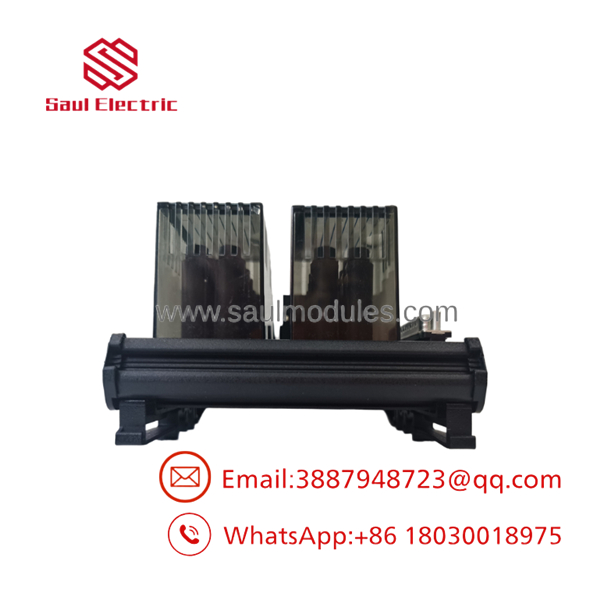
RH917HX
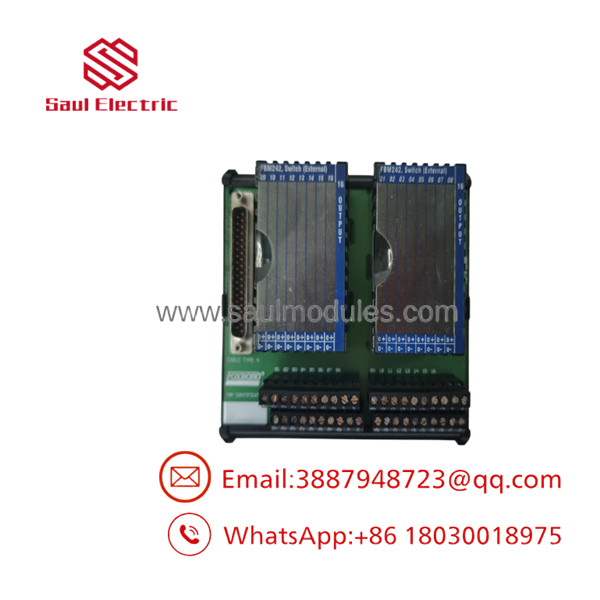
RH917HX
The Veteran’s Tech Trap Guide
⚠️ Trap #1 — Applying power based on an assumed voltage
Never assume is a 24 VDC relay simply because it is being used in an industrial control cabinet.
PRO TIP: Read the actual marking or obtain the applicable wiring/assembly documentation first.
⚠️ Trap #2 — Testing only the relay coil
A healthy coil does not guarantee healthy contacts. Contact resistance, transfer behavior, and the actual load circuit also need consideration.
⚠️ Trap #3 — Ignoring inductive-load suppression
If the relay switches a motor starter, solenoid, contactor, or other inductive load, suppression components can affect contact life and transient voltage. Check the complete interface circuit rather than treating the relay as an isolated component.
Dynamic FAQ
What is Foxboro ?
is a Foxboro legacy relay/interface part number used in compatible industrial control hardware. Its precise electrical configuration should be confirmed from the applicable assembly documentation.
What voltage does the coil require?
The coil voltage should not be inferred from the model number. Confirm the actual rating from the relay marking or Foxboro technical documentation before energizing it.
What contact configuration does have?
The exact NO/NC arrangement should be verified from the applicable component or assembly documentation. Do not assume the contact configuration based solely on the part number.
Can a generic relay replace ?
Only after engineering equivalency has been established. Compare coil voltage, contact arrangement, current/voltage ratings, insulation requirements, terminal configuration, mounting, and switching load.
What should I request for New Surplus ?
Ask for actual-unit photographs, complete identification markings, condition classification, coil/contact test results, and written warranty terms. A simple “tested OK” statement is not enough for a critical relay spare.
Is covered by warranty?
That depends on the supplier and stock condition. For plant-critical Foxboro spares, specify the warranty duration and return procedure in the purchase documentation.

 Start Chat


