





Description
Product Introduction
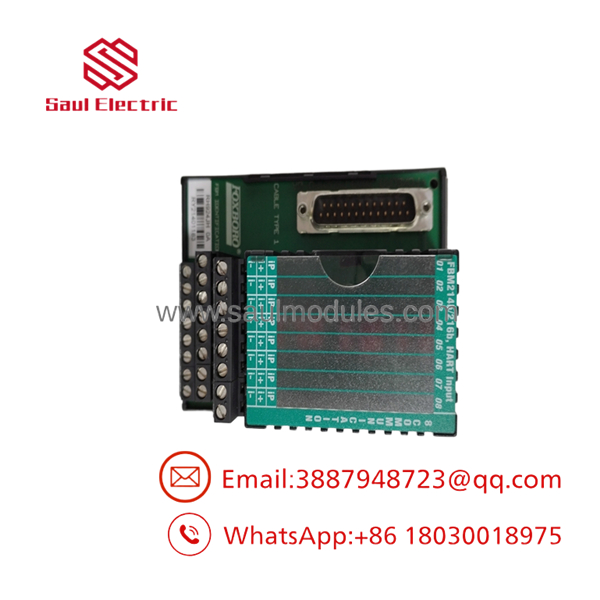
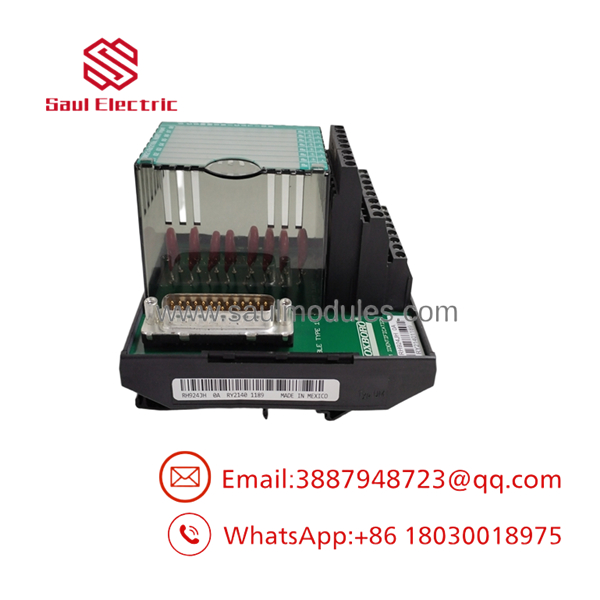
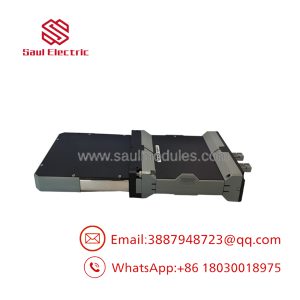
The Foxboro FBM242 RH924JH is a 16-channel discrete output interface card manufactured for the Foxboro I/A Series and Foxboro Evo Distributed Control Systems (DCS). Resting inside the Compact 200 Series subsystem, it serves as the command execution bridge, translating internal Field Control Processor (FCP) digital logic decisions into physical switching actions across 16 independent output channels.
Unlike low-density I/O cards, the RH924JH relies on external field power passed through matching Terminal Assemblies (TAs) to energize field loads like solenoid valves, motor starters, indicator lamps, and interlock relays. It supports both standard non-redundant setups and fail-safe redundant pairings. In redundant arrangements, twin modules monitor field continuity simultaneously, allowing seamless online hardware swaps without dropping held-in control contactors or critical trips.
Key Technical Specifications
| Parameter | Value |
| Module Part Number | FBM242 RH924JH / P0924JH |
| Output Channels | 16 discrete channels |
| Switching Voltage Range | External sourcing (Up to 120 VAC / 125 VDC depending on TA) |
| Output Type | Direct drive or Relay contact isolation via external TA |
| Off-State Leakage Current | < 1 mA maximum |
| Configurable Fail-Safe State | Hold last value, Force ON, or Force OFF on comm loss |
| Isolation Rating | 1500 VAC galvanically isolated channel-to-bus |
| Power Dissipation | ~2.8 W maximum |
| Harsh Environment Rating | ISA S71.04 Class G3 (Severe) |
| Status LEDs | Module operational status (Red/Green), 16 Output state indicators |
| Mounting Mechanism | Compact 200 Series Baseplate (Dual retention screws) |
Application Scenarios & The “Trench” Experience
When an interlock demands a emergency isolation valve shut off right now, the output card cannot afford a sticking switch or a blown backplane driver. In high-stakes processing environments, a failed output channel usually means a tripped pump motor, an un-commanded flare block, or worse—a valve that fails to shut when a high-pressure alarm sounds.
- Petrochemical Plants – Emergency Shutdown Valve (ESD) Actuation – Reliable pulse and continuous output switching for heavy pneumatic valve solenoids.
- Power Generation Utilities – Boiler Draft Fan Motor Starter Logic – Interfacing 24 VDC control signals with high-voltage motor control center (MCC) trip coils.
- Refining Operations – Automatic Lube Oil Pump Cut-in System – Using redundant RH924JH configurations to ensure backup lube oil pumps start immediately if main line pressure fails.
- Water & Wastewater Facilities – Chemical Dosing Pump Sequencing – Cycling heavy-duty dosing relays on fixed timed matrices to control pH adjustment streams.
Field Case Study: Preventing a Thermal Runaway in a Polymers Unit
At an Indiana polymer synthesis facility, an aging discrete output card controlling a reactor cooling water solenoid suffered a shorted transistor channel, locking the cooling loop closed during a temperature spike. The control system flagged an I/O fault, and operators had to manual-override the line before a run-away reaction occurred. The plant sourced a pre-tested RH924JH replacement card from surplus stock. Because the module was pre-inspected and ready for drop-in installation, technicians completed a hot-swap onto the live baseplate in under 15 minutes without taking the reactor block offline, preventing an estimated $140,000 in lost batch product and cleanup costs.
RH924JH
RH924JH
Transparency SOP: Quality Assurance & Testing
We don’t just ship boxes; we test them on actual Foxboro 200 Series baseplates with live output loads.
- Inbound Mechanical & Pin Audit: Detailed inspection of connector pins, module housing latches, front bezel LED windows, and OEM serial verification.
- Baseplate Communication POST: Mounting the unit on an energized Foxboro Compact 200 baseplate to verify backplane handshake and logic initialization.
- Channel-by-Channel Load Switching: Injecting 24 VDC and 120 VAC field power through a matching Terminal Assembly to verify active load switching across all 16 output channels.
- Fail-Safe Timeout Simulation: Disconnecting the upstream communication link to verify that configured fail-safe behaviors (Hold Last State vs. Force OFF) trigger correctly.
- Firmware & Software Block Reading: Interrogating internal card registers via Foxboro System Definition software to log hardware revision and verify patch levels.
- Anti-Static Packaging: Enclosing the verified card in heavy anti-static bubble packaging alongside active desiccant pouches.
The Veteran’s Tech Trap Guide (Crucial Value-Add)
- ⚠️ Confirm Your Fail-Safe Configuration Settings: Before dropping a fresh RH924JH onto a production rack, verify the soft-configuration in the Foxboro Control Processor block (
FBMBOUND). If the block is set to “Force OFF” on comm loss and you lose backplane communication, every valve tied to that card will drop out instantly. - ❗ Never Overload Terminal Assembly Contacts: The card logic drives the switching, but the raw current passes through the Terminal Assembly (TA). Pushing 5 Amps through a TA relay channel rated for 2 Amps will weld the internal relay contacts together, causing a dangerous “stuck ON” failure mode.
- ⚠️ Check Suppression Diodes on DC Solenoids: Inductive kickback from un-suppressed 24 VDC field solenoid coils will degrade the output transistors over time. Always verify flyback diodes are installed directly across DC solenoid terminals in the field.
- ❗ Verify Redundancy Wiring Before Hot-Swapping: If replacing one half of a redundant FBM242 pair, make sure the channel bypass jumpers on the redundant TA are seated correctly. Pulling a card with misconfigured redundancy jumper pins can drop the active channel output.
Frequently Asked Questions (FAQ for Conversion)
Q: Is the FBM242 hot-swappable on a running DCS?
A: Yes. You can remove and insert the module onto an active 200 Series baseplate without cutting system power or disrupting neighboring operational modules.
Q: What is the exact difference between P0924JH and ?
A: They are the same module. “P0924JH” is the primary legacy Foxboro hardware part number, while “” indicates the lead-free RoHS-compliant variant. They replace each other 1-to-1 without configuration changes.
Q: Does this module supply power directly to field devices?
A: No. The acts as an isolated interface switcher. External field power (DC or AC, depending on the connected Terminal Assembly type) must be supplied to the TA power terminals to drive external loads.
Q: What condition are these units shipped in?
A: We offer both Factory Sealed New Surplus and fully bench-tested Clean Refurbished units. Every module undergoes our rigorous load-switching QA process prior to dispatch.
Q: What kind of warranty do you offer on this module?
A: All modules come standard with a 12-month full replacement warranty starting from the date of shipment.

 Start Chat


