





Description
Product Introduction & Engineering Value
The Galil DMC-1842 is a four-axis PCI motion controller intended for applications requiring coordinated positioning from a host PC. It supports servo and stepper configurations and provides functions such as point-to-point motion, linear and circular interpolation, contouring, electronic gearing, and electronic camming.
This is legacy hardware, so replacement planning requires more than matching the model number. The host computer’s PCI architecture, controller firmware, application software, 100-pin interface hardware, motor amplifiers, and encoder wiring all need to remain compatible.
Technical Specifications
| Parameter | Specification |
|---|---|
| Manufacturer | Galil Motion Control |
| Model | DMC-1842 |
| Controller Family | DMC-18×2 |
| Series Type | Econo |
| Bus Interface | PCI |
| Controlled Axes | 4 |
| Motor Types | Servo or stepper |
| Encoder Frequency | Up to 12 MHz for servo applications; up to 3 MHz for stepper applications |
| Position Control | PID compensation with velocity and acceleration feedforward |
| Motion Modes | Point-to-point, jogging, linear/circular interpolation, contouring, electronic gearing, electronic cam |
| General I/O | 8 uncommitted inputs and 8 uncommitted outputs |
| Main External Interface | 100-pin high-density connector |
The DMC-18×2 architecture uses a 100-pin high-density connection to external interconnect hardware such as the ICM-2900. Galil documentation also specifies nonvolatile storage for programs, variables, and arrays, with multitasking for concurrent execution of up to eight programs.
Important architectural distinction
The DMC-1842 is not simply a four-channel generic PCI I/O card. It is a dedicated motion controller with its own processor, firmware, motion algorithms, program memory, encoder interfaces, and amplifier command outputs.
The Econo DMC-18×2 family also omits several functions available on the DMC-18×0 Optima family, including optical isolation on inputs, uncommitted analog inputs, dual encoder inputs, and auxiliary FIFO/DPRAM communication channels.
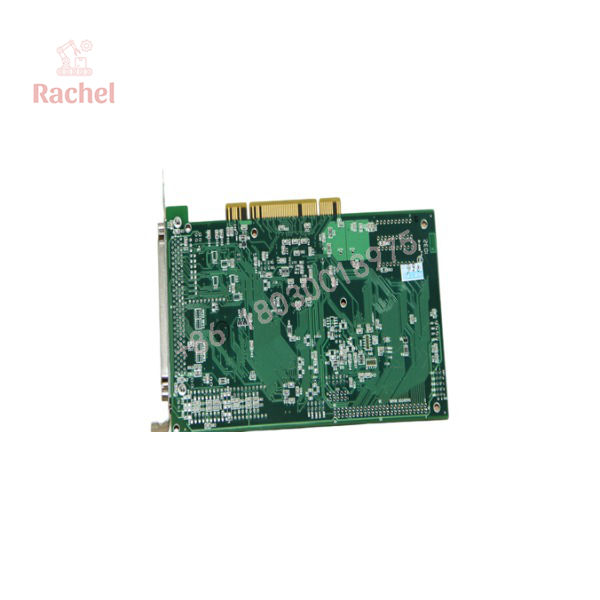
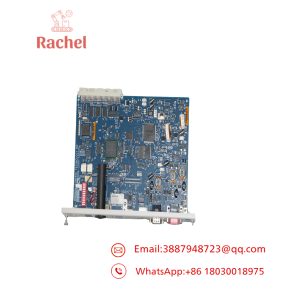
DMC-1842
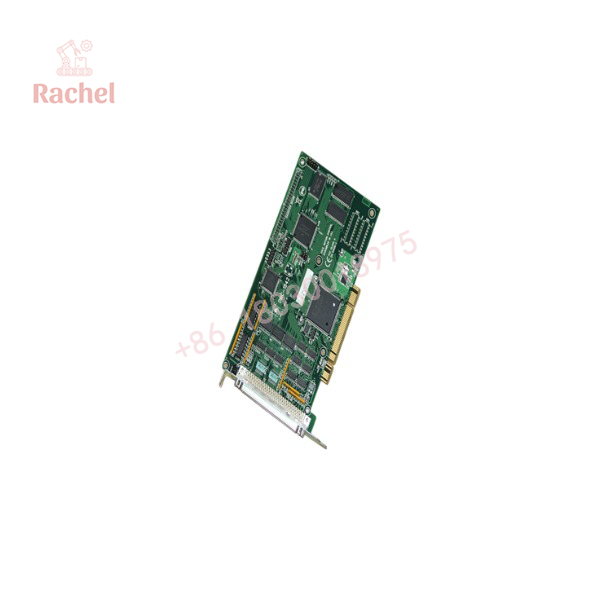
DMC-1842
Field Application & the “Trench” Experience
A common legacy-machine problem looks deceptively simple: a PC fails, the replacement computer has a different PCI implementation, and suddenly the motion-control application cannot communicate with the DMC-1842. The motion card itself may still be perfectly functional.
The correct recovery procedure is to identify the original controller configuration, verify the replacement computer’s PCI compatibility, preserve the 100-pin cabling and interconnect hardware, and confirm that the installed Galil software and controller firmware can communicate with the card. The DMC-18×2 manual specifically identifies the PC, PCI bus, 100-pin cable, interconnect module, amplifiers, encoders, and communication software as components of the overall system.
Niche application scenarios
- Four-axis precision positioning stage: Coordinating X/Y/Z positioning with an auxiliary rotary axis.
- Automated inspection gantry: Synchronizing servo axes with encoder feedback and external machine events.
- Motorized optical positioning system: Controlling multiple positioning axes where the original PC-based motion architecture must be maintained.
A published laboratory implementation, for example, used DMC-1842 controllers for motorized rotary stages, with the controller providing four-axis control even though only one axis was used in that particular setup.
Transparency SOP: QA & Testing
For New Surplus or previously unused inventory, a meaningful inspection should cover more than appearance:
- Model verification — Confirm the Galil DMC-1842 designation and board configuration.
- Connector inspection — Examine the 100-pin high-density connector and PCB for bent contacts, contamination, corrosion, or storage damage.
- PCI inspection — Check the edge connector and board for physical damage.
- Power-up test — Verify that the controller initializes correctly and does not generate abnormal fault indications.
- Communication test — Where suitable test equipment is available, establish communication with the controller using compatible Galil software.
- Motion verification — For fully tested units, verify encoder feedback, command output, and representative axis operation using an appropriate amplifier and motor test setup.
For refurbished inventory, ask whether the unit was actually powered and function-tested or merely inspected and cleaned. Those are not equivalent conditions.
The Veteran’s Tech Trap Guide
⚠️ Trap #1 — PCI compatibility can stop the project before the motor moves.
The DMC-1842 belongs to a legacy PCI-based architecture. A modern computer may have PCI Express slots but no native conventional PCI support. A PCI-to-PCIe bridge is not automatically equivalent to the original bus environment. Validate the host platform before purchasing a replacement controller.
⚠️ Trap #2 — Do not confuse DMC-1842 with DMC-1840.
Both are four-axis PCI controllers, but they belong to different product families. The DMC-1842 is the Econo version and has fewer hardware features than the DMC-1840 Optima controller.
⚠️ Trap #3 — The card is only one part of the motion system.
The DMC-1842 normally works with external amplifier hardware, encoder feedback, cabling, and an interconnect module. Galil’s documentation specifically lists the ICM-1900/ICM-2900 family and 100-pin cable as system components.
PRO TIP: Before removing a functioning DMC-1842, document the installed firmware revision, jumper configuration, axis assignments, amplifier wiring, encoder connections, and host-PC software version. Legacy motion systems often depend on configuration details that are not obvious from the card itself.
Dynamic FAQ
Is the Galil DMC-1842 a four-axis controller?
Yes. The DMC-1842 is the four-axis Econo PCI motion controller in the DMC-18×2 family.
Does the DMC-1842 support both servo and stepper motors?
Yes. The DMC-18×2 architecture supports both servo and stepper motor configurations, with installation and configuration differing according to the selected motor type.
Does the DMC-1842 directly power the motors?
No. It is a motion controller rather than a motor power amplifier. The system requires appropriate external amplifier/driver hardware and a suitable power supply for the amplifiers.
What software is used with the DMC-1842?
The DMC-18×2 documentation references Galil communication and programming software, including DMCTERM, DMCWIN32, WSDK32, and later SmartTERM-related software. Compatibility depends on the host operating system and installed controller/driver configuration.
Is the DMC-1842 still a current controller?
It is a legacy Galil controller rather than a current-generation motion-control platform. Current secondary-market listings identify it as an older PCI 4-axis Econo controller, making lifecycle and host-PC compatibility important considerations for replacement planning.
How should New Surplus authenticity be verified?
Verify the complete model marking, PCB condition, connector condition, packaging, and available traceability. For critical machinery, request confirmation of whether the unit is genuinely unused New Surplus or has been previously installed and tested. Warranty terms should also be confirmed in writing, including DOA coverage and the return period.

 Start Chat


