





Description
Product Introduction & Engineering Value
When an internal stator ground fault or stator overtemperature condition hits a 10 MW prime-power generator, standard utility relays often lack the precise 100% stator earth protection or negative-sequence tracking required to prevent catastrophic iron core melting.
The GE Multilin 489-P5-HI-A20-T fills this critical gap with targeted generator protection logic. Equipped with 5A phase current transformer inputs (P5), a high-range universal power supply (HI), isolated 4–20 mA analog outputs (A20), and a dedicated 10BaseT Ethernet port (T), this module drops straight into 5A secondary CT panels to deliver continuous differential, thermal, and electrical telemetry straight to SCADA networks.
Technical Specifications
| Parameter | Specification |
| Phase CT Inputs (P5) | 5 A Secondary Nominal (CT Burden < 0.2 VA at 5 A) |
| Control Power (HI) | 50 to 300 VDC / 60 to 265 VAC (45–66 Hz) |
| Analog Outputs (A20) | 4 Isolated 4–20 mA Transducer Outputs (Assignable up to 1200 Ω Load) |
| Ethernet Port (T) | Rear 10BaseT RJ45 Interface (Modbus TCP/IP Protocol) |
| Generator Protection | Stator Differential (87G), 100% Stator Ground (27TN/59N), Loss of Field (40), Reverse Power (32) |
| Thermal Monitoring | 12 Onboard RTD Inputs (10Ω Cu, 100Ω Pt, 120Ω Ni, 100Ω Ni) |
| Output Contacts | 6 Assignable Form-C Relays (Trip, Alarm, Auxiliary 1–3, Service) |
| Serial Communications | 1 Front RS232 Port, 2 Rear RS485 Ports (Modbus RTU) |
| Metering & Logging | True RMS Current/Voltage, kW, kvar, kVA, Power Factor, Event Recorder, Waveform Capture |
| Operating Temp | -20°C to +60°C (-4°F to +140°F) |
Field Application & The “Trench” Experience
During an unplanned utility grid separation at a cogeneration facility, a 12.5 kV gas turbine generator failed to decouple cleanly, inducing severe negative-sequence current heating across the rotor field windings. The existing legacy relay failed to trigger an unbalance trip early enough. The engineering crew replaced the damaged unit with a GE 489-P5-HI-A20-T. Utilizing the P5 5A CT secondary connections and turning on negative-sequence current monitoring (I_2^2 t), alongside mapping the 4–20 mA outputs (A20) directly to the turbine governor for rapid load dumping, they stabilized the islanding controls and eliminated future thermal rotor damage.
Specific Field Applications
- Co-Generation Steam and Gas Turbines: Protects synchronous generators against reverse power (motoring), loss of excitation, and overfrequency conditions.
- Hydroelectric Power Units: Uses the 12 RTD channels and 100% stator ground protection to monitor low-speed, high-mass generator stator windings.
- Emergency Standby Diesel Generators: Connects directly into building management systems via the T option Ethernet port for continuous power quality tracking and automated event reporting.
Transparency SOP: QA & Testing
- Power Supply Regulation Verification: Testing the internal “HI” power supply card across the full voltage range (50 VDC up to 265 VAC) to verify steady-state output rails.
- 5A Secondary Injection Testing: Applying high-precision 5A secondary currents and voltage vector sets to verify protection elements including 87G differential and 32 reverse power trip points.
- Analog Output Calibration (A20): Measuring output current on all four 4–20 mA channels using a calibrated precision meter at 4 mA, 12 mA, and 20 mA calibration steps.
- Modbus TCP Ethernet Stress Test: Exercising the rear RJ45 port (T option) with continuous packet pings and automated setpoint read/write sweeps to ensure communication stability.
- Climate Chamber Burn-In: 24-hour thermal endurance cycle under power at 50°C to catch potential component thermal drift prior to final dispatch.
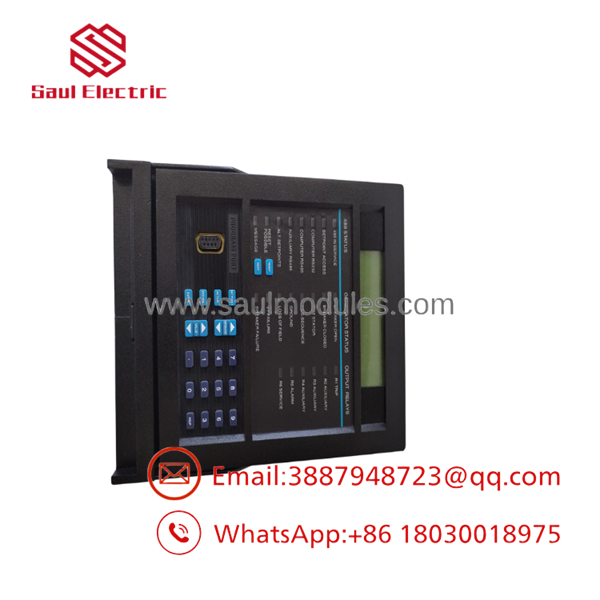
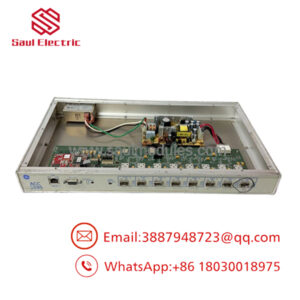
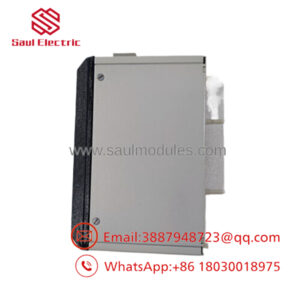
- 489-P5-HI-A20-T
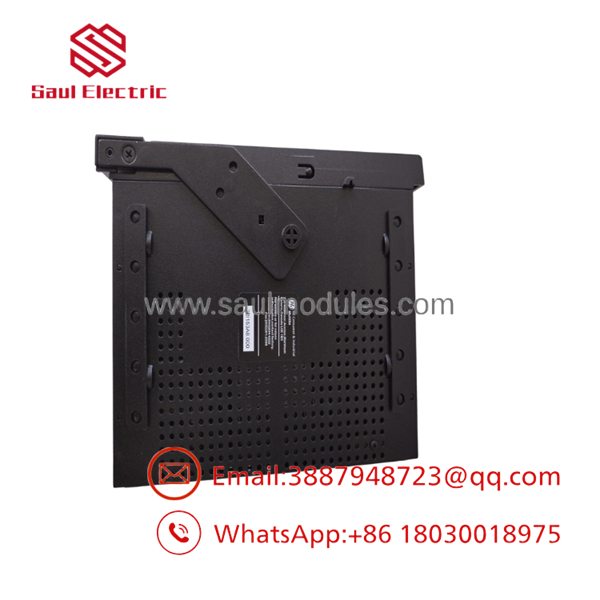
- 489-P5-HI-A20-T
The Veteran’s Tech Trap Guide
⚠️ Do Not Confuse 489 with 469 Relays: While the 489 (Generator) and 469 (Motor) look identical from the front panel and share similar drawout chassis, their internal protective algorithm firmware is entirely different. Dropping a 489 into a motor slot—or vice versa—will disable essential protective functions like motor acceleration logic or generator reverse power trips.
PRO TIP: When setting up reverse power protection (ANSI 32) on a diesel or gas turbine generator, account for power consumption during spin-down. Setting the trip time delay too short can cause a false reverse power trip during routine stop sequences when the engine drops torque before the main breaker opens.
⚠️ Drawout Shorting Bar Checks: Always inspect the rear shorting bar spring contacts inside the drawout case before racking in a replacement 489-P5-HI-A20-T. Damaged or bent shorting bar fingers will prevent the CT secondaries from shorting automatically if the relay is removed, causing high-voltage arcing across the case terminals.
Dynamic FAQ
Q: What is the primary difference between a GE 489 and a GE 469 relay?
A: The GE 489 is specifically engineered for generator protection (featuring stator differential, loss of field, reverse power, and 100% stator ground elements), whereas the 469 is tailored for motor management (including thermal capacity used, stall protection, and starts-per-hour limits).
Q: What CT secondary rating is required for the 489-P5-HI-A20-T?
A: The P5 designation indicates that this unit requires 5 Amp secondary phase current transformers. If your plant uses 1 Amp secondary CTs, you must order the 489-P1 model instead.
Q: Can I stream real-time data over the Ethernet port without additional cards?
A: Yes. The T suffix designates an embedded 10BaseT Ethernet port on the rear of the unit that supports native Modbus TCP/IP communications for direct connection to plant DCS or SCADA networks.
Q: Does this unit come fully tested and covered by a warranty?
A: Yes. All New Surplus and fully reconditioned 489-P5-HI- units undergo complete 5-stage bench testing and include a standard 1-year functional replacement warranty.

 Start Chat


