





Description
Product Introduction
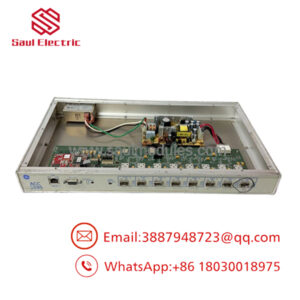
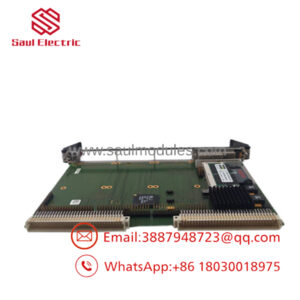
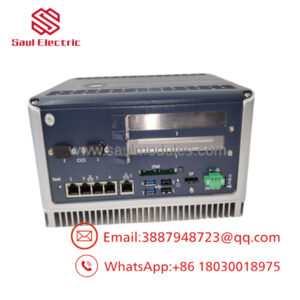
The GE 531X board series forms the core processing and signal distribution backbone for General Electric’s legacy DC drive systems, such as the Direct-O-Matic II and early GE Digital Drives. These circuit boards act as critical control hubs, orchestrating voltage feedback, tachometer processing, SCR gate firing, and communications between main processor racks and heavy power bridges.
Engineered for rugged industrial environments, 531X boards utilize heavy-duty component layouts designed to withstand severe electrical noise and high operating temperatures inside mill-duty drive cabinets. Integrating a pre-tested replacement board allows engineers to maintain proven high-horsepower drive lines without undertaking multi-million-dollar modern drive panel overhauls.
Key Technical Specifications
| Parameter | Specification |
| Manufacturer | General Electric (GE Drive Systems) |
| Base Part Series | 531X System Board Family |
| Compatible Drive Platforms | GE Direct-O-Matic II, SCR Drive Cabinets, Custom Motor Drives |
| Power Supply Inputs | +5VDC, +15VDC, -15VDC, +24VDC (bus-supplied via backplane/harness) |
| Feedback Processing | Pulse tachometer, armature voltage, field current, and shunt feedback |
| Gate Drive Outputs | Pulse transformer interfaces for 6-pulse or 12-pulse SCR bridges |
| System I/O | Optically isolated digital inputs, high-speed analog output channels |
| Form Factor | Rack-mounted or open-frame PCB with card-edge/ribbon connectors |
| Operating Temperature | 0°C to 60°C (32°F to 140°F) inside drive enclosure |
Application Scenarios & The “Trench” Experience
It’s 1:45 AM during a continuous casting run at a steel mill. The main strand drive trips on an un-cleared SCR fault, bringing hot metal transfer to a dead halt. The line operator attempts three resets, but the drive refuses to clear the gate driver error. The root cause isn’t a blown SCR or a melted fuse—it’s a failed driver transistor on an aging 531X board that lost its bias voltage. Every ten minutes the line sits idle, thousands of dollars in scrap metal cool in the tundish.
Primary Industrial Applications
- Metal Processing & Rolling Mills – Main Roll Stand Drives – Executes precise torque and speed loop regulation under extreme shock loading.
- Paper & Pulp Converting – Sectional Paper Machine Drives – Handles tight tachometer feedback matching between adjacent draw rolls.
- Mining & Heavy Material Handling – Mine Hoist & Dragline Drives – Controls high-inertia reversing duty cycles for large DC motors.
- Extrusion & Plastics – High-Horsepower Main Extruders – Manages field weakening and armature current loops for constant-power running.
Field Case Study
A paper converter in Ohio ran a legacy 1,500 HP DC drive line with a damaged 531X tachometer feedback board. The OEM recommended replacing the entire drive system with an AC conversion kit requiring 16 weeks of downtime and panel refits. Instead, the plant electrical engineer sourced a pre-tested 531X replacement board. The swap took under an hour, the motor locked onto its speed setpoint within 0.1 RPM, and the plant saved over $200,000 in hardware and lost production.
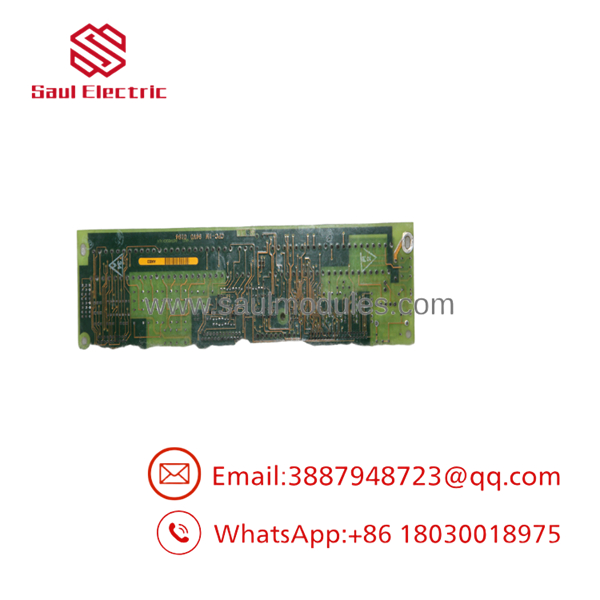
531X
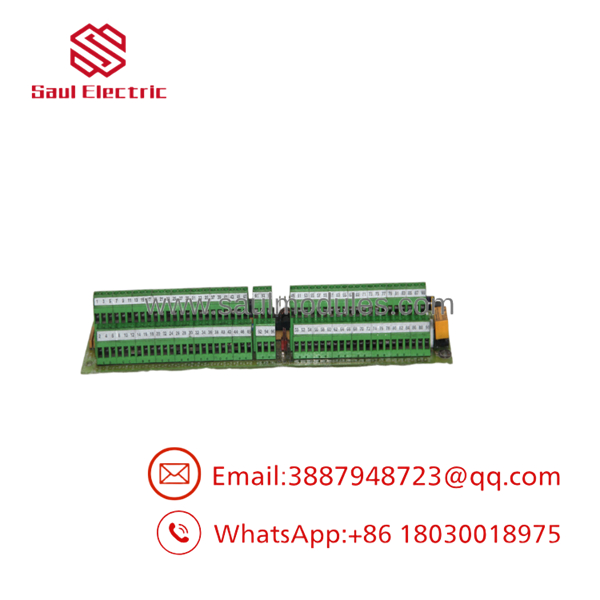
531X
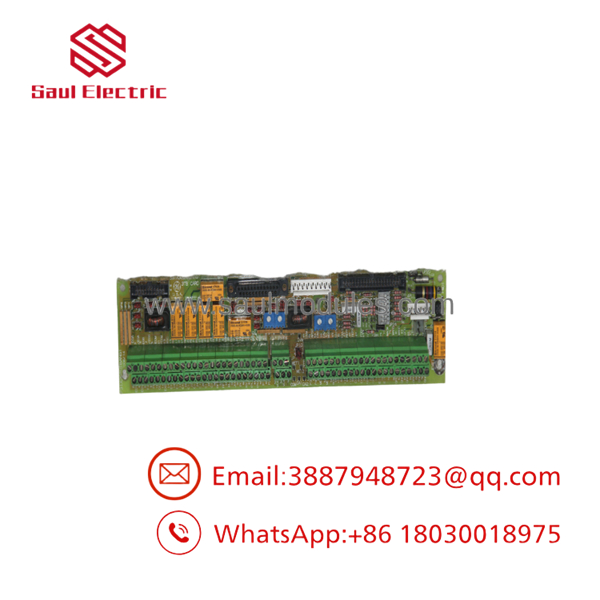
531X
Transparency SOP: Quality Assurance & Testing
We test legacy GE boards on live drive racks to ensure drop-in field reliability. Our quality assurance pipeline includes:
- Inbound Visual & Component Audit: Detailed inspection of PCB traces, solder bridges, electrolytic caps, resistor packs, and card-edge gold fingers for heat stress or corrosion.
- Backplane Power-On Checks: Mounting the card to a live test chassis to verify +5V, +15V, and -15V DC rail stability and clock oscillator performance.
- Signal & Feedback Injection Testing: Simulating motor speed inputs (tach/encoder) and current feedback using signal generators to track output response across driver stages.
- Gate Pulse Waveform Audit: Using multi-channel oscilloscopes to confirm SCR firing pulse amplitude, rise time, and phase synchronization across all channels.
- ESD Sealing & Heavy-Duty Packaging: Resetting jumper setups, logging exact board revision suffixes, and sealing the unit inside anti-static shielding bags with custom foam packing.
The Veteran’s Tech Trap Guide (Crucial Value-Add)
⚠️ Trap 1: Check the Suffix Code Revisions carefully.
The part number prefix (e.g., 531X305N) tells only half the story. The trailing revision code (e.g., TBAG1 vs. TBAG2 or revision letters like A, B, C) indicates component updates, socketed ICs, or altered resistor networks. Installing a different revision level can result in incorrect scaling on analog inputs or missing jumper pins. Match the full suffix string whenever possible.
❗ Trap 2: Take Photos of DIP Switches and Config Jumpers.
531X boards rely heavily on physical DIP switches and BERG jumpers to set system gains, feedback ranges, and drive configurations. Do not assume your replacement board arrives pre-configured for your motor. Carefully copy every jumper position from your failed card to the replacement before applying power.
⚠️ Trap 3: Inspect Ribbon Cables and Card-Edge Connectors.
Downtime on 531X installations is often caused by oxidation or bent pins on the multi-pin ribbon cables rather than a failed board. Before condemning a board, clean all edge connectors with isopropyl alcohol and inspect cable strain reliefs.
❗ Trap 4: Never Pull or Insert Boards Under Power.
These legacy boards lack hot-swap support. Pulling a 531X card with control power applied will send current spikes through the backplane, potentially destroying surrounding processor boards or firing SCR gates out of sequence. Always disconnect main power and lock out the DC drive before servicing.
Frequently Asked Questions (FAQ for Conversion)
Q: Are GE 531X series boards hot-swappable?
A: No. Always disconnect input line power and verify all DC bus capacitors are fully discharged before removing or installing a 531X board. Swapping cards on an energized rack will damage sensitive CMOS logic.
Q: Can I use a 531X board with a different revision suffix than my original?
A: In many cases, higher revision suffixes (e.g., Revision B to Revision C) are backward-compatible. However, you must verify that all jumper locations, scaling resistors, and socketed EPROMs match your original board layout before installation.
Q: Why choose replacement 531X boards over a complete modern drive retrofit?
A: Complete drive retrofits require replacing cabinets, re-wiring field devices, updating PLC communication programs, and scheduling days of downtime. Dropping in a pre-tested 531X board restores system operation in hours at a fraction of the cost.
Q: How do I know if the fault is on the 531X board or the power bridge?
A: Verify power supply voltages (+5V, +/-15V) at the board test points first. If voltages are correct but gate pulse outputs are missing or distorted on an oscilloscope while firing commands are active, the driver board is likely at fault.
Q: What warranty coverage is included with your surplus 531X boards?
A: Every GE 531X unit ships with a full 12-month functional replacement warranty. If the board fails diagnostic checks or encounters issues in service within one year, we replace it immediately.

 Start Chat


