





Description
Product Introduction
The GE ACC-5595-208 (part of the VMIVME-5595 family originally developed by VMIC) is a managed fiber-optic hub built specifically for Reflective Memory real-time deterministic networks. Reflective Memory networks allow multiple independent computers, VME crates, and PLCs to share a common block of local RAM across fiber optic links without software overhead, network protocol stacks, or collision management.
The ACC-5595-208 hub acts as the central nerve center for these ultra-low-latency networks. It allows node insertion, ring bypass, and automatic link regeneration. Instead of relying on a fragile daisy-chained fiber ring where a single broken cable or powered-down node drops the entire plant network, the 5595 hub automatically bypasses failed ports to keep the remaining nodes in sub-microsecond deterministic synchronization.
Key Technical Specifications
| Parameter | Value |
| Network Type | GE / VMIC Reflective Memory (5565 / 5595 Series Compatible) |
| Data Transfer Rate | Up to 2.125 Gbps deterministic ring transmission |
| Fiber Optic Interface | Multi-port LC / ST Fiber Optic transceivers |
| Media Type | Multimode Fiber (850nm) / Single-mode Fiber options |
| Max Fiber Distance | Up to 300 meters (Multimode) / Up to 10 km (Single-mode) |
| Bypass Hardware | Automatic optical/electronic port bypass on link loss or node failure |
| Management Interface | RS-232 serial console / Dark fiber diagnostics |
| Enclosure & Mounting | Standalone chassis / Rack-mount shelf kit |
| Power Supply | 100–240V AC / 24V DC input depending on chassis build |
| Operating Temperature | 0°C to +65°C (32°F to 149°F) |
Application Scenarios & The “Trench” Experience
In full-flight simulators, hardware-in-the-loop (HIL) automotive test cells, or power plant simulators, thousands of analog inputs, actuator positions, and control variables must sync across multiple host computers in under 1 microsecond. When a single fiber node loses power or suffers a broken jumper, a simple ring topology collapses, dropping the whole simulation mid-run. Dropping an ACC-5595-208 hub into the center of the network converts the fragile ring into a fault-tolerant star topology. If node 3 suffers a power loss or a snapped fiber cable, the 5595 hardware bypass switches engage in nanoseconds, maintaining uninterrupted synchronization across all remaining nodes.
- Flight Simulators & Training Rigs – Linking visual engines, motion platforms, and flight-model host processors with sub-microsecond memory mirroring.
- Power Plant & Grid Hardware Simulators – Mirroring high-speed grid telemetry between real-time target computers and physical control panels.
- High-Speed Test Cells – Synchronizing multi-channel acoustic, vibration, and torque data acquisition racks in engine test stands.
- Defense Radar & Sonar Arrays – Passing continuous signal-processing matrix buffers between VMEbus processor crates without bus locking.
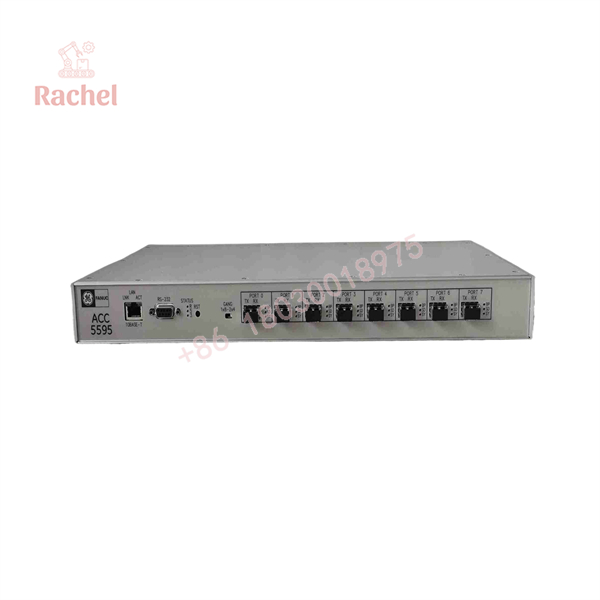
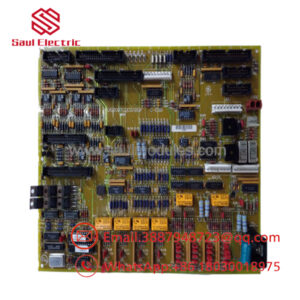
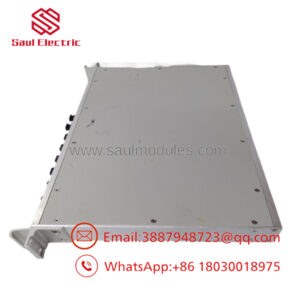
ACC-5595-208
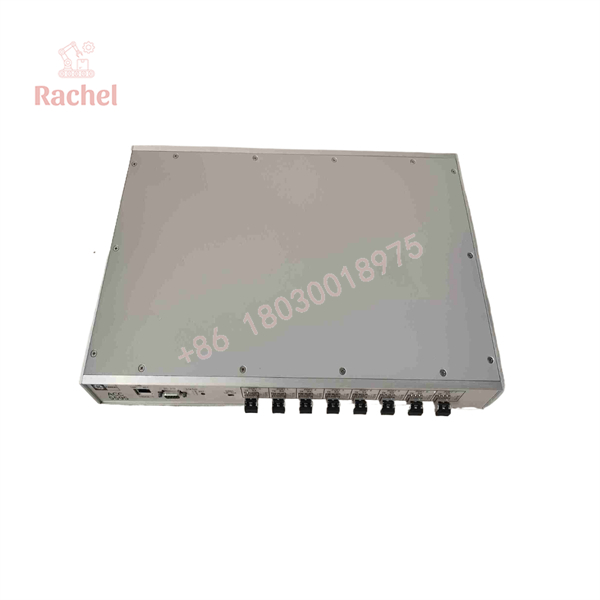
ACC-5595-208
Transparency SOP: Quality Assurance & Testing
We don’t just ship boxes; we test them on actual GE VMIC Reflective Memory benches. Every surplus or refurbished ACC-5595-208 undergoes a strict 5-stage verification process before shipping:
- Inbound Physical Inspection: Complete audit of internal power supplies, optical transceiver ports, chassis fans, and identification labels.
- Power Rail & Thermal Diagnostic: Bench powered under continuous load; internal voltages checked for clean regulation and zero thermal drift across power components.
- Optical Power Output & Sensitivity Check: Fiber port transceivers tested using optical power meters to ensure transmitter power (dBm) and receiver sensitivity fall strictly within OEM specifications.
- Active Ring Data Loopback Test: Connected to multiple VMIVME-5565 / PCI-5565 node cards across all ports simultaneously; verified continuous 2.125 Gbps memory mirroring under stress-test DMA transfers.
- Automatic Port Bypass Verification: Disconnected active fiber patch cables live during stress testing to verify instant automatic port bypass logic and confirm zero data corruption on adjacent ports.
The Veteran’s Tech Trap Guide (Crucial Value-Add)
⚠️ Clean Your Fiber Endfaces: Over 80% of Reflective Memory link errors are caused by dirty LC/ST fiber connectors. A tiny dust speck on a 2.125 Gbps optical transceiver will cause high bit-error rates (BER), triggering continuous port-bypass switching. Always clean fiber tips with isopropyl alcohol optical wipes before plugging them into the hub ports.
❗ Observe Port Speed Constraints: Ensure all node interface cards on the hub (e.g., VMIVME-5565, PCI-5565, PMC-5565) are set to match the clock speed of the hub. Mixing older 1.25 Gbps nodes with newer 2.125 Gbps ports without setting proper port speed negotiation will prevent the ring from locking up.
⚠️ Single-mode vs. Multimode Port Matching: The ACC-5595-208 can be built with multimode or single-mode optical transceivers. Never mix multimode fiber patch cables into single-mode transceiver ports. Doing so causes massive optical attenuation and signal scatter that trips link-loss indicators.
❗ Don’t Exceed Fiber Bend Radii: When routing fiber optic patch cables from the hub through server rack cabinets, keep bend radii above 30 mm. Sharp bends cause micro-bending light loss that causes intermittent frame loss during high-temperature plant operations.
Frequently Asked Questions (FAQ for Conversion)
Q: Can the ACC-5595-208 hub be used to connect both VMEbus and PCI/PCIe Reflective Memory cards? A: Yes. Reflective Memory operates at the hardware layer independent of the host computer bus. As long as the node cards use the same Reflective Memory protocol speed (e.g., 5565 series architecture), a VME card, a PCI card, and a PCIe card can all plug into the same ACC-5595-208 hub.
Q: Does the ACC-5595-208 require driver software or programming? A: No. The ACC-5595-208 is an unmanaged hardware-level protocol converter/hub. It handles signal conditioning, clock extraction, and port bypass strictly in onboard hardware without needing software drivers or firmware configuration.
Q: What happens if a node connected to the hub loses power? A: The ACC-5595-208’s internal optical detection circuitry detects the loss of light or signal lock on that specific port and automatically engages an internal hardware bypass. The rest of the nodes on the network remain completely connected without breaking the memory-sharing ring.
Q: Is the GE ACC-5595-208 still in production? A: No. These legacy VMIC / GE Intelligent Platforms modules are discontinued by the OEM. Sourcing our fully tested New Surplus or refurbished units guarantees a direct 1:1 hardware drop-in without requiring you to re-architect your fiber topology or replace expensive node cards.
Q: What warranty is provided with this unit? A: All our new surplus and bench-tested refurbished GE Reflective Memory hardware comes backed by a full 12-month direct replacement warranty. If any port or internal component fails under normal operating conditions within one year, we will swap the unit out immediately from our stock.

 Start Chat


