





Description
Product Introduction
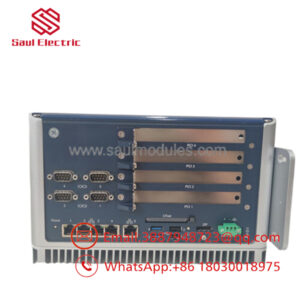
The GE D20-EME (Ethernet Memory Expansion) module is a specialized processing and interface card engineered for the GE Harris D20 Substation Automation platform. Installed directly into the VMEbus rack alongside main processor cards like the D20ME, the D20-EME expands database memory capacity while adding high-speed network connectivity to legacy Remote Terminal Units (RTUs).
In utility substations, this board allows older D20 RTUs to process larger DNP3 or IEC 60870-5-104 point databases without running into memory bottlenecks. By upgrading communication throughput from slow serial lines to local Ethernet, the D20-EME bridges legacy field acquisition hardware directly into modern SCADA networks.
Key Technical Specifications
| Parameter | Specification |
| Manufacturer | GE Grid Solutions / GE Harris |
| Base Model | D20-EME |
| Compatible Platform | GE D20 / D200 Substation RTUs |
| System Bus Interface | VMEbus Standard (Eurocard Form Factor) |
| Onboard Memory | Up to 2MB NVRAM / Flash for database expansion |
| Network Interfaces | 10Base-T (RJ45) or 10Base-FL (Fiber Optic ST connectors) |
| Communication Protocols | DNP3 IP, IEC 60870-5-104, Modbus TCP/IP |
| Operating Voltage | +5 VDC (Supplied via VME backplane) |
| Operating Temperature | -20°C to +70°C (-4°F to 158°F) |
| Diagnostics | Front panel status LEDs (Power, Run, Tx/Rx, Fail) |
Application Scenarios & The “Trench” Experience
It is 4:30 PM on a Friday before a holiday weekend, and a high-voltage transmission substation loses its primary SCADA link. The EMS system reports a communication timeout on the main breaker line. Onsite, the utility technician finds the legacy D20 RTU frozen on a memory-overflow error due to a recent point-database update. Without SCADA visibility, grid operators cannot perform remote switching, forcing the utility to post an expensive field crew at the remote site overnight.
Primary Industrial Applications
- Electric Utility Substations – SCADA Communication Gateway – Connects field I/O racks to regional Energy Management Systems (EMS) over DNP3 IP.
- Renewable Energy Integration – Solar/Wind Collector RTUs – Expands database memory to log rapid voltage/frequency fluctuations from inverter banks.
- Industrial Power Distribution – Refinery Substation Monitoring – Integrates local breaker protection relays into central plant DCS networks.
- Transit Electrical Grids – Traction Substation Control – Provides high-speed event reporting for railway power distribution systems.
Field Case Study
A Midwest power utility attempted to migrate a 138kV substation from serial lease lines to an encrypted WAN. The existing D20ME processor ran out of memory when loading the new network protocol stack. Rather than pulling the entire cabinet and rewiring hundreds of field points—costing over $80,000 in panel retrofits—the field engineer installed a pre-tested D20-EME card into the open VME slot. The expansion card doubled available database memory and brought the RTU online via Ethernet in under two hours.
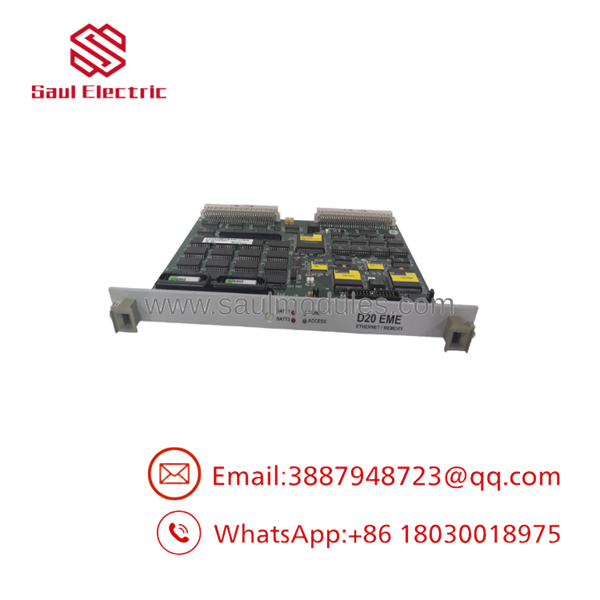
D20-EME
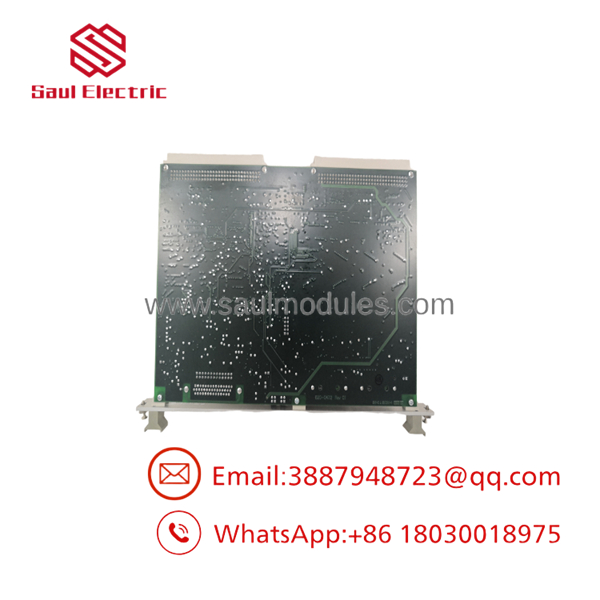
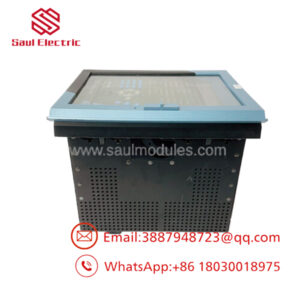
D20-EME
Transparency SOP: Quality Assurance & Testing
We evaluate power utility hardware on specialized D20 test benches to guarantee sea-level and field reliability:
- Physical & Component Inspection: Thorough check of gold VME edge-connector pins, onboard lithium backup batteries, memory chips, and RJ45/ST fiber ports for stress or corrosion.
- VMEbus Power-Up Validation: Mounting the board into a live D20 chassis to verify internal +5V rails, bootloader integrity, and front-panel LED status.
- Memory Stress & NVRAM Audits: Executing full read/write memory diagnostics across the entire address space to ensure zero bad blocks in NVRAM or Flash.
- Network Traffic & Protocol Handshakes: Testing Ethernet ports under continuous DNP3 IP and Modbus TCP traffic loops to verify zero packet drops or thermal drift.
- Static Shielding & Custom Packaging: Clearing configuration data, applying protective covers over optical ports, and packing the card in anti-static ESD bags with heavy foam boxing.
The Veteran’s Tech Trap Guide (Crucial Value-Add)
⚠️ Trap 1: Check Your Onboard Battery Voltage First.
The D20-EME board relies on an onboard coin battery to hold database tables in NVRAM during station power cycles. If you pull a surplus board from storage and install it without checking battery voltage, the RTU may drop its configuration the moment station auxiliary power drops. Always measure for a solid 3.0V+ before sliding the card into the rack.
❗ Trap 2: Pay Attention to Fiber vs. Copper Part Variations.
boards come in configurations for 10Base-T (RJ45 copper) and 10Base-FL (ST fiber optic). Ordering the wrong version means needing media converters inside the cabinet, which introduces another point of failure. Check the hardware part number suffix (e.g., 517-0158 vs 502-0260) to confirm your physical media type.
⚠️ Trap 3: VMEbus Slot Placement Matters.
The must be placed in the designated expansion slot adjacent to the main CPU card to maintain proper VMEbus daisy-chain signals (IACK / BERR). Leaving an empty slot between the D20ME processor and the will interrupt backplane communications and prevent the RTU from booting.
❗ Trap 4: Firmware & Config File Version Matching.
Do not push a standard D20 configuration file to an RTU after adding a board without updating the hardware definitions in WESDAC / ConfigPro software. The system configuration must explicitly enable the EME memory map, or the CPU will ignore the extra RAM space.
Frequently Asked Questions (FAQ for Conversion)
Q: Can I hot-swap the board while the RTU is powered?
A: No. The D20 VME backplane is not hot-swappable. Inserting or removing the module with power applied will cause backplane bus errors and can permanently damage the processor or memory chips. Always isolate the 48V/125V station battery power supply before servicing cards.
Q: What is the main difference between a D20ME and a ?
A: The D20ME is the main processor card that executes RTU operating logic and handles basic serial ports. The is an expansion board that mounts alongside the main processor to provide extra database memory and dedicated Ethernet network ports.
Q: Do I need special software to configure the board?
A: Yes, configuring the ethernet interfaces and expanded memory maps requires GE’s ConfigPro or SGCT (Substation Gateway Configuration Tool) software suite, along with the appropriate system definition files.
Q: Why buy new surplus or refurbished modules instead of upgrading the RTU?
A: Upgrading an entire substation RTU platform requires rewiring field terminations, drawing new schematics, and scheduling prolonged outages. Swapping in a pre-tested board keeps your proven field wiring intact while restoring full SCADA operation.
Q: What warranty is provided with this expansion board?
A: Every GE module ships with a full 12-month functional replacement warranty. If the unit experiences memory faults or port failures in field service, we replace it immediately.

 Start Chat


