





Description
Product Introduction & Engineering Value
The SDCC is one of the boards you do not want to substitute casually. It sits at the center of the drive-control electronics, processing feedback and command information while interfacing with other Mark V boards and drive hardware.
The G1AEC configuration is important. The DS200SDCC family contains multiple hardware and artwork revisions. A board that merely carries the “DS200SDCC” designation is not automatically equivalent to DS200SDCCG1AEC.
Technical Specifications
| Parameter | Specification |
|---|---|
| Manufacturer | General Electric |
| Part Number | DS200SDCCG1AEC |
| Series | Mark V Speedtronic |
| Functional Acronym | SDCC |
| Product Type | Drive Control Board |
| Board Group | G1 |
| Configuration | A |
| Revision Identification | E/C configuration |
| Microprocessors | 3 × 80C186 |
| Programmable Logic | 2 × VME-type programmable logic devices |
| Communication | Mark V LAN / serial interface architecture |
| Application | GE turbine and drive control systems |
The SDCC includes multiple onboard processors and programmable logic resources. It also contains connectors used to interface with other Mark V drive-control hardware.
Important specification boundary
Exact connector assignments, firmware configuration, memory population, communication options, and drive-specific I/O behavior can vary by SDCC configuration. For that reason, procurement should use the complete DS200SDCCG1AEC number and the original board’s hardware markings, rather than relying on a generic SDCC datasheet.
Field Application & the “Trench” Experience
A turbine auxiliary drive starts producing inconsistent speed-control behavior. The power section checks out. Field feedback is present. The Mark V diagnostics, however, point toward the drive-control electronics.
The maintenance engineer checks the installed DS200SDCCG1AEC, photographs the board, records the jumper and connector configuration, and compares it against the available spare. The spare is a different SDCC revision, so it is held back rather than installed during the outage.
That is the right call. The SDCC is deeply integrated into the drive-control architecture. Replacing it with a visually similar board without checking the exact configuration can turn a diagnostic problem into a commissioning problem.
Specific application scenarios:
- GE Mark V turbine auxiliary-drive control
- AC/DC drive control and feedback processing
- Turbine starting and auxiliary equipment
- Legacy Speedtronic drive cabinet refurbishment
- SDCC-based Mark V drive troubleshooting
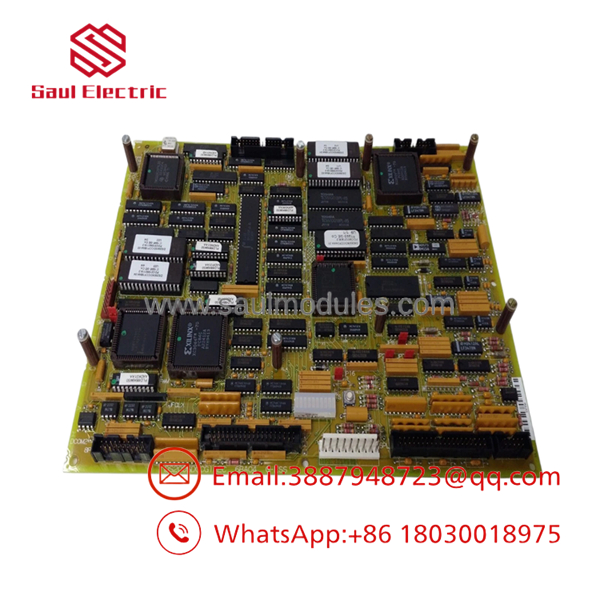
DS200SDCCG1AEC
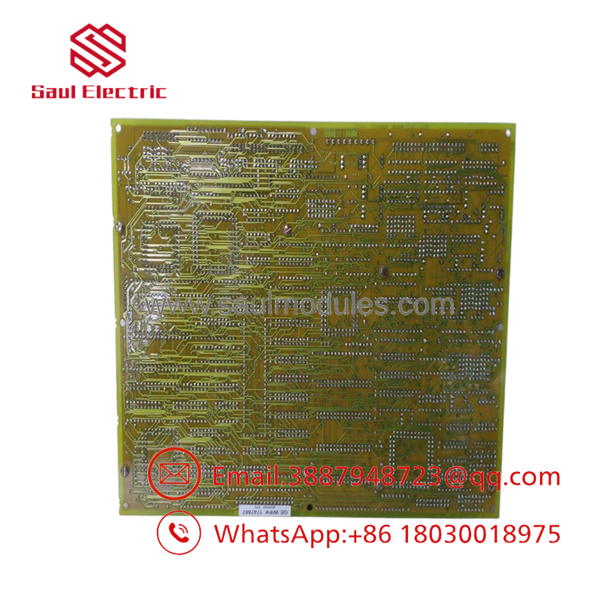
DS200SDCCG1AEC
Transparency SOP: QA & Testing
For DS200SDCCG1AEC, QA should go beyond a simple power-up:
- Part-number verification — Confirm
DS200SDCCG1AECon the actual PCB. - Revision inspection — Record all visible hardware/artwork revision markings.
- Physical inspection — Examine processors, programmable logic devices, connectors, capacitors, resistors, solder joints, and PCB traces.
- Connector testing — Inspect all external and backplane interfaces for damaged or oxidized contacts.
- Processor verification — Confirm the onboard processor circuitry operates correctly using the appropriate Mark V test environment.
- I/O verification — Test applicable drive-control inputs and outputs.
- Communication testing — Verify applicable LAN/serial communications and diagnostic behavior.
- System integration test — Confirm correct interaction with the associated Mark V drive hardware.
- Final QA record — Document the actual board, revision, test results, condition, and warranty.
For New Surplus, obtain confirmation that the board has never been installed or energized. For Refurbished, request evidence of processor, I/O, and communications testing.
The Veteran’s Tech Trap Guide
⚠️ Trap #1 — The SDCC is not a generic controller card.
It is a central component of the Mark V drive-control architecture. A wrong configuration can affect multiple drive functions.
⚠️ Trap #2 — Firmware and configuration matter.
Before removing a functioning SDCC, capture the existing configuration and diagnostic information. Do not assume that installing a physically compatible board will reproduce the original system behavior.
⚠️ Trap #3 — Check the surrounding boards.
An SDCC-related alarm does not automatically mean the SDCC itself has failed. Associated interface boards, cables, feedback circuits, and power supplies can generate similar symptoms.
PRO TIP: Record the complete board number, revision markings, firmware/configuration information, and cable connections before removing the original SDCC.
Dynamic FAQ
Q: What is the GE DS200SDCCG1AEC?
A: It is a GE Mark V SDCC Drive Control Board, used for drive-control processing and interfaces within compatible Speedtronic systems.
Q: What processors are used on the SDCC?
A: The documented SDCC architecture uses multiple Intel 80C186-family microprocessors, with three processors associated with the board’s control functions.
Q: Is DS200SDCCG1AEC interchangeable with another DS200SDCC?
A: Not automatically. The complete G1AEC configuration, hardware revision, firmware/configuration, and application should be verified before substitution.
Q: What should be backed up before replacing an SDCC?
A: Record the installed board’s part number and revisions, system configuration, firmware information where accessible, connector/cable arrangement, and Mark V diagnostic information.
Q: How should New Surplus authenticity be checked?
A: Request actual-unit photographs showing the complete part number and revision markings, confirmation of unused status, and any available original GE packaging or traceability.
Q: What should I request for Refurbished stock and warranty?
A: Request the refurbishment scope, processor/logic testing, I/O and communications testing, actual-unit photographs, serial/part-number traceability, and written warranty/DOA terms. A basic power-on test is not enough for an SDCC control board.

 Start Chat


