





Description
Product Introduction & Engineering Value
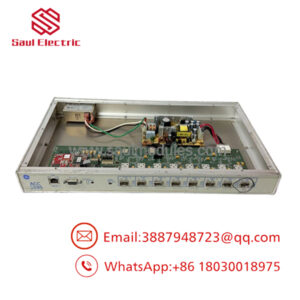
The TCDA handles a large portion of the discrete signal traffic associated with a Mark V system. It receives contact and pulse information from the terminal-board layer, processes those signals, and provides relay outputs for control functions.
The full DS200TCDAH1BHD identifier should be used when sourcing a replacement. The additional revision/configuration characters are important because Mark V DS200 boards exist in numerous closely related variants.
Technical Specifications
| Parameter | Specification |
|---|---|
| Manufacturer | General Electric |
| Part Number | DS200TCDAH1BHD |
| Series | Mark V Speedtronic |
| Functional Acronym | TCDA |
| Product Type | Digital I/O Board |
| Digital Inputs | 32 |
| Pulse Accumulator Inputs | 8 |
| Relay Outputs | 10 |
| Processor | Intel 80196 family |
| Programmable Logic | EPLD devices |
| Terminal Interfaces | DTBC / DTBD architecture |
| Application | Mark V turbine control |
The TCDA architecture uses an onboard microprocessor and programmable logic to handle digital I/O processing. It also contains dedicated interface circuitry for pulse accumulation and relay-output functions.
Configuration caution
The exact BHD configuration should be confirmed from the physical board and the customer’s Mark V documentation. Do not infer voltage ratings, terminal-board compatibility, firmware, or relay contact ratings from the generic TCDA description alone.
Field Application & the “Trench” Experience
A turbine maintenance team is chasing an intermittent permissive signal. The field contact checks correctly with a multimeter, but the Mark V occasionally reports the input as false.
Instead of immediately replacing the DS200TCDAH1BHD, the technician checks the terminal board, ribbon cable, connector seating, and diagnostic status. Once the signal path is narrowed to the TCDA, the spare board is compared against the installed unit down to its complete part number and revision.
That matters. A discrete-input problem can originate anywhere between the field contact and the processor. Replacing the TCDA first can hide the real fault.
Specific application scenarios:
- Turbine start permissive and interlock monitoring
- Digital trip-status acquisition
- Pulse-speed and rotating-equipment feedback
- Auxiliary-system relay control
- Legacy Mark V I/O cabinet maintenance
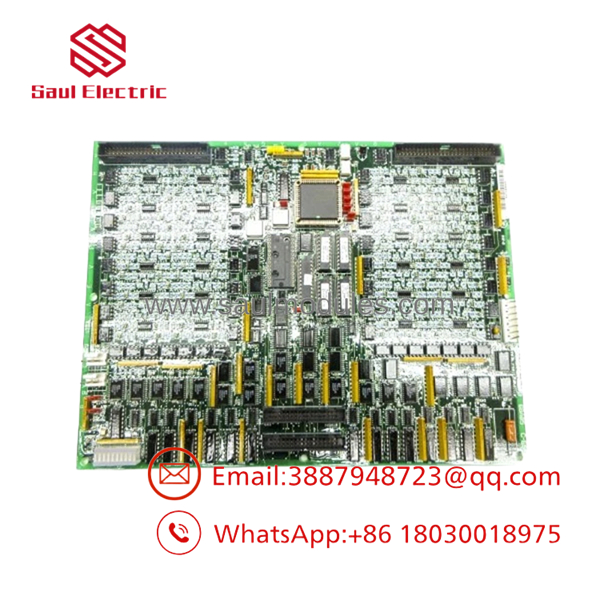
DS200TCDAH1BHD
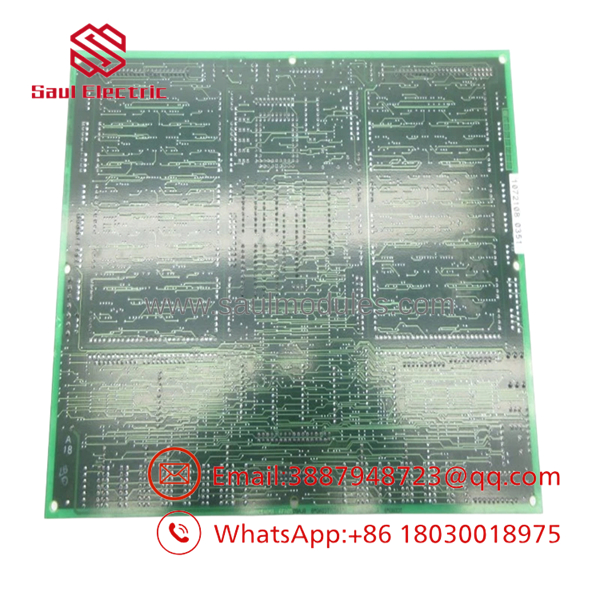
DS200TCDAH1BHD
Transparency SOP: QA & Testing
For DS200TCDAH1BHD, a proper test sequence should include:
- Identity check — Verify the complete part number and revision markings.
- Visual inspection — Check the PCB, ICs, relays, connectors, solder joints, and traces.
- Connector inspection — Examine the terminal-board and backplane interfaces.
- Digital-input testing — Apply controlled discrete signals and verify channel response.
- Pulse-input testing — Exercise representative pulse channels using controlled frequency signals.
- Relay testing — Verify each applicable relay-output circuit under suitable test conditions.
- Processor/logic diagnostics — Check onboard processing and diagnostic behavior using an appropriate Mark V test setup.
- System test — Verify correct I/O operation after installation.
- Documentation — Record test results, actual-unit photographs, condition, and warranty.
For New Surplus, ask for confirmation that the PCB has never been installed or energized. For Refurbished, request the actual I/O test report.
The Veteran’s Tech Trap Guide
⚠️ Trap #1 — Don’t treat all TCDA boards as identical.
The TCDA family contains several revisions and configurations. Match DS200TCDAH1BHD, not simply “TCDA.”
⚠️ Trap #2 — Check the terminal-board path first.
A faulty ribbon cable, terminal-board connection, or field contact can produce exactly the kind of symptom that gets blamed on the TCDA.
⚠️ Trap #3 — Pulse channels need separate testing.
A conventional continuity check does not prove that the pulse-accumulator circuitry is functioning correctly.
PRO TIP: Photograph the original board and label every ribbon cable before removal. Mark V cabinets reward careful documentation.
Dynamic FAQ
Q: What is the GE DS200TCDAH1BHD?
A: It is a GE Mark V TCDA Digital I/O Board used for digital inputs, pulse accumulation, and relay-output functions.
Q: How many digital inputs does the TCDA provide?
A: The documented TCDA architecture provides 32 digital inputs and 8 pulse-accumulator inputs, along with 10 relay outputs.
Q: What processor is associated with the TCDA?
A: The TCDA architecture uses an Intel 80196-family microprocessor with programmable logic devices.
Q: Should another DS200TCDA board be used as a replacement?
A: Only after confirming the complete part number, hardware revision, terminal-board arrangement, and system configuration. Similar appearance is not sufficient.
Q: How do I verify New Surplus authenticity?
A: Request actual-unit photographs, the complete DS200TCDAH1BHD identification, confirmation that the board has never been installed or energized, and any available packaging or traceability information.
Q: What should I request for Refurbished stock and warranty?
A: Request digital-input testing, pulse-input testing, relay-output testing, processor/logic verification, actual-unit photographs, refurbishment details, and written warranty/DOA terms. A simple power-on test is not adequate for a Mark V digital I/O board.

 Start Chat


