





Description
Product Introduction
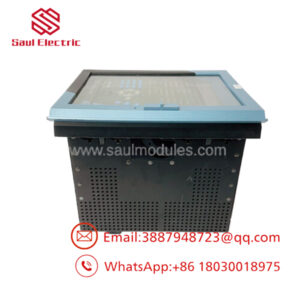
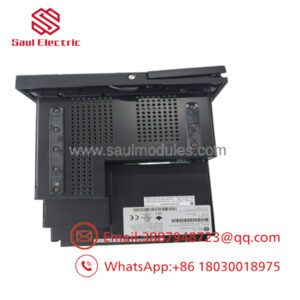
The GE DS3800HADA1B1B is a specialized Auxiliary Analog Daughterboard (HADA) engineered for GE Speedtronic Mark IV turbine control racks and high-horsepower industrial drive systems. Functioning as a daughtercard module, it mounts directly onto primary Mark IV motherboards (such as main processor or I/O driver cards) using multi-pin standoff pin headers, expanding localized analog signal processing capacity without consuming extra backplane slots.
Unlike standalone rack-mount cards that interface directly with backplane buses, the HADA board provides dedicated hardware-level conditioning, scaling, and precision trimming for auxiliary analog feedback loops. It handles localized signal filtering, gain adjustment, and offset compensation for sensitive process variables before passing clean analog feeds directly into the underlying motherboard’s A/D conversion circuit.
Key Technical Specifications
| Parameter | Specification / Value |
| Manufacturer | General Electric (GE) |
| System Architecture | Speedtronic Mark IV Turbine Control & Industrial Drives |
| Board Functional Acronym | HADA (High-Density Auxiliary Analog Daughterboard) |
| Form Factor | Compact plug-in daughtercard with nylon standoff clips |
| Inter-Board Interface | Multi-pin pass-through header pins connecting to base PCB |
| Signal Processing Types | Precision DC voltage scaling, offset trimming, and analog isolation |
| Hardware Configuration | Multi-turn precision trimpots (potentiometers) & BERG jumper blocks |
| Onboard Components | Low-noise operational amplifiers, metal-film precision resistor arrays |
| Board Generation / Prefix | DS3800 Series (Classic modular Mark IV hardware architecture) |
| Dimensions | Compact sub-card layout (~12 cm x 8 cm) |
Application Scenarios & The “Trench” Experience
The Trench Story
It’s 1:00 AM at a paper mill driven by legacy GE DC drive panels controlled via Mark IV architecture. Section 3 of the paper machine experiences subtle speed hunting, tearing the web and stopping production. Instrument techs trace the problem not to the main drive controller, but to thermal drift in an operational amplifier on the small HADA daughterboard mounted to the analog regulator card. The drift was distorting the tension feedback signal by less than 15 millivolts—just enough to destabilize the speed loop. Swapping out the faulty daughtercard with a pre-calibrated DS3800HADA1B1B restored rock-solid tension control and got the line running before morning shift change.
Industrial Applications
- Turbine Valve Positioning: Fine-tuning analog feedback signals from LVDTs on main steam inlet and governor control valves.
- Heavy DC & AC Drives: Providing precision analog signal conditioning for motor armature current feedback and field regulator loops.
- Auxiliary Temperature Scaling: Pre-conditioning localized thermocouple or RTD signal inputs before primary A/D multiplexing.
- Process Pressure Feedback Loops: Offset and gain adjustment for specialized hydraulic and lube oil header pressure transducers.
Transparency SOP: Quality Assurance & Testing
We don’t just pull legacy boards out of a warehouse box and throw them into a crate; we validate them on live GE Mark IV test fixtures.
- Inbound Physical Inspection: Complete visual audit under magnification. Inspection for trace cracks, corroded header pins, aged electrolytic capacitors, and damaged multi-turn potentiometers.
- Anti-Static ESD Cleaning: Ultrasonic bath cleaning using specialized dielectric solvent to eliminate carbon dust, oil haze, and rosin residue.
- Potentiometer & Passive Component Checks: Measuring multi-turn trimpots across full resistance ranges to verify smooth linear adjustments without dropouts or noisy dead spots.
- Live Daughtercard Mating Test: Mounting the card onto a live Mark IV base board on a test rack. Verifying pin-header contact integrity and power rail (+15V, -15V, +5V) distribution.
- Precision Signal Injection & Burn-In: Injecting calibrated microvolt and millivolt reference signals to verify linear gain execution and zero thermal drift during thermal chamber burn-in.
- Jumper Audit & ESD Packaging: Documenting all factory jumper configurations before vacuum-sealing the board in anti-static ESD shielding.
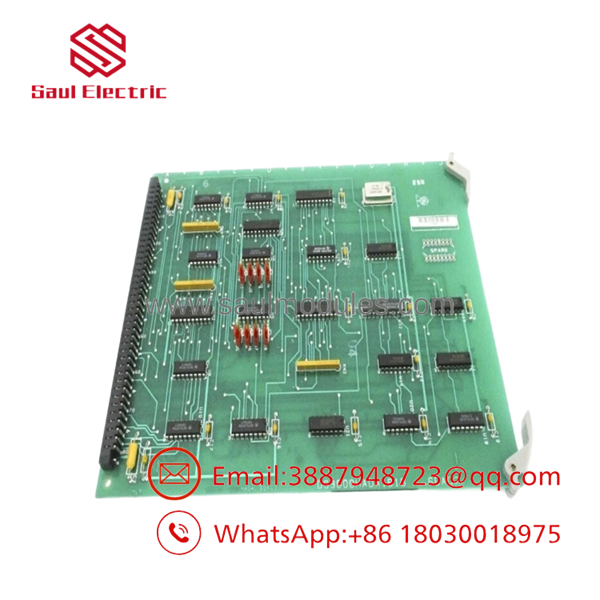
DS3800HADA1B1B
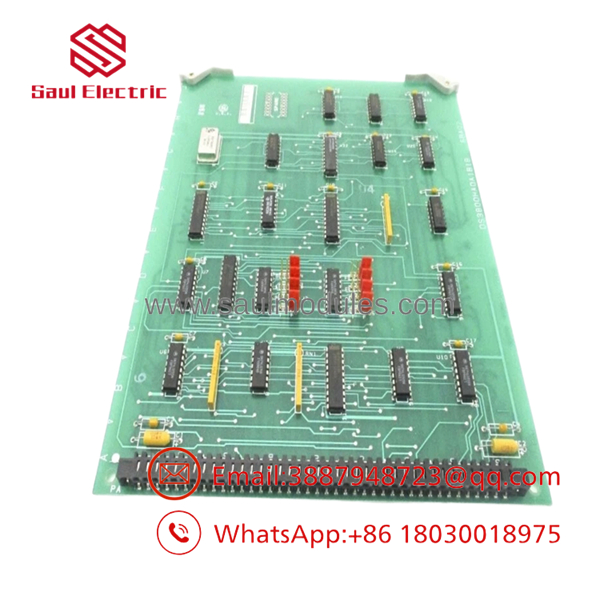
DS3800HADA1B1B
The Veteran’s Tech Trap Guide (Crucial Value-Add)
⚠️ 1. The Trimpot Calibration Trap
Never expect a replacement DS3800HADA1B1B daughterboard to match your plant’s specific analog calibration right out of the box. The onboard multi-turn potentiometers (trimpots) are physically set for gain and offset tuning. Installing a replacement without verifying pot settings against your original board (or performing a manual loop zero/span calibration) can cause offset errors in critical valve positioning or motor torque loops.
Fix: Measure and record the exact resistance values across the trimpot test points on your old board before removal, or plan to perform a zero/span calibration after installation.
❗ 2. Header Pin Bending & Standoff Alignment
Because the HADA card mounts via multi-pin gold headers and plastic snap-in standoffs, uneven pressure during installation can easily bend or shear off connector pins underneath the board.
Fix: Support the motherboard from underneath when pressing down the HADA daughterboard. Align all connector pins visually before applying firm, even pressure directly over the header locations.
⚠️ 3. Revision Matching (1B1B)
The trailing suffix (1B1B) denotes the specific artwork revision and resistor tolerance upgrades implemented late in the Mark IV product cycle. Replacing a 1B1B board with an earlier 10A revision can introduce minor gain mismatch errors due to component value changes in the feedback loops.
Fix: Match the exact full part number on the silk-screened label to preserve loop accuracy.
Frequently Asked Questions (FAQ)
Q: Can I plug in or remove the DS3800HADA1B1B daughterboard while the main board is powered up?
A: Absolutely not. Plugging or unplugging a daughtercard on a powered motherboard will cause voltage transients across the signal pins, which can destroy sensitive operational amplifiers on both the HADA card and the host board. Always isolate control power completely before servicing.
Q: Does the HADA daughtercard plug directly into the Mark IV rack backplane?
A: No. The DS3800HADA1B1B does not have a backplane edge connector. It is designed exclusively to mount directly onto a main Mark IV motherboard card via internal pin headers and nylon mounting standoffs.
Q: What is the primary cause of failure on these legacy daughterboards?
A: The most common failure modes on aging HADA boards are thermal degradation of precision operational amplifiers, drift or mechanical wear in multi-turn potentiometers, and cracked solder joints on the multi-pin interface headers due to cabinet vibration.
Q: Do I need special software or HMI tools to configure this card?
A: No. The DS3800HADA1B1B is a purely hardware-based analog conditioning board. Configuration is performed strictly through physical BERG jumpers and manual potentiometer adjustments using a precision screwdriver and multimeter.
Q: What warranty is supplied with your surplus and refurbished stock?
A: Every DS3800HADA1B1B daughterboard shipped carries a full 12-month replacement warranty. If a board fails under normal operating conditions within one year of installation, we replace it immediately from our inventory.

 Start Chat


