





Description
Product Introduction
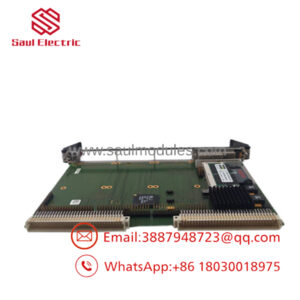
The GE DS3800HFXC1J1F is a communication interface board engineered specifically for GE Speedtronic Mark IV gas and steam turbine control systems. It serves as a vital data highway node, managing signal traffic between the primary control processor racks, operator interface stations, and external drive hardware. Equipped with high-density integrated circuit arrays, resistor network blocks, and onboard DIP configuration switches, the card ensures low-latency, deterministic signal exchange across the Mark IV architecture.
Process engineers rely on the HFXC card because it offloads communication management overhead directly from the main processor cards. Unlike basic passive terminal interfaces, this board actively buffers data streams and manages hardware handshake protocols across multiple connectors. Its mechanical design also includes four raised surface standoffs and an internal vertical header, allowing technicians to stack an optional auxiliary daughterboard to extend local signal routing without taking up additional rack slots.
Key Technical Specifications
| Parameter | Specification / Value |
| Part Number | DS3800HFXC1J1F |
| System Compatibility | GE Speedtronic Mark IV Turbine Control |
| Board Type | Communication Interface Board (HFXC) |
| Expansion Capability | 4 surface standoffs & vertical pin header for daughterboard attachment |
| Interconnects | Main card-edge connector, vertical ribbon header, 2 front-edge plugs |
| Signal Passive Components | 8 resistor network arrays, discrete filtering capacitors |
| Configuration Controls | Edge-mounted red switch component & hardware jumper banks |
| Handling Mechanics | Dual red nylon card extractor clips on leading edge |
| Revision Level | Group 1J, Assembly 1F (1J1F) |
| Operating Temperature | 0°C to +60°C (32°F to +140°F) |
Application Scenarios & The “Trench” Experience
It’s 1:15 AM on a stormy night, and a 100 MW simple-cycle gas turbine trips offline during a grid balancing event. The control room HMIs throw a loss-of-communication fault across the primary drive rack, locking out remote operator commands. The issue isn’t a blown turbine or a corrupted software file—a communication interface card’s bus driver IC failed due to an electrical transient. Every hour that peaker stays cold costs the utility thousands in unfulfilled generation contracts. Getting a fully bench-tested DS3800HFXC1J1F on site, matching its jumper configuration, and sliding it into the slot is the only way to re-establish the data link and fire up the turbine before the morning demand peak.
- Peaking Power Stations – GE Frame 7E/7FA Gas Turbines – Managing serial data handshake loops between Mark IV racks and remote operator stations.
- Industrial Co-generation Plants – Large Steam Turbines – Buffering communication lines between turbine governors and local drive controllers.
- Chemical Process Utilities – Heavy Mechanical Drive Turbines – High-reliability bus interface for continuous-duty compressor control networks.
Field Case Study
A paper mill’s captive power facility experienced recurring, intermittent comms dropouts between their Mark IV speed governor rack and the boiler interface panel. Diagnostic logs pointed to signal attenuation along the main interface bus. We dispatched a verified DS3800HFXC1J1F replacement board within 8 hours. The site engineer copied the original board’s jumper block and edge-switch settings, swapped the card using the front extractor clips, and cleared the comms errors permanently—avoiding an estimated $95,000 in lost paper machine production time.
Transparency SOP: Quality Assurance & Testing
We don’t just ship boxes; we test them on actual GE Mark IV rack environments. Here is our exact internal verification workflow before any DS3800HFXC1J1F leaves our bench:
- Inbound Visual & Physical Audit: Inspect card-edge connectors for gold-plating wear, check the 4 daughterboard standoffs for thread integrity, and confirm intact OEM batch labels.
- Resistor Network & Trace Checks: Test the eight resistor network arrays and trace lines for thermal cracking or impedance drift.
- Power-On & Backplane POST: Mount the card into a live GE Mark IV test chassis to verify power rail distribution and logic boot execution.
- Data Bus Handshake Sweep: Inject high-frequency serial communication packets across all interface ports and vertical headers to verify 100% data frame transmission without packet drops or signal distortion.
- Switch & Jumper Verification: Exercise the edge switch and verify jumper pin continuity under mechanical agitation.
- ESD Packaging: Enclose the board inside static-shielding bags with fresh desiccant packs before custom foam boxing.
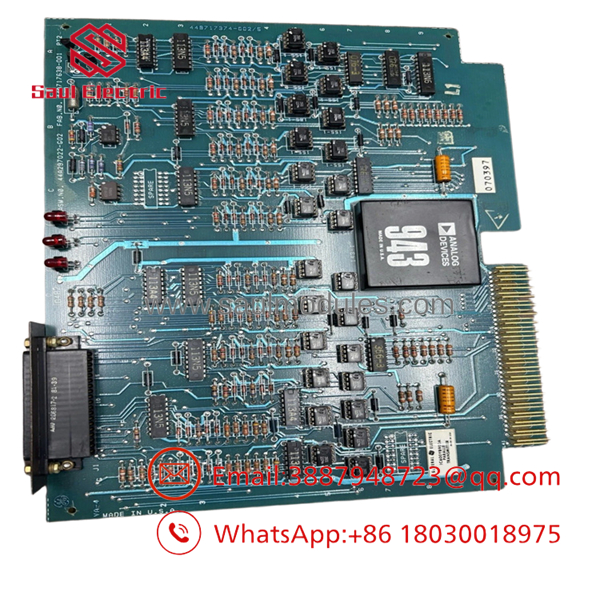
DS3800HFXC1J1F
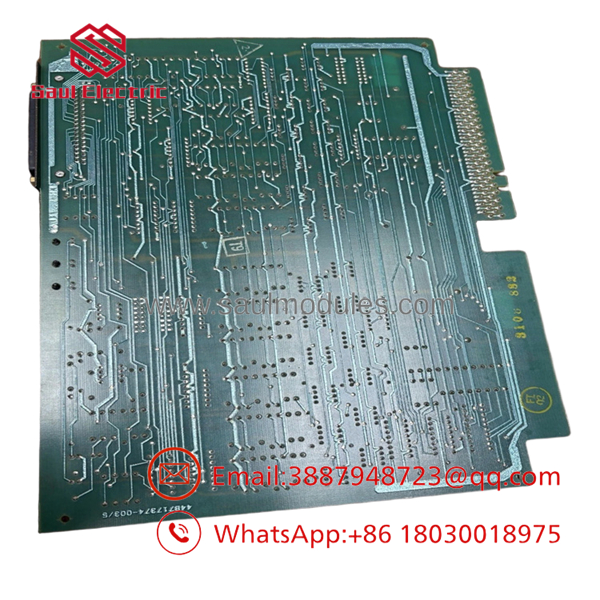
DS3800HFXC1J1F
The Veteran’s Tech Trap Guide (Crucial Value-Add)
⚠️ 1. Verify Daughterboard Standoff Heights and Cable Routing
If your original DS3800HFXC card has an auxiliary daughterboard mounted to its four surface standoffs, handle the ribbon cable connection with extreme care. The vertical pin header near the center of the board must mate perfectly without bent pins. Always transfer the daughterboard carefully, ensuring the mounting standoffs line up before cinching down screws to prevent flexing the underlying PCB.
❗ 2. Duplicate Edge Switch and Jumper Configurations
The DS3800HFXC1J1F features an edge-mounted switch component and multiple jumper headers that dictate address selection and baud rate termination. Moving a new surplus board straight from the box into the rack without matching these switches to your plant’s original board will cause the control system to throw an immediate bus configuration fault. Take a photo of the original settings before pulling the old board!
⚠️ 3. Use the Nylon Extractor Clips Correctly
This board is fitted with two red nylon extractor clips on its leading edge. Never pull or yank the card by its wiring harness or attached daughterboard! Engage both extractor clips simultaneously with equal pressure to back the card cleanly out of its multi-pin backplane socket.
Frequently Asked Questions (FAQ for Conversion)
A: No. Pulling a communication interface card while the Mark IV rack is energized will sever active control communications, triggering a total system fault and an immediate safety trip of the turbine. Always execute full LOTO procedures before replacing this card.
Q: What does the “1J1F” suffix signify?
A: In GE Mark IV part numbers, 1J1F represents the exact hardware revision level. 1J designates the group artwork and trace layout, while 1F indicates the specific installed bill of materials (BOM) revision.
Q: Can I run this board without a daughterboard attached?
A: Yes. The four standoffs and vertical pin header are designed for optional expansion. If your plant’s specific slot architecture does not require a stacked auxiliary board, the HFXC operates as a standalone communication interface.
Q: Is this unit new or refurbished, and what warranty covers it?
A: We supply this unit as New Surplus stock (unused factory original surplus). Every board comes backed by our comprehensive 12-month full replacement warranty.
Q: Why buy surplus instead of ordering directly through GE OEM networks?
A: Legacy Mark IV series components are long discontinued by the original manufacturer. Sourcing New Surplus from our stock eliminates multi-month factory lead times, avoids rush penalties, and provides immediate drop-in replacements for active industrial plants.

 Start Chat


