





Description
Product Introduction
The GE DS3800HLNC1A1A serves as a High-Level Network Communicator Card (HLNC) within the classic GE Speedtronic Mark IV turbine control system. Occupying a dedicated slot in the central card cage, it manages high-speed local area network traffic between individual Mark IV control cores (R, S, T) and remote operator station displays or plant historian networks.
Built around dedicated communication controllers and socketed firmware PROMs, the HLNC1A1A converts internal backplane data structures into serialized protocol streams. This card offloads heavy networking overhead from primary turbine execution processors, maintaining deterministic loop execution for critical protection functions while ensuring continuous operator visibility.
Key Technical Specifications
| Parameter | Specification |
| Manufacturer | General Electric (GE) |
| Part Number | DS3800HLNC1A1A |
| System Compatibility | Speedtronic Mark IV Control Systems |
| Board Function | High-Level Network Communicator (HLNC) |
| Revision Code | 1A1A |
| Backplane Interfacing | Gold-plated edge connector contacts |
| External Interfacing | Front-edge multi-pin ribbon header / serial port |
| Firmware Architecture | Socketed EPROM memory sets |
| Status Indication | Onboard diagnostic LEDs / Test points |
| Operating Temp | -30°C to +65°C (-22°F to +149°F) |
Application Scenarios & The “Trench” Experience
During a baseload run on a combined-cycle power plant, the main operator station suddenly loses communication with the Mark IV panel, triggering “Network Comm Failure” alarms across the control room screens. While the turbine continues running safely on its core logic processors, operators are left entirely blind to critical bearing temperatures and fuel valve positions. Diagnostics point to a failed communication controller on the original HLNC card. Swapping in a bench-tested DS3800HLNC1A1A board and transferring the socketed firmware PROMs restores the operator data link in minutes without taking the turbine offline.
- Gas & Steam Power Stations – Operator Interface Gateway – Transmits real-time turbine telemetry to legacy operator displays and SCADA gateways.
- Industrial Cogeneration Units – Historical Data Logging – Feeds plant-wide historians with critical event sequence logs and trip data.
- Excitation & Drive Racks – Inter-Rack Coordination – Facilitates high-speed network handshakes between generator excitation systems and main turbine controllers.
Transparency SOP: Quality Assurance & Testing
We don’t just ship boxes; we test them on actual GE Mark IV test racks.
- Inbound Visual Inspection: Detailed check under high magnification for trace damage, cracked IC sockets, cold solder joints, or corroded edge connector contacts.
- Gold Finger Inspection: Cleaning and verifying the integrity of the rear card-edge contacts to guarantee low-resistance backplane connection.
- Power Rail Bench Check: Applying clean DC voltage rails on a test bench to verify clock oscillators and local power regulation.
- Comm Loopback Simulation: Inserting the card into an energized Mark IV test chassis to perform loopback network tests and verify handshake responses.
- Anti-Static Packaging: Sealed in anti-static ESD shielding bags accompanied by fresh desiccant prior to protective foam boxing.
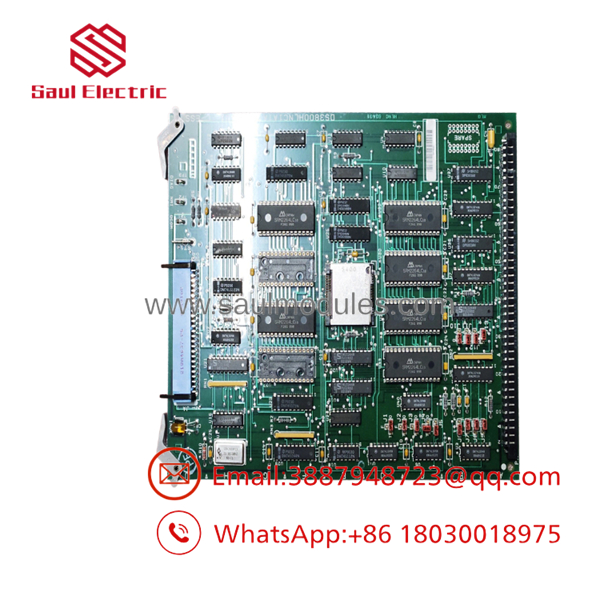
DS3800HLNC1A1A
The Veteran’s Tech Trap Guide (Crucial Value-Add)
- ⚠️ TRANSFER YOUR FIRMWARE CHIPS: To be honest, this catches tech teams off guard every time. A replacement HLNC board will not talk to your specific operator network unless you transfer the socketed EPROM chips from your old failed card to the replacement board. Keep track of chip orientation notches!
- ❗ Never Force Card Insertion: Mark IV backplane connectors are sensitive. Use the white plastic ejector handles at the top and bottom corners of the board to seat it smoothly. Forcing the board manually can bend female pins inside the backplane frame.
- ⚠️ Match Hardware Jumpers: Check every shorting jumper on the board array. These jumpers configure memory mapping, baud rates, and network node addresses. Mirror the old card’s jumpers pin-for-pin before restoring power.
- ❗ ESD Safe Handling: Static electricity can silently degrade communication chips without completely killing them, leading to intermittent comm drops weeks later. Always wear a grounded ESD wrist strap when handling this board.
Frequently Asked Questions (FAQ for Conversion)
Q: Will pulling the DS3800HLNC1A1A card trip a running turbine?
A: Typically, losing the HLNC card loses operator visibility rather than initiating an automatic trip, as primary protection logic runs on core processor cards. However, you should never pull a board while the rack is energized. Always follow site safety procedures and de-energize the slot if possible.
Q: Does the DS3800HLNC1A1A require software flashing via a laptop?
A: No. Operating parameters and network protocol routines are burned directly into physical socketed EPROM chips. Swapping the original chips over to the replacement board transfers all necessary software configuration.
Q: What is the significance of the 1A1A suffix on this part number?
A: The 1A1A code represents the precise hardware artwork revision, component layout baseline, and circuit trace design. It ensures exact structural and electrical compatibility with first-generation Mark IV HLNC specifications.
Q: Why source new surplus Mark IV boards instead of migrating to newer control systems?
A: Full migrations to modern Mark VIe platforms require months of planning, engineering fees, and extensive plant downtime. Replacing a single DS3800 board takes under an hour and costs a fraction of a full system upgrade.
Q: What warranty is offered with this replacement module?
A: Every unit comes backed by a full 12-month replacement warranty from the date of shipment, covering all onboard communication circuits, trace continuity, and component performance.

 Start Chat


