





Description
Product Introduction
The GE DS3800HLNE1B1B (HLNE) is a legacy Line Network Extension and Interface Board developed for GE Speedtronic Mark IV turbine control panels and early-generation DC2000 drive systems. Positioned within the main card rack, this module acts as a physical-layer communication buffer, converting single-ended internal logic signals into robust differential line driver signals to transmit telemetry across expanded rack backplanes and external drops.
Engineered for high noise immunity in severe electromagnetic environments, the HLNE board utilizes specialized transceiver ICs and filtering networks to prevent high-frequency drive noise or switching transients from corrupting inter-card communication highways. Its board-edge test points allow instrumentation techs to monitor serial transmit and receive waveforms directly with an oscilloscope without interrupting live system traffic.
Key Technical Specifications
| Parameter | Specification |
| Manufacturer | General Electric (GE) |
| Part Number | DS3800HLNE1B1B |
| Functional Acronym | HLNE |
| System Compatibility | GE Speedtronic Mark IV / DC2000 Drive Cabinets |
| Primary Function | Differential Line Driving & Bus Signal Extension |
| Interface Style | Gold-plated card-edge connector & multi-pin header jumpers |
| Signal Handling | Multi-channel differential RS-422/RS-485 style serial lines |
| Diagnostic Features | Onboard test points for signal line trace verification |
| Configuration | Onboard hardware jumper arrays for line termination selection |
| Operating Temperature | 0°C to 60°C (32°F to 140°F) |
Application Scenarios & The “Trench” Experience
Picture this: It’s 4:15 AM on a sub-zero morning during peak regional energy demand. A utility steam turbine experiences a sudden communication loss between the primary processor rack and the expansion I/O drop, throwing a “Remote Bus Timeout” alarm that halts turbine ramping. The field tech traces the fault to an aging DS3800HLNE board—a failed line driver IC choked the differential transmit pair, dropping signal voltage from a healthy 3.5V down to under 0.4V. When line extension cards break down, entire racks go deaf.
- Legacy Power Generation – Speedtronic Mark IV Turbine Control Cabinets – Maintains high-speed differential signal continuity between core processor cages and expansion I/O racks.
- Heavy Industrial Paper & Steel Mills – GE DC2000 Main Drive Racks – Buffers serial feedback and reference commands across long cabinet runs subject to high electrical noise.
- Chemical Process Automation – Industrial Control Cabinets – Provides noise-isolated communication bridging between central controllers and remote termination assemblies.
Field Case Study: A paper mill’s main section drive suffered intermittent communication dropouts during heavy motor acceleration. Replacing the degraded DS3800HLNE1B1B board with a fully bench-tested surplus unit restored clean differential waveforms across the communication highway. The drive returned to 100% duty cycle, preventing an estimated $45,000 per hour in lost paper production.
Transparency SOP: Quality Assurance & Testing
We understand that an untested legacy communication card can cause phantom bus faults that take days to debug. Every DS3800HLNE1B1B undergoes a strict 5-step bench validation before shipping:
- Inbound Micro-Inspection: High-magnification optical audit checking for trace oxidation, cold solder joints, cracked IC packages, and gold edge-connector wear.
- Dielectric & Ground Checks: Insulation resistance checks between differential communication channels and logic ground to ensure isolation integrity.
- Live Test-Rig Installation: Card is seated in a powered GE Mark IV test rack to verify logic power rail distribution and bus handshake initialization.
- Data Transmission Stress Test: High-frequency data streams are injected across all transceiver channels while monitoring differential signal amplitude and eye diagrams on an oscilloscope over 12 hours.
- ESD Packaging & Protection: Cleaned, fitted with protective edge covers, vacuum-sealed in an anti-static shielding bag, and packed in reinforced custom foam.
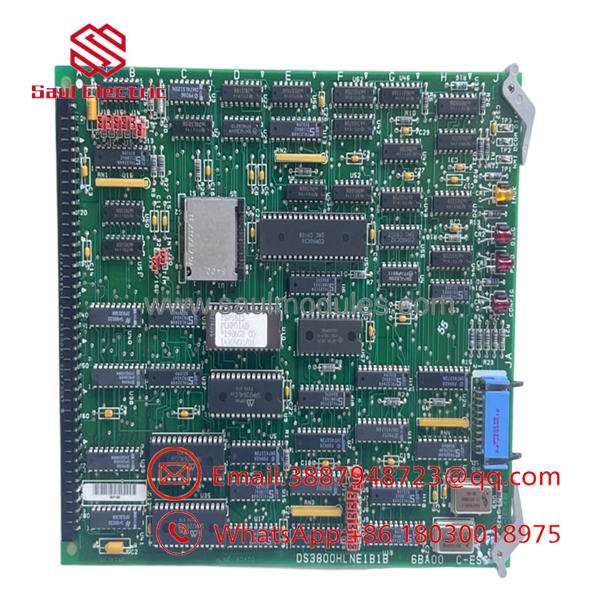
DS3800HLNE1B1B
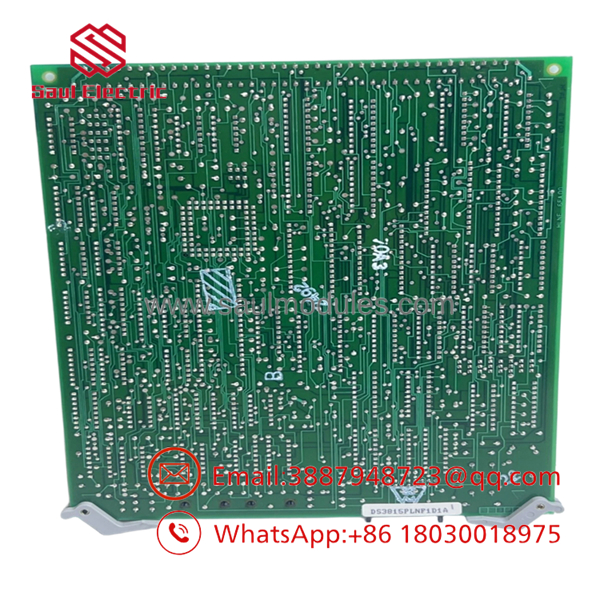
DS3800HLNE1B1B
The Veteran’s Tech Trap Guide (Crucial Value-Add)
⚠️ 1. Verify Line Termination Jumpers: The HLNE board uses hardware jumpers to engage or disengage onboard bus termination resistors. If this board sits at the physical end of a communication bus, termination must be jumpered ON; if it sits in the middle of a drop, termination must be OFF. Incorrect termination causes signal reflections that ruin communication stability.
❗ 2. Clean Gold Edge Connectors Safely: Decades of panel service create an oxide film on card-edge fingers. Never use abrasive sandpaper or wire pads—they strip the thin gold plating down to the raw copper, leading to rapid corrosion. Clean edge fingers exclusively using a lint-free swab saturated with high-purity isopropyl alcohol or a dedicated rubber contact cleaner pad.
⚠️ 3. Inspect Differential Transceiver Chips: Line driver transceivers take the brunt of external voltage surges. If your old card failed after a lightning strike or field fault, check the external cable shielding and grounding before plugging in the replacement card to avoid frying the new transceivers.
❗ 4. Power Down Before Unseating: Never hot-swap the DS3800HLNE1B1B. Removing or inserting this board while the rack backplane is powered will interrupt active serial loops, trigger uncontrolled processor resets, and potentially cause contact arcing across edge connector pins.
Frequently Asked Questions (FAQ for Conversion)
Q: Is the GE DS3800HLNE1B1B hot-swappable?
A: No. Pulling this board while the rack is energized will sever live communication lines, cause backplane power surges, and trigger immediate system trips. Always lock out cabinet power before replacing the module.
Q: What do the revision suffixes (1B1B) mean?
A: The “1B1B” suffix indicates specific factory artwork, trace layout, and component updates applied by GE during production. A is backward-compatible with earlier HLNE revisions, provided onboard termination jumpers are matched correctly.
Q: Do I need software or firmware to configure this card?
A: No software loading is required. The HLNE board operates strictly at the physical layer, conditioning and driving hardware signals. Configuration is handled entirely through physical jumper pin settings on the board.
Q: Are these units brand new from General Electric?
A: GE discontinued the DS3800 series years ago. Our stock consists of New Surplus (unused OEM spares) and Refurbished / Bench-Tested units reclaimed from clean decommissioned facilities worldwide.
Q: What warranty coverage do you provide?
A: All units come with a comprehensive 12-month replacement warranty. If any communication or hardware fault occurs under normal operating conditions within one year, we will provide an advance replacement or issue a full credit.

 Start Chat


