





Description
Product Introduction
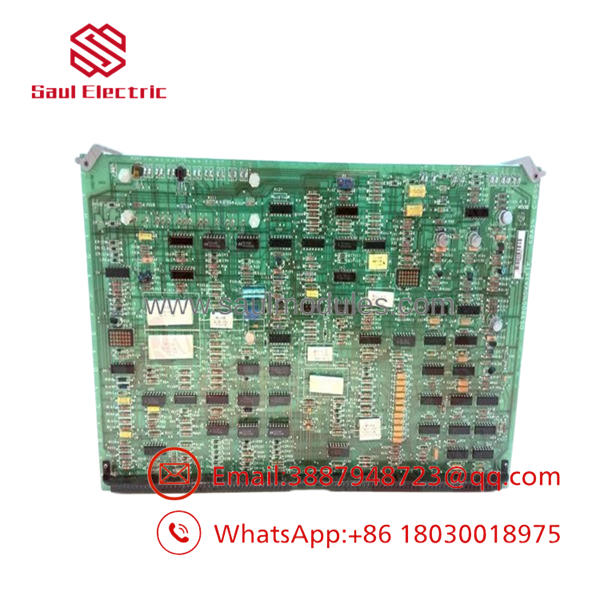
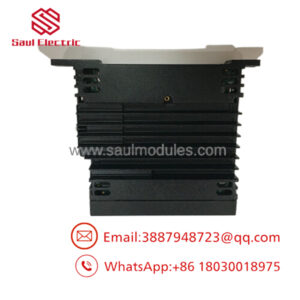
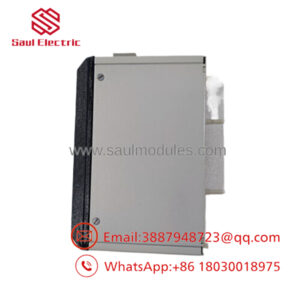
The GE DS3800NOWA1K1K is a specialized Signal Conditioning and Optical Interface Board (NOWA) engineered for General Electric Speedtronic Mark IV turbine control enclosures and heavy industrial system drive cabinets. Operating in environments prone to high electromagnetic interference (EMI) and extreme ground potential differences, this board functions as a high-integrity isolation barrier between sensitive backplane logic and field equipment signals.
By converting incoming control signals through optical isolation channels or high-speed differential buffers, the NOWA board prevents ground loops and voltage transients from corrupting central processing cores (such as the HMPJ card). Its dense array of optocouplers, operational amplifiers, and precision filter networks ensures that critical feedback and trigger commands maintain exact pulse fidelity across long cable runs in power plants and heavy manufacturing facilities.
Key Technical Specifications
| Parameter | Specification / Value |
| Manufacturer | General Electric (GE) |
| System Architecture | Speedtronic Mark IV Turbine Control & System Drives |
| Board Functional Acronym | NOWA (Optical / Signal Conditioning Interface Board) |
| Primary Function | High-voltage signal isolation, optoelectronic conversion, and transient suppression |
| Isolation Barrier | Onboard optical isolators ensuring complete galvanic separation across signal paths |
| Backplane Connection | Dual multi-pin gold card-edge connectors for Mark IV card-cage slot insertion |
| Hardware Configuration | Physical BERG jumpers for signal gain, attenuation, and filter response time |
| Diagnostic Elements | Front-edge LED status indicators for channel activity and power availability |
| Board Generation / Prefix | DS3800 Series (Classic full-frame modular PCB architecture) |
| Operating Temperature | -30°C to +65°C Industrial Extended Range |
Application Scenarios & The “Trench” Experience
The Trench Story
It’s 3:15 AM at an industrial cogeneration plant. A combined-cycle gas turbine experiences intermittent “High-Voltage Isolation / Signal Fault” alarms during load changes, causing the governing system to reject automatic dispatch commands. Instrument technicians trace the issue to the signal conditioning rack, where high ambient enclosure heat degraded the optocoupler performance on the original NOWA board over decades of operation. This allowed electrical noise from a nearby VFD to bleed into the control loop. Swapping in a pre-tested DS3800NOWA1K1K replacement board and duplicating the physical BERG jumper configuration restores clean, isolated signal paths and clears all transient bus faults immediately.
Industrial Applications
- Turbine Control Isolation: Conditioning and isolating high-speed pulse and control signals across GE Frame 5, 6, 7, and 9 gas turbines.
- Generator Excitation Loops: Providing galvanically isolated feedback channels between power stage excitation cabinets and control racks.
- Heavy Duty Industrial VFDs: Handling isolated trigger and feedback signals in large motor drive systems.
- Balance of Plant (BOP) Interfaces: Bridging high-noise field instrumentation signals to the central Speedtronic backplane.
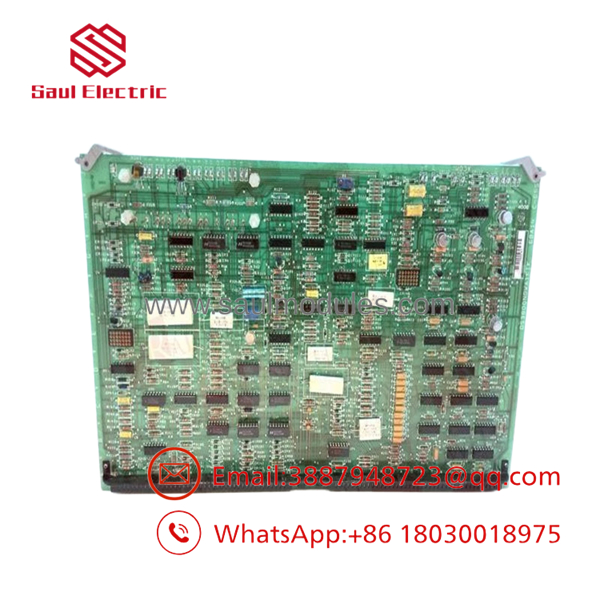
DS3800NOWA1K1K
Transparency SOP: Quality Assurance & Testing
Every legacy module undergoes a strict, multi-stage reconditioning and dynamic isolation validation protocol before dispatch:
- Inbound Physical Inspection: Detailed optical audit under magnification for thermal trace fatigue, cracked optocoupler housings, degraded filter capacitors, and gold edge-connector wear.
- Ultrasonic ESD Cleaning: Deep solvent wash to eliminate airborne oil haze, carbon dust, and industrial film accumulated over years of enclosure service.
- Dielectric & Isolation Test: High-voltage isolation testing across input/output barriers to verify zero breakdown or leakage current under simulated field transient conditions.
- Signal Integrity & Frequency Response Audit: Injecting test waveforms across input channels to inspect pulse rise/fall times, propagation delay, and linear signal reproduction using a digital oscilloscope.
- Live Mark IV Rack Execution: Installing the card into an active Speedtronic Mark IV test cage to verify backplane bus response and clean diagnostic LED operation under full load.
- Jumper Audit & ESD Packaging: Documenting all physical BERG jumper settings before vacuum-sealing the board in static-shielding ESD packaging.
The Veteran’s Tech Trap Guide (Crucial Value-Add)
⚠️ 1. Gain & Attenuation BERG Jumpers
The DS3800NOWA1K1K utilizes physical BERG jumper blocks to set signal gain, voltage attenuation levels, and response filter time-constants. Installing a replacement board without replicating the jumper settings from your original card can cause signal clipping, phase lag, or false threshold trips in critical control loops.
Fix: Take a high-resolution photograph of every jumper block on your failed card before removal, and duplicate every jumper position line-for-line on the replacement board.
❗ 2. Card-Edge Contact Maintenance
Because this module processes sensitive isolated signals, oxidation or fine dust on the backplane gold card-edge connectors can introduce high-resistance contact points that distort low-amplitude signals.
Fix: Clean the card-edge contacts gently with an isopropyl alcohol swab or a clean pencil eraser before seating the card. Avoid abrasive pads like Scotch-Brite, which strip the thin gold plating.
⚠️ 3. Revision Suffix Parity (1K1K)
The trailing suffix 1K1K designates late-generation artwork revisions, incorporating higher-speed optocouplers, upgraded noise-filtering capacitors, and improved power dissipation traces compared to earlier 1A or 1B variants. Matching the full alphanumeric code ensures circuit parity and signal timing compatibility.
Fix: Cross-reference the complete part number stamped on the PCB edge margin prior to ordering.
Frequently Asked Questions (FAQ)
Q: Can I hot-swap the DS3800NOWA1K1K board while the Mark IV system is under power?
A: No. Pulling or inserting a signal conditioning card live can disrupt backplane data lines, trigger false safety trips, or damage surrounding logic modules. Always isolate cabinet control power prior to servicing.
Q: What is the most common failure mode on this module?
A: Continuous thermal exposure inside control enclosures over 15–20 years gradually degrades the optocoupler LED efficiency, leading to signal attenuation, increased propagation delay, or intermittent channel loss.
Q: Does this card require software flashing or firmware loading after replacement?
A: No. The DS3800NOWA1K1K is a pure hardware-level signal conditioning and isolation board. It operates using analog/digital isolation circuits, operational amplifiers, optocouplers, and physical BERG jumpers—no software loading or EEPROM programming is required.
Q: Why does my control system report a signal channel fault immediately after swapping boards?
A: This is almost always caused by mismatched BERG jumper configurations (incorrect gain/attenuation settings) or an improperly seated card-edge connector in the rack cage. Double-check all jumpers against your original board and ensure the card is seated firmly into its guide rails.
Q: What warranty is supplied with your surplus and refurbished stock?
A: Every DS3800NOWA1K1K board shipped carries a full 12-month replacement warranty. If a module fails under standard operating conditions within one year of installation, it is replaced directly from stock.

 Start Chat


