





Description
Product Introduction & Engineering Value
The DS3800NVAA is a signal-conditioning and isolation board used within legacy GE Mark IV Speedtronic control equipment. Available documentation describes it as an isolation converter board, while GE parts references identify the NVAA family as an ISOL CUR CARD.
This is an important distinction during replacement. The DS3800 family contains numerous interface and conditioning boards, and the NVAA designation should not be confused with the related NVIA voltage isolator or other NV-series boards. Match the complete board number and installed configuration before substitution.
Technical Specifications
| Parameter | Specification |
|---|---|
| Manufacturer | General Electric |
| Part Number | DS3800NVAA |
| Series | Mark IV / DS3800 |
| Product Type | Isolation Converter Board |
| Functional Description | Voltage/current isolation and signal conversion |
| Associated Platform | GE Speedtronic Mark IV |
| Reported Logic Supply | +5 VDC |
| Reported Power Supply Voltage | 24 VDC |
| Reported Operating Temperature | -40 to +55°C |
| Reported Dimensions | 15.7 cm high × 17.5 cm |
| Reported Weight | 0.6 kg |
| Configuration Hardware | 7 adjustable potentiometers |
The published component description also identifies a large black battery pack, one glass fuse, three yellow capacitors, nine deep-red capacitors, four silver capacitors, one orange capacitor, two light-yellow capacitors, approximately 165 resistors, 22 integrated circuits, four small transformers, and multiple diode groups.
Specification note: The +5 VDC/24 VDC ratings and environmental figures above come from a secondary-market technical listing rather than an OEM GE datasheet. Treat them as procurement-reference data and verify them against the Mark IV cabinet documentation before applying power.
Field Application & the “Trench” Experience
A turbine maintenance crew is chasing an unstable analog signal in an older Mark IV cabinet. The signal looks plausible at the field device, but the control-system reading is drifting. The suspected DS3800NVAA is removed only after the team documents the wiring, potentiometer positions, and board identification.
The replacement is compared component-for-component at the physical level before installation. The technicians also verify the associated field circuit rather than assuming that a questionable signal automatically means the isolation board has failed.
That distinction matters. Isolation and conversion circuits sit between field instrumentation and control electronics. A wiring fault, calibration issue, or upstream signal problem can look like a PCB failure.
Specific application scenarios:
- Mark IV analog signal isolation and conversion
- Turbine instrumentation interface troubleshooting
- Legacy Speedtronic control-cabinet refurbishment
- Voltage/current signal conditioning within GE turbine-control circuits
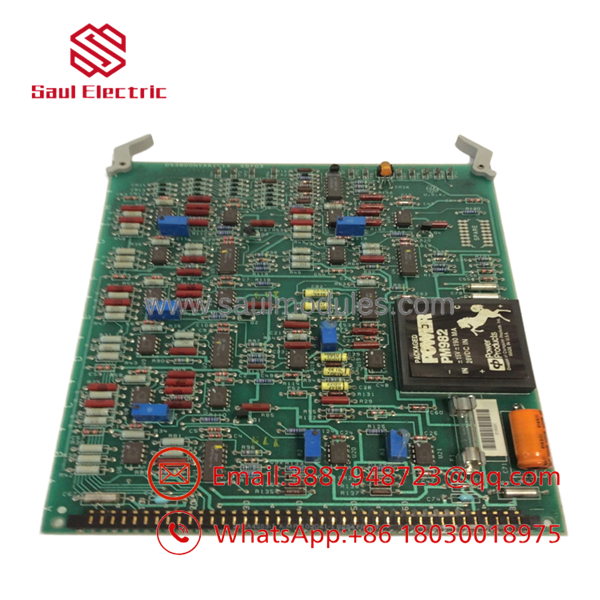
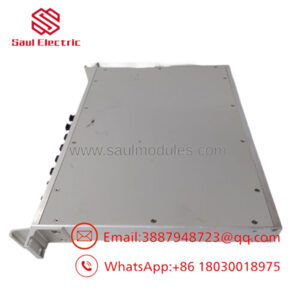
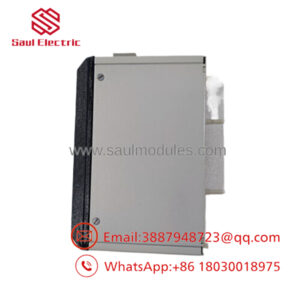
DS3800NVAA
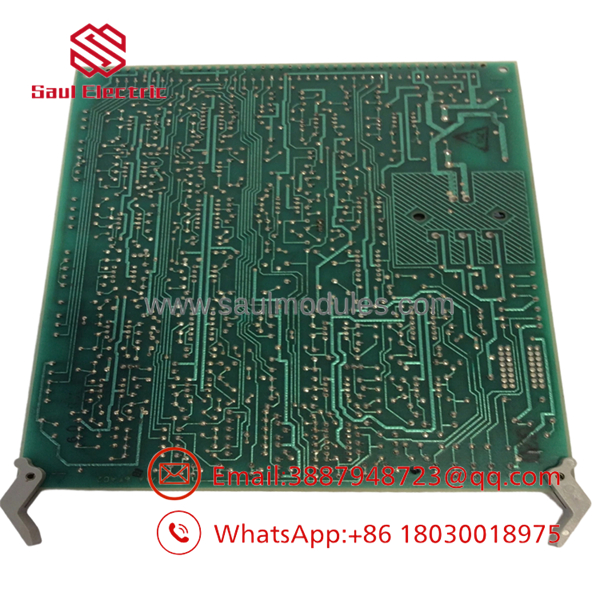
DS3800NVAA
Transparency SOP: QA & Testing
For DS3800NVAA, release testing should be more than a visual inspection.
- Identity verification — Confirm the complete DS3800NVAA marking and photograph the actual board.
- Component inspection — Examine the battery pack, fuse, transformers, capacitors, potentiometers, ICs, diodes, connectors, and PCB traces.
- Configuration recording — Photograph all adjustable potentiometers before any refurbishment or calibration work.
- Condition screening — Check for corrosion, electrolyte leakage, overheating, damaged components, contamination, and previous repair.
- Electrical testing — Verify applicable supply and isolation/conversion functions using appropriate Mark IV test procedures.
- Final traceability — Document test status, material condition, photographs, and any repaired components.
For New Surplus, confirm that the actual board is unused and disclose whether it has ever been energized. For Refurbished, request the repair scope and test report. Current market listings identify the DS3800NVAA in both unused and rebuilt conditions.
The Veteran’s Tech Trap Guide
⚠️ Trap #1 — Don’t confuse NVAA with NVIA.
The DS3800 catalog separately identifies NVAA as a voltage/current isolation card and NVIA as a voltage isolator. They are not interchangeable based on naming similarity.
⚠️ Trap #2 — Don’t adjust the potentiometers casually.
The board contains seven adjustable potentiometers. Record their original positions before servicing. A replacement that is electrically functional can still require application-specific calibration.
⚠️ Trap #3 — Check the battery and capacitors.
This is decades-old hardware. The documented component population includes a battery pack and numerous capacitors. Storage history and component condition should be part of the acceptance inspection.
PRO TIP: Capture close-up photographs of the potentiometer settings and all board labels before removing the original unit. Keep them with the site’s Mark IV spare record.
Dynamic FAQ
Q: What is the GE DS3800NVAA?
A: It is a GE Mark IV Isolation Converter Board, also described in parts references as a voltage/current isolation card.
Q: What does the DS3800NVAA do?
A: Its stated function is electrical isolation and signal conversion within compatible Mark IV control circuitry. This makes it an interface between control electronics and associated field/control signals.
Q: Does it have adjustable components?
A: Yes. The published board description identifies seven potentiometers. Their positions should be documented before removal or refurbishment.
Q: Is DS3800NVAA interchangeable with DS3800NVIA?
A: No automatic substitution should be made. GE references identify them as different board types: NVAA is associated with voltage/current isolation, while NVIA is identified as a voltage isolator.
Q: How should New Surplus authenticity be verified?
A: Request actual-unit photographs, confirmation that the PCB is unused and has not been energized, and documented inspection/testing information.
Q: What should I ask about Refurbished stock and warranty?
A: Request the component-level repair scope, electrical test procedure, actual-unit photographs, and written warranty terms. Do not treat a generic “tested” statement as proof of Mark IV functional compatibility.

 Start Chat


