





Description
Product Introduction
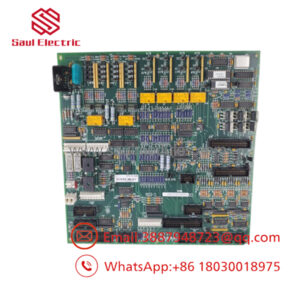
The GE DS3820A is a dedicated auxiliary interface and signal distribution board engineered for General Electric’s legacy SPEEDTRONIC Mark IV gas and steam turbine control systems. Positioned inside the Mark IV core racks, the DS3820A routes critical field feedback signals and internal control commands between the primary triple-modular redundant (TMR) processor channels and output driver boards.
Built to survive the demanding environments of power generation facilities and heavy industrial mechanical drive stations, the DS3820A uses industrial-grade trace routing and noise-filtering networks. Swapping in a fully bench-tested DS3820A board allows plant engineers to resolve persistent signal dropouts or ground faults instantly, bypassing the high capital expenditure and lengthy downtime of a full Mark IV control cabinet replacement.
Key Technical Specifications
| Parameter | Specification |
| Manufacturer | General Electric (GE Energy / Industrial) |
| Base Model Series | DS3820A Family |
| System Compatibility | GE SPEEDTRONIC Mark IV Turbine Control System |
| Board Category | Auxiliary Signal Interface / Distribution Card |
| Bus Connections | Gold-plated card-edge connectors, multi-pin ribbon headers |
| Operating Voltages | Regulated +5 VDC, +/-15 VDC (Rack-supplied via backplane) |
| Signal Processing | Passive filtering, isolation resistor networks, bus buffering |
| Form Factor | Standard SPEEDTRONIC Mark IV rack-mountable PCB |
| Operating Temperature | 0°C to 60°C (32°F to 140°F) inside enclosure |
| Conformal Coating | Standard factory coating for moisture and dust protection |
Application Scenarios & The “Trench” Experience
It is 2:00 AM at a peaking power plant when a heavy Frame 7 gas turbine trips on a sudden “Turbine Protection Fault” during a fast start sequence. The main operator panel points to a communication timeout between the control rack and the output termination block. The issue isn’t a dead turbine valve or a failed sensor—it is a cracked solder joint on a ribbon connector header on an aging DS3820A card. With grid operators demanding generation capacity for the morning peak, every hour spent guessing costs thousands in unfulfilled power availability.
Primary Industrial Applications
- Gas Turbine Speedtronic Cabinets – Core Signal Routing – Connects main TMR processor cards (, , ) to field termination blocks.
- Steam Turbine Control Systems – Governor Valve Interfacing – Routes high-speed position feedback signals to prevent speed-hunting.
- Combined-Cycle Power Plants – Heat Recovery Steam Generator (HRSG) Controls – Maintains clean signal transmission across noisy field wiring runs.
- Mechanical Drive Stations – Pipeline Compressor Drives – Handles critical interlock and trip signals on heavy-duty gas pump engines.
Field Case Study
An industrial cogenerator in Texas ran an aging Mark IV system on a Frame 6 turbine when interlocked trip signals began dropping randomly due to thermal degradation on their original board. The OEM recommended an emergency digital control upgrade with a 20-week lead time and multi-day outage window. By sourcing a pre-tested surplus board, the site instrument supervisor replaced the card during a brief scheduled window, restored complete signal stability, and avoided over $300,000 in unscheduled downtime.
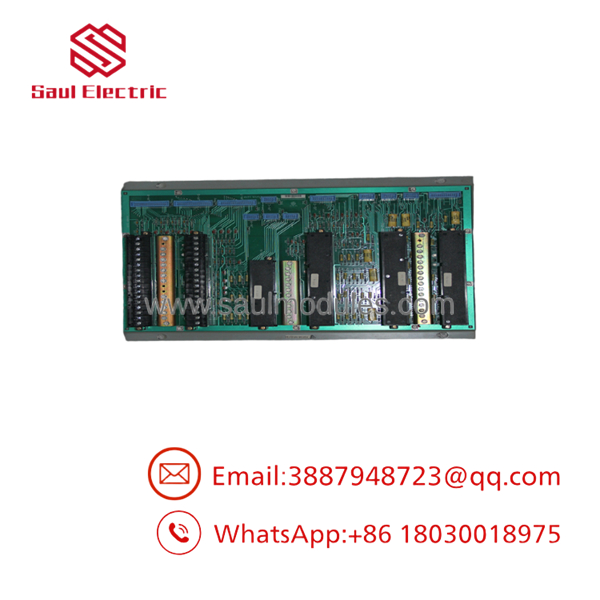
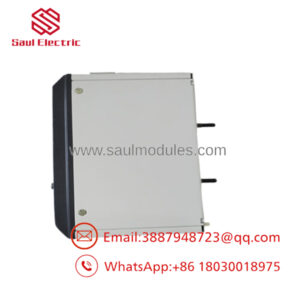
DS3820A
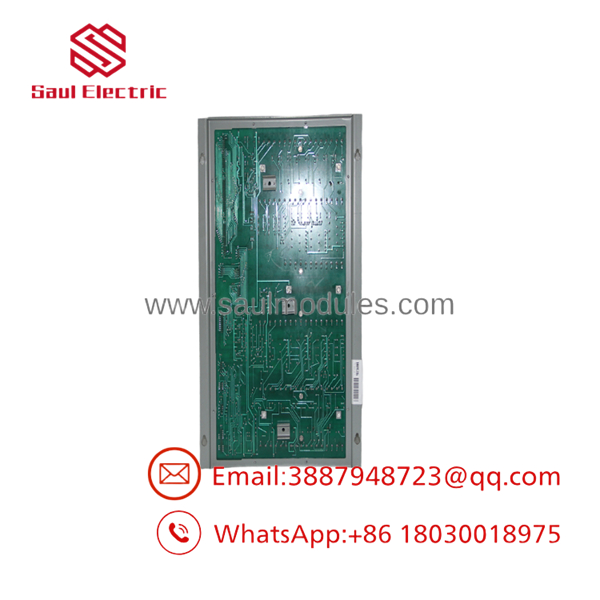
DS3820A
Transparency SOP: Quality Assurance & Testing
We test legacy SPEEDTRONIC boards on dedicated Mark IV test benches to ensure drop-in field reliability:
- Inbound Physical Inspection: Thorough examination of trace pathways, resistor networks, capacitor bodies, edge connectors, and header pins for signs of heat stress, mechanical wear, or corrosion.
- Backplane Power-On Checks: Mounting the module into a live Mark IV rack to verify voltage rail integrity (+5 VDC, +/-15 VDC) and verify zero voltage drops across ground planes.
- Signal Continuity & Loop Audits: Injecting multi-channel analog and discrete test signals across all ribbon header pins to ensure 100% path continuity without intermittent resistance spikes.
- Thermal Stability Testing: Operating the board under load within a thermal chamber to verify solder joint integrity and signal accuracy during temperature changes.
- ESD Sealing & Custom Packaging: Clearing testing logs, verifying card rev levels, and sealing the board inside anti-static shielding bags with custom shock-absorbing packaging.
The Veteran’s Tech Trap Guide (Crucial Value-Add)
⚠️ Trap 1: Check Ribbon Cable Orientation and Latching.
Mark IV systems rely heavily on multi-pin ribbon cables attached to the face and top headers of the . These older connectors can be easily misaligned by one pin if forced. Double-check pin-1 indicators (usually marked with a red stripe on the cable) before seating the connector locking arms.
❗ Trap 2: Verify Board Hardware Revision Suffixes.
Part numbers like are often followed by revision codes (e.g., DS3820A1A, DS3820AE). While base functions remain similar, pinouts or jumper configurations on specific revisions can vary. Match your original board’s full part number and suffix closely, or verify jumper matrix layouts before applying rack power.
⚠️ Trap 3: Inspect Backplane Card-Edge Fingers for Oxidation.
The gold-plated edge connectors on legacy Mark IV boards can collect fine oxidation film or industrial dust after decades in service. Before sliding the replacement card into the rack slot, gently clean the card-edge contacts with isopropyl alcohol and a lint-free swab to ensure low-resistance backplane contact.
❗ Trap 4: Always De-Energize the Rack Before Servicing.
The SPEEDTRONIC Mark IV backplane does not support live hot-swapping. Inserting or pulling a module with rack power applied will cause signal arcs across the card-edge contacts, potentially frying sensitive logic ICs on adjacent TMR processor boards. Always isolate control power before replacing modules.
Frequently Asked Questions (FAQ for Conversion)
Q: Is the GE circuit board hot-swappable?
A: No. Always disconnect input power to the Mark IV rack and lockout control power before pulling or inserting the card. Swapping modules live can send voltage transients through the bus, damaging surrounding processor cards.
Q: What is the main function of the within the Mark IV system?
A: The acts as an internal signal distribution and interface module, bridging control signals, trip inputs, and status monitoring paths between the primary processor cores and terminal blocks.
Q: Do I need special software or programming tools to replace a board?
A: No. The is primarily a hardware interface and signal routing card. As long as you transfer any configurable jumpers or socketed components from your original board, no software programming is required upon installation.
Q: Why choose pre-tested surplus boards over a complete turbine system retrofit?
A: A full turbine control system retrofit requires replacing panels, drawing new schematics, running field wiring, and taking weeks of planned downtime. A direct surplus replacement board restores your existing, proven control system in a matter of hours at a fraction of the cost.
Q: What warranty coverage is included with your surplus boards?
A: Every GE card ships with a full 12-month functional replacement warranty. If the board fails diagnostic checks or encounters operational issues in service within 365 days, we replace it immediately.

 Start Chat


