





Description
Key Technical Specifications
| Parameter | Value |
|---|---|
| Manufacturer | GE Intelligent Platforms |
| Model | EVMECNTM13 |
| Product Type | VME Clock & Network Timing Module |
| Form Factor | 6U VME64 / VME64x Single-Slot Module |
| System Compatibility | GE VME Embedded Computing Systems |
| Timing Inputs | IRIG-B (AM/DC), 1 PPS, optional external GPS receiver |
| Timing Outputs | IRIG-B, 1 PPS, 10 MHz reference clock |
| Network Synchronization | IEEE 1588-2008 Precision Time Protocol (PTP) |
| Ethernet | 10/100 Mbps RJ-45 |
| Software Support | VxWorks, Linux (driver dependent) |
| Operating Temperature | 0 °C to +60 °C |
| Typical Applications | Power systems, aerospace test equipment, synchronized data acquisition, industrial automation |
These specifications reflect the published characteristics of the EVMECNTM13 timing module.
Product Introduction & Supply Chain Strategy
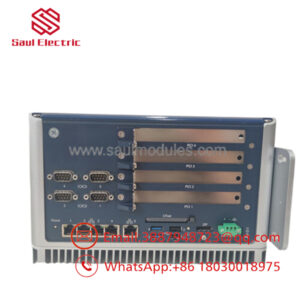
The GE EVMECNTM13 is a specialized VME Clock and Network Timing Module designed for embedded VME systems that require deterministic time synchronization. It distributes a common timing reference across multiple processor and I/O boards, supporting IRIG-B, IEEE 1588 Precision Time Protocol (PTP), 1 PPS, and 10 MHz reference clock signals. This enables accurate event timestamping and synchronized operation in mission-critical applications such as electrical substations, power system disturbance recorders, aerospace test facilities, and industrial measurement systems.
The module has reached End-of-Life (EOL) status, and genuine OEM inventory is increasingly scarce. Organizations relying on VME-based platforms should maintain 1–2 New Surplus modules as critical spare inventory. Early procurement reduces Total Cost of Ownership (TCO), minimizes procurement risk, and avoids the uncertainty associated with aging refurbished timing hardware.
Installation & Configuration Guide
Stage 1 – Preparation
- Perform Lock-Out/Tag-Out (LOTO).
- Power down the VME chassis.
- Wear an approved ESD wrist strap.
- Record current timing configuration.
- Document IRIG-B, PTP, and network settings.
Stage 2 – Removal
- Disconnect all timing and Ethernet cables.
- Release the front-panel retaining screws.
- Remove the module evenly from the VME backplane.
- Inspect connectors for contamination or bent pins.
- Verify chassis power supply condition.
Stage 3 – Installation
- Confirm the replacement module is EVMECNTM13.
- Insert the board into the designated VME slot.
- Reconnect IRIG-B, 1 PPS, Ethernet, and reference clock cables.
- Verify firmware and driver compatibility.
- Secure the module before energizing.
Stage 4 – Commissioning
- Restore system power.
- Verify module initialization.
- Confirm synchronization with the external timing source.
- Validate IEEE 1588 and IRIG-B operation.
- Perform timestamp accuracy and system synchronization tests before returning the system to service.
Firmware / Software Versions & Upgrade Notes
- Verify firmware compatibility with the installed VME CPU and operating system.
- Confirm the correct IEEE 1588 profile and IRIG-B configuration before commissioning.
- Preserve timing configuration files during module replacement.
- Avoid replacing multiple timing modules simultaneously in redundant systems.
- After installation, verify synchronization accuracy, holdover performance, and event timestamp consistency.
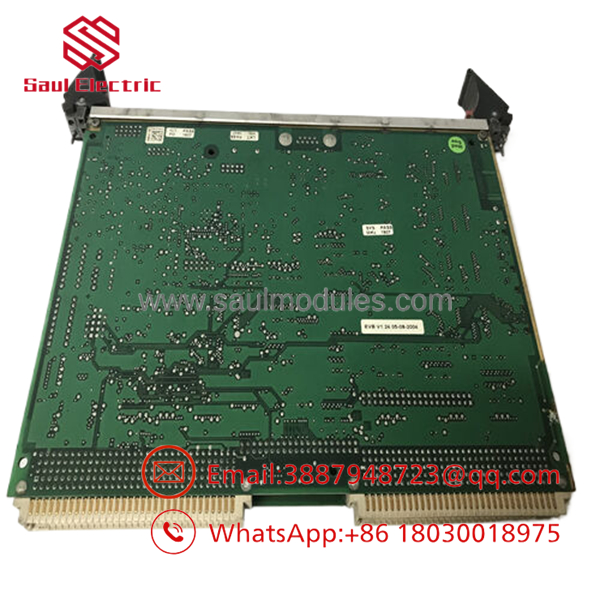
- EVMECNTM13
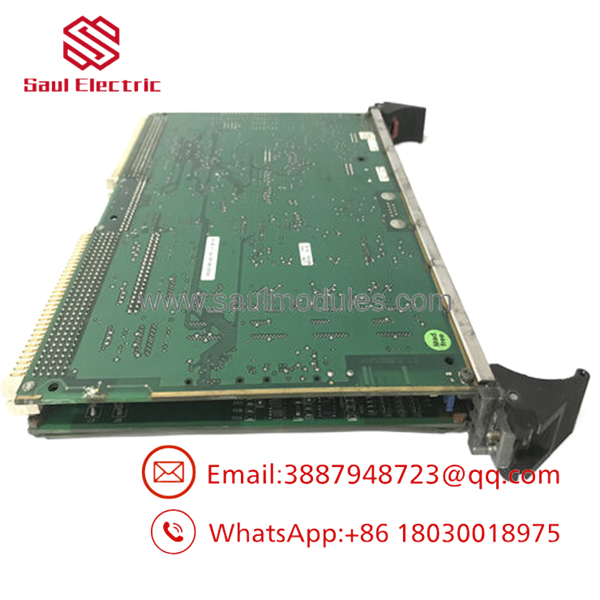
- EVMECNTM13
Frequently Asked Questions (FAQ)
Q1. Is this a New Original product?
Yes. This module is typically supplied as New Original / New Surplus. It is unused, not repaired, and should undergo serial number verification, visual inspection, and functional testing before shipment.
Q2. What is the primary function of the ?
It provides a common precision time reference for VME systems by supporting IRIG-B, IEEE 1588 Precision Time Protocol (PTP), 1 PPS, and 10 MHz reference clock synchronization. This enables accurate event recording and deterministic control across distributed hardware.
Q3. Which applications typically use this module?
The module is commonly deployed in:
- Power utility substation automation
- Sequence-of-events (SOE) recorders
- Fault recording systems
- Aerospace and defense test equipment
- Synchronized industrial data acquisition platforms
Q4. Is the still manufactured?
No. The module has reached End-of-Life (EOL) status, and OEM production has been discontinued. Replacement units are generally available only through remaining New Surplus inventory or the secondary market.
Q5. Can the module continue operating if the external timing source fails?
Yes. The onboard oscillator provides holdover timing, allowing continued operation for a limited period after loss of the external reference. However, timing accuracy gradually degrades as holdover duration increases.
Q6. What warranty is typically available?
Professional industrial automation suppliers typically offer a 12 month warranty, including functional verification, timing accuracy testing, anti-static packaging, and export-grade shipping.
Q7. What inventory strategy is recommended?
For organizations operating legacy GE VME platforms with precision timing requirements, maintain as critical spare inventory. Because the module is obsolete and replacement availability is increasingly limited, proactive last-time-buy planning and supplier qualification are strongly recommended.

 Start Chat


