





Description
Product Introduction
The GE GF868-1-2 is a member of the DigitalFlow™ GF868 family of ultrasonic gas flowmeters developed specifically for flare gas and other demanding industrial gas measurement applications. It uses patented Correlation Transit-Time™ technology to calculate gas velocity without introducing pressure loss or moving mechanical components into the process.
In our field experience, flare gas measurement is one of the toughest flow applications in the plant. Gas composition changes continuously, flow rates can swing from nearly zero to extremely high velocities, and traditional differential-pressure meters often struggle under these conditions. The GF868 handles these operating conditions well, but only when transducer spacing, pipe geometry, and process configuration match the original engineering design. Verify the installation drawings before replacing any electronics or sensors.
Key Technical Specifications
| Parameter | Value |
|---|---|
| Manufacturer | GE Panametrics (Baker Hughes) |
| Model | GF868-1-2 |
| Product Family | DigitalFlow™ GF868 |
| Product Type | Ultrasonic Flare Gas Flowmeter |
| Measurement Principle | Correlation Transit-Time Ultrasonic |
| Primary Application | Flare Gas Measurement |
| Flow Measurement | Volumetric Flow, Mass Flow, Velocity |
| Communications | RS-232 Standard, Optional RS-485, Modbus, HART, Ethernet |
| Outputs | Configurable 4–20 mA, Frequency, Relay Outputs (configuration dependent) |
| Data Logging | More than 43,000 flow records |
| Display | Integral Graphic LCD |
| Hazardous Area Options | General Purpose, Explosion-Proof, Flameproof, IP65/IP66 (configuration dependent) |
| Maintenance | No Moving Parts, No Pressure Drop |
| Product Status | Active Legacy Platform |
Application Scenarios & The “Trench” Experience
Here’s a situation every refinery instrument engineer eventually encounters.
The environmental reporting system suddenly shows impossible flare gas values. Production hasn’t changed. Pressure transmitters are healthy. Operators suspect the flowmeter has failed, but replacing the transmitter doesn’t solve the problem.
Several hours later, technicians discover one ultrasonic transducer cable has moisture intrusion. The electronics were never the problem.
Typical applications include:
- Oil Refineries — Continuous flare gas measurement for emissions reporting and process monitoring.
- Petrochemical Plants — Hydrocarbon flare header flow measurement under highly variable operating conditions.
- Natural Gas Processing — Waste gas and relief system monitoring.
- LNG Facilities — Vent and flare gas accounting for environmental compliance.
- Chemical Manufacturing — Process vent gas measurement without introducing pressure loss.
Field Replacement Example
A refinery experienced unstable flare flow readings during startup events. Instrument technicians initially suspected the transmitter electronics. After reviewing diagnostic data, they identified deteriorated transducer cabling exposed to years of heat and vibration. Following replacement of the damaged cable, verification of acoustic signal quality, and recalibration of the GF868-1-2, the flow measurements stabilized without replacing the complete meter assembly.
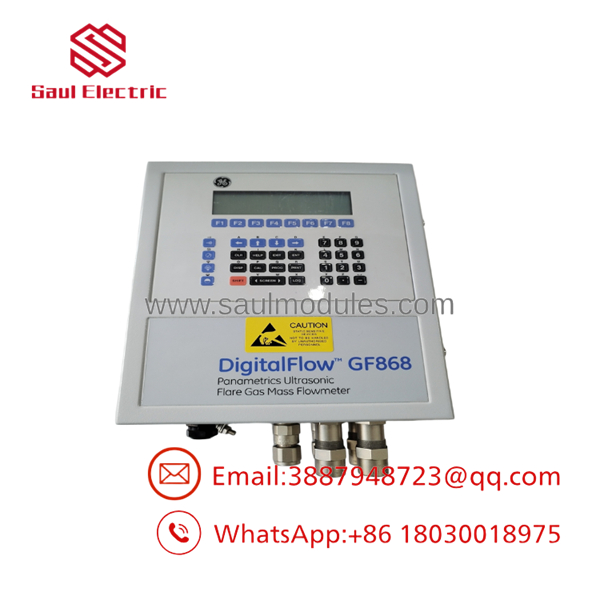
- GF868-1-2
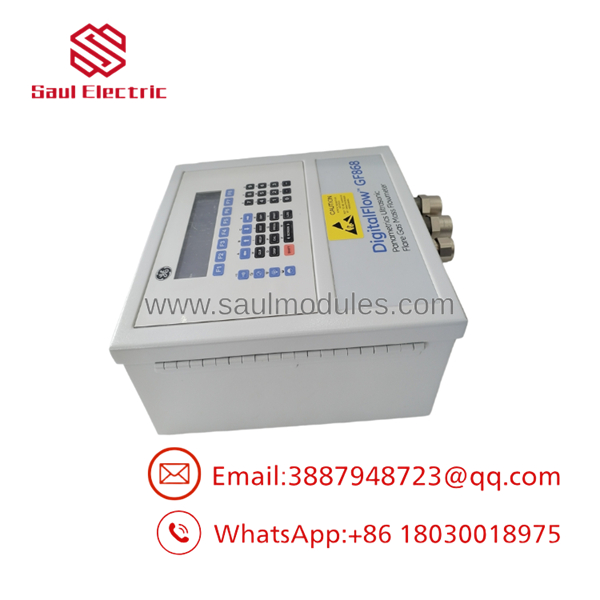
- -1-2
Transparency SOP: Quality Assurance & Testing
We don’t just ship transmitters; we verify them using compatible Panametrics test equipment whenever practical.
- Inbound Inspection
- Verify complete catalog number and configuration code.
- Inspect enclosure, display, keypad, and cable glands.
- Confirm serial number and factory labels.
- Live Functional Testing
- Apply rated supply voltage.
- Verify normal boot sequence.
- Confirm display operation.
- Test communication ports.
- Electrical Parameter Checks
- Verify analog output accuracy.
- Test digital communications.
- Confirm relay operation where installed.
- Firmware Verification
- Record firmware revision.
- Verify installed I/O options.
- Confirm configuration integrity.
- Final QC & Anti-static Packaging
- Complete functional inspection.
- Moisture-resistant packaging.
- Anti-static protection.
- Shock-resistant industrial shipping.
The Veteran’s Tech Trap Guide
⚠️ Don’t replace the transmitter until you inspect the transducers.
Many problems originate in damaged transducers, loose cable terminations, or moisture entering junction boxes—not in the electronics. Check acoustic signal strength before ordering replacement hardware.
❗ Verify the original configuration file.
The can be configured for different gases, pipe diameters, flowcells, and output assignments. Loading the wrong configuration may produce believable—but incorrect—flow values.
⚠️ Don’t ignore process conditions.
Transit-time ultrasonic meters depend on proper acoustic transmission. Heavy condensate, excessive turbulence, or incorrect transducer spacing can reduce signal quality and measurement accuracy.
❗ Confirm your communication settings.
RS-232, Modbus, HART, and Ethernet options require matching baud rates, addresses, and protocol settings. Communication failures are often configuration issues rather than hardware faults. A field case discussed by users ultimately traced intermittent communications to faulty wiring rather than the flowmeter itself.
Frequently Asked Questions (FAQ)
Q1. What is the primary function of the -1-2?
It measures flare gas flow using ultrasonic transit-time technology and can calculate flow velocity, volumetric flow, and mass flow without introducing pressure loss into the process.
Q2. Does the have moving parts?
No. The instrument contains no moving mechanical components, which minimizes routine maintenance and eliminates wear associated with turbine or positive-displacement flowmeters.
Q3. Which communication protocols are available?
Standard communication includes RS-232, with optional RS-485, Modbus, HART, and Ethernet, depending on the installed I/O configuration.
Q4. Can this meter measure gases other than flare gas?
Yes. When properly configured, the can measure natural gas, fuel gas, compressed air, steam, and other industrial gases. Always verify that the transducers and application configuration match the process conditions.
Q5. Why do flow readings sometimes become unstable?
Common causes include contaminated or damaged transducers, incorrect transducer spacing, moisture in junction boxes, poor grounding, changing gas composition, or communication configuration errors. The electronics are not always the source of the problem.
Q6. Is the suitable for hazardous areas?
Yes. Depending on the ordered configuration, the is available with explosion-proof or flameproof enclosures for hazardous industrial environments. Verify the exact certification on the nameplate before installation.
Q7. What warranty is typically provided?
Most industrial automation suppliers offer a 12-month warranty on functionally tested new surplus or professionally refurbished units. Before commissioning, verify the configuration file, firmware revision, transducer installation, communication parameters, and process data against the original commissioning records to ensure measurement accuracy.

 Start Chat


