





Description
Product Introduction & Engineering Value
As production networks evolve, adding communication modules to an aging PLC rack can quickly consume valuable slot space. An integrated Ethernet CPU simplifies the architecture while preserving the existing Series 90-30 control platform.
The GE IC693CPU374 combines a 133 MHz embedded processor, 240 KB of configurable user memory, and a built-in dual-port 10/100 Mbps Ethernet switch in a single-slot CPU. It is well suited for manufacturing systems that require PLC programming, HMI connectivity, SCADA communications, and Ethernet Global Data (EGD) without installing a separate Ethernet interface module.
Technical Specifications
| Parameter | Specification |
|---|---|
| Manufacturer | GE Fanuc (Emerson) |
| Model | IC693CPU374 |
| PLC Family | Series 90-30 |
| CPU Type | Single-slot CPU with Embedded Ethernet |
| Processor | Embedded 586 (AMD SC520 family) |
| Processor Speed | 133 MHz |
| User Program Memory | 240 KB configurable |
| Memory Type | RAM and Flash |
| Boolean Execution Time | 0.15 ms per 1K Boolean logic |
| Ethernet Ports | Two RJ-45 10/100Base-T/TX auto-sensing ports |
| Ethernet Features | Embedded switch, SRTP, Ethernet Global Data (EGD) |
| Number of IP Addresses | One |
| Maximum Discrete I/O | 2,048 Inputs / 2,048 Outputs |
| Maximum System Size | One CPU rack plus seven expansion and/or remote racks |
| Power Requirement | 7.4 W from 5 VDC backplane |
| Operating Temperature | 0°C to 60°C |
| Agency Approvals | UL, cUL Class I Div 2, CE |
Field Application & The “Trench” Experience
A pharmaceutical packaging line needed to integrate production reporting into a plant-wide MES network. The original Series 90-30 controller relied on an external Ethernet module, and the CPU rack had no available slots for future expansion.
Rather than redesigning the control cabinet, engineers installed an IC693CPU374. The integrated dual-port Ethernet switch allowed one network cable to connect the PLC to the plant backbone while the second port linked directly to the HMI. Existing ladder logic remained unchanged, commissioning finished during a weekend shutdown, and the spare rack slot remained available for future I/O expansion.
Typical application scenarios include:
- Pharmaceutical packaging line serialization
- Automotive body shop conveyor synchronization
- Municipal water treatment SCADA integration
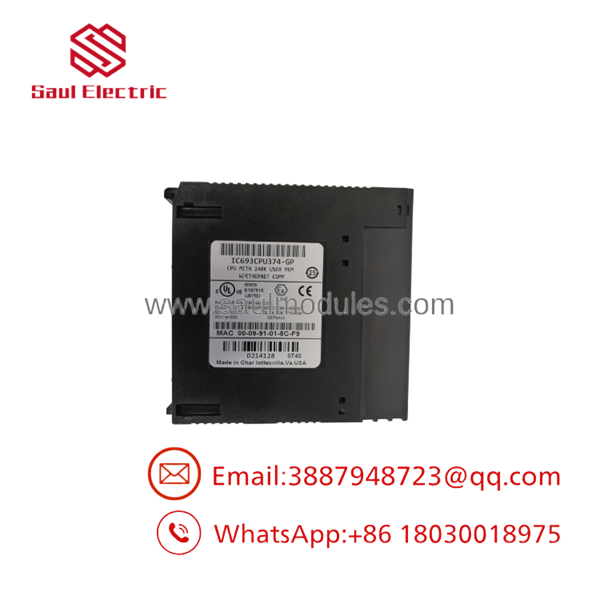
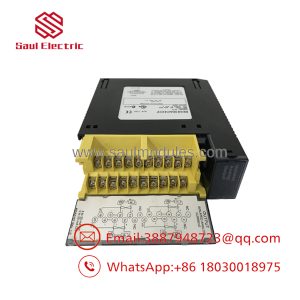
IC693CPU374
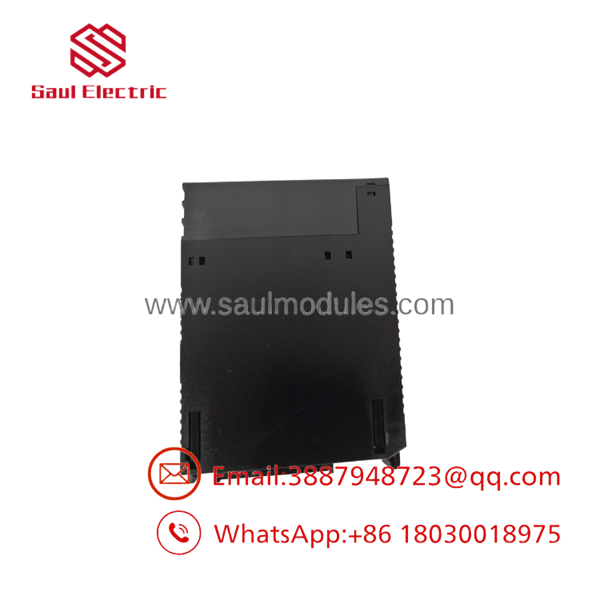
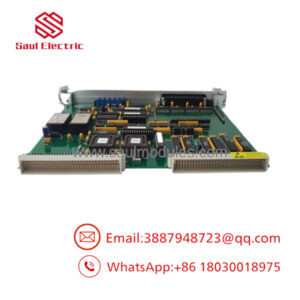
IC693CPU374
Transparency SOP: QA & Testing
Before shipment, every CPU module completes a documented verification process.
- Verify catalog number, firmware revision, and hardware identification.
- Inspect Ethernet ports, backplane connector, PCB assemblies, and status LEDs.
- Install the CPU in a Series 90-30 test rack with compatible power supplies.
- Execute a functional PLC application to verify processor performance and memory integrity.
- Confirm communication through both Ethernet ports using SRTP diagnostics.
- Perform repeated power-cycle testing to validate Flash memory and controller startup.
- Package the module using ESD-safe materials with industrial protective packaging.
New Surplus inventory is inspected to confirm unused condition. Refurbished units receive additional operational, communication, and burn-in testing before release.
The Veteran’s Tech Trap Guide
⚠️ Don’t Expect an Embedded Web Server
Unlike newer PACSystems controllers, the IC693CPU374 does not include a built-in web server. Ethernet is intended primarily for programming, SRTP messaging, and Ethernet Global Data communications.
⚠️ Document Network Parameters Before Replacement
The controller stores its Ethernet configuration internally. If the IP address, subnet mask, or station configuration is not backed up before replacement, reconnecting HMIs and SCADA systems can take far longer than replacing the hardware itself.
PRO TIP: The two RJ-45 connectors function as an integrated Ethernet switch—not as two independent network interfaces. The CPU supports only one IP address, so avoid planning redundant network architectures around the second port.
⚠️ Review CPU Firmware
Firmware Release 11.01 corrected startup memory corruption issues, while Release 11.03 resolved specific Ethernet client communication faults and PROFIBUS interaction issues. Matching firmware revisions with the existing installation can prevent unexpected commissioning problems.
Dynamic FAQ
Q1. What is the primary advantage of the IC693CPU374?
Its integrated dual-port 10/100 Mbps Ethernet interface eliminates the need for a separate Ethernet communication module in many Series 90-30 systems while providing high-performance PLC processing.
Q2. Does the IC693CPU374 support Ethernet Global Data (EGD)?
Yes. The embedded Ethernet interface supports SRTP and Ethernet Global Data (EGD) for controller-to-controller and supervisory communications.
Q3. How many Ethernet ports are available?
The CPU includes two auto-sensing 10/100Base-T/TX RJ-45 ports connected through an integrated Ethernet switch while operating with a single IP address.
Q4. Can this controller support large Series 90-30 systems?
Yes. The supports up to eight total baseplates (one CPU baseplate plus seven expansion and/or remote baseplates) and accommodates up to 2,048 discrete inputs and 2,048 discrete outputs.
Q5. Which programming software is compatible?
The controller is supported by VersaPro, CIMPLICITY Machine Edition Logic Developer PLC, and later Proficy Machine Edition releases that support the CPU374 hardware family.
Q6. Are New Surplus modules tested before shipment?
Yes. Every New Surplus unit is inspected for part number accuracy, physical condition, connector integrity, and hardware identification. Refurbished units additionally undergo processor, Ethernet communication, memory retention, and power-cycle verification before shipment.

 Start Chat


