





Description
Product Introduction & Engineering Value
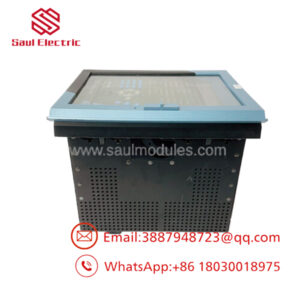
The IS200DSPXH2B is not a simple discrete I/O card. It sits within the Mark VI control architecture and performs processor-based signal and control functions, making hardware revision and system compatibility important during replacement.
A maintenance team should compare the complete board number, revision, connector configuration, firmware requirements, and application cabinet before installation. A visually similar DSPX variant is not automatically an approved substitute.
Technical Specifications
| Parameter | Specification |
|---|---|
| Manufacturer | General Electric |
| Part Number | IS200DSPXH2B |
| Series | Mark VI |
| Functional Acronym | DSPX |
| Product Type | Digital Signal Processing / Control Board |
| System Generation | Mark VI |
| Board Revision | H2B |
| Processor Architecture | DSP-based |
| Application | Turbine control |
| Interface | Mark VI control-system architecture |
| PCB Family | IS200 |
| Service Category | Legacy/maintenance spare |
Important configuration note
The IS200DSPXH2B should not be confused with other DSPX variants such as different revision or option configurations. Hardware suffixes can correspond to changes in board functionality or system compatibility.
Exact clock frequency, memory capacity, firmware revision, connector pin assignments, and electrical ratings should be confirmed against GE documentation for the specific DSPX configuration rather than inferred from a generic DSPX listing.
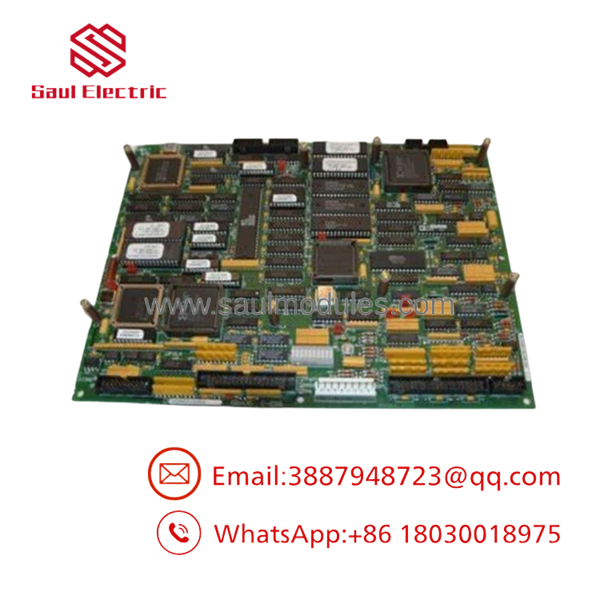
IS200DSPXH2B
Field Application & the “Trench” Experience
A Mark VI turbine cabinet develops an intermittent control fault after a board replacement. The replacement powers up normally, but the system does not behave exactly like the original configuration.
The maintenance engineer compares the removed board and spare. The old PCB is marked IS200DSPXH2B, while the first spare has a different suffix. It fits the same general cabinet location, but the team stops the installation until the hardware revision and application documentation are reconciled.
That’s the lesson with Mark VI processor boards: physical fit and power-up are not proof of compatibility.
Specific application scenarios:
- Mark VI turbine control processing
- Digital signal-processing functions in turbine controllers
- Legacy Mark VI controller maintenance
- Control-board replacement during turbine outages
- Mark VI spare-parts lifecycle management
Transparency SOP: QA & Testing
For IS200DSPXH2B, a suitable QA process should include:
- Part-number verification — Confirm
IS200DSPXH2Band all board markings. - PCB inspection — Check processors, memory devices, connectors, capacitors, solder joints, and PCB traces.
- Connector inspection — Verify contact condition and mechanical integrity.
- Power-rail screening — Check applicable supply rails against the correct GE documentation.
- Processor diagnostics — Verify processor initialization and board diagnostic behavior.
- Interface testing — Test the board through an appropriate Mark VI test environment.
- Firmware/configuration verification — Confirm that installed firmware and application configuration are appropriate for the customer’s system.
- System integration — Validate communication and control behavior with the associated Mark VI hardware.
- Final QA report — Record actual-unit photographs, test results, board revision, and warranty.
For New Surplus, ask for confirmation that the board has never been installed or energized. For Refurbished, request processor-level functional testing rather than a basic power-on check.
The Veteran’s Tech Trap Guide
⚠️ Trap #1 — Hardware revision matters.
Do not substitute another DSPX board solely because the model family is the same. Confirm the complete part number and hardware revision.
⚠️ Trap #2 — Firmware and application configuration can matter as much as the PCB.
A replacement processor board should be checked against the installed Mark VI application before commissioning.
⚠️ Trap #3 — Don’t diagnose a DSPX fault in isolation.
Power quality, backplane/interface connections, adjacent control boards, communication paths, and system configuration can all produce processor-related symptoms.
PRO TIP: Record the original board’s part number, revision, firmware information, configuration data, and connector arrangement before removal. This is much safer than relying on memory during commissioning.
Dynamic FAQ
Q: What is the GE IS200DSPXH2B?
A: It is a GE Mark VI DSPX digital signal processing/control board used within the Mark VI turbine-control architecture.
Q: What does DSPX stand for?
A: DSPX identifies GE’s Digital Signal Processor board family used within the Mark VI control architecture.
Q: Can another DSPX revision replace the IS200DSPXH2B?
A: Not automatically. Verify hardware revision, application compatibility, firmware requirements, connector configuration, and the applicable GE documentation.
Q: What should be checked if a replacement DSPX board does not initialize?
A: Check board power rails, connectors, backplane/interface connections, processor diagnostics, firmware/configuration, and related Mark VI control hardware before declaring the PCB defective.
Q: How can New Surplus authenticity be verified?
A: Request actual-unit photographs showing the complete marking, confirmation that the board has never been installed or energized, and available packaging or traceability information.
Q: What should I request for Refurbished stock and warranty?
A: Request the refurbishment scope, processor/board functional testing, firmware/configuration verification where applicable, actual-unit photographs, part-number traceability, and written warranty/DOA terms. A simple power-on test is not sufficient for a processor-based Mark VI board.

 Start Chat


