





Description
Product Introduction
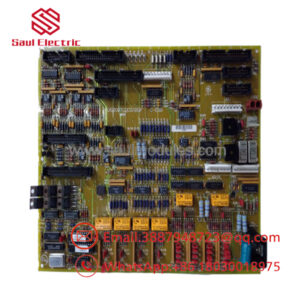
The GE IS200TPROH1CPR2 serves as an Emergency Protection Terminal Board (TPRO) for GE Speedtronic Mark VI and Mark VIe turbine control architectures. Designed to sit at the core of the autonomous overspeed and synchronization safety loops, it acts as the primary hardware landing point for speed sensors, potential transformers (PTs), and emergency trip output cabling.
Equipped to mount up to three PPRO protection I/O packs directly onto its faceplate, the TPROH1CPR2 conditions incoming magnetic pulse speed signals and passes scaled generator/bus telemetry across high-speed internal buses. This dedicated hardware layout guarantees hardwired overspeed trip detection independent of the turbine’s primary control software.
Key Technical Specifications
| Parameter | Specification |
| Manufacturer | General Electric (GE) |
| Part Number | IS200TPROH1CPR2 |
| System Lines | Speedtronic Mark VI / Mark VIe Control Systems |
| Functional Acronym | TPRO (Emergency Protection Terminal Board) |
| Speed Input Range | 2 Hz to 20,000 Hz (Magnetic Pickup Sensing) |
| Signal Inputs | Generator & Bus PT Voltages, 4-20 mA auxiliary loops |
| Pack Compatibility | Houses up to 3x PPRO / VPRO Emergency Protection Packs |
| Trip Connectors | 3x DC-37 pin D-sub connectors for backup trip relay cables |
| Terminal Types | Two pluggable 24-point barrier terminal blocks |
| Operating Temp | -30°C to +65°C (-22°F to +149°F) |
Application Scenarios & The “Trench” Experience
During a full-load trip test on a combined-cycle gas turbine, the primary control governor fails to throttle fuel fast enough, causing shaft RPM to accelerate rapidly toward overspeed limits. The IS200TPROH1CPR2 board continuously conditions the raw pulse stream from magnetic speed pickups and feeds hardware registers on attached PPRO protection packs. The moment the pulse rate crosses the 110% overspeed threshold, the hardware trip circuit drops out through the DC-37 trip cables instantly, dumping emergency trip oil pressure and protecting the turbine-generator set from catastrophic mechanical failure.
- Heavy-Duty Gas Turbines – Emergency Overspeed Protection – Continuously measures shaft RPM to trigger hardware trip solenoids during speed surges.
- Steam Turbine Generators – Bus & Generator PT Synchronization – Pre-conditions PT phase and voltage signals for emergency grid lockouts.
- Industrial Cogeneration – Independent Safety System – Acts as a SIL-rated independent safety barrier operating completely outside standard PLC networks.
Transparency SOP: Quality Assurance & Testing
We don’t just ship boxes; we test them on actual GE Mark VI/VIe test rigs.
- Inbound Visual Inspection: Optical magnification checking for terminal block thread damage, trace oxidation, clean DC-37 pins, and pristine PPRO pack header sockets.
- Frequency Input Injection: Injecting calibrated high-frequency pulse streams (2 Hz to 20 kHz) to verify signal conditioning linearity across all speed channels.
- PT Voltage Scaling Audit: Applying AC potential transformer reference signals to confirm onboard conditioning step-down circuits operate accurately.
- Live Protection Rig Handoff: Mounting test PPRO I/O packs to verify electronic ID (eID) interrogation, power distribution, and DC-37 trip output continuity.
- Anti-Static Packaging: Vacuum-sealed in anti-static ESD shielding bags with fresh desiccant packages before protective foam encapsulation.
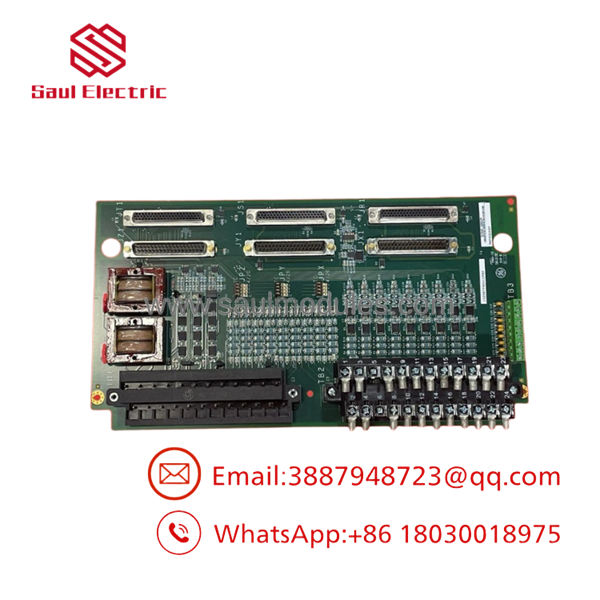
IS200TPROH1CPR2
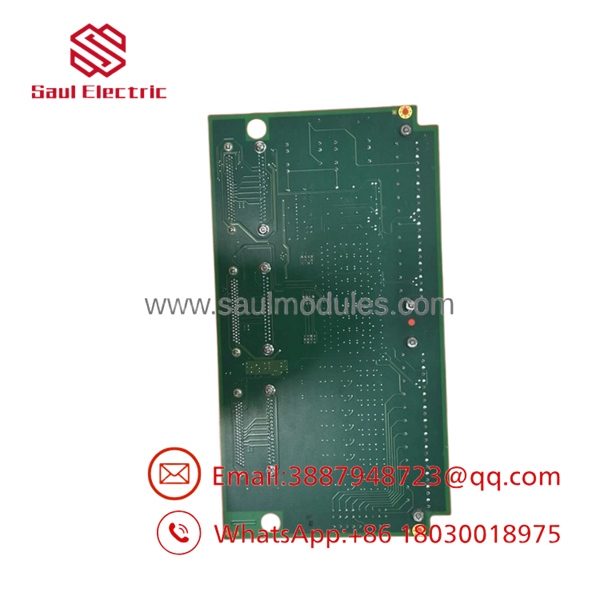
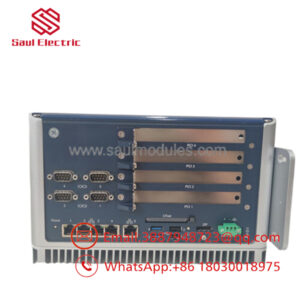
IS200TPROH1CPR2
The Veteran’s Tech Trap Guide (Crucial Value-Add)
- ⚠️ DO NOT HOT-SWAP UNDER POWER: Never remove or insert the TPRO board or its connected PPRO packs while the cabinet segment is energized. Doing so will cause undefined trip-relay states, triggering an immediate shutdown of the turbine.
- ❗ Verify Terminal Isolation (240 VAC vs DC): Potential transformer (PT) input lines carry high AC voltages. Ensure clear physical separation between AC PT leads and sensitive DC sensor loops on the terminal blocks to prevent blowing onboard MOV surge arresters.
- ⚠️ Secure DC-37 Thumb Screws: The three DC-37 connectors route hardwired trip commands to terminal relay boards. Always hand-tighten metal thumbscrews completely; cabinet vibration can back loose D-sub connectors out, triggering false trip faults.
- ❗ Check Electronic ID (eID) Compatibility: The Mark VIe system queries the TPRO board’s hardwired eID chip upon startup. Ensure replacement board revision
CPR2matches your cabinet’s system configuration to avoid hardware mismatch lockouts.
Frequently Asked Questions (FAQ for Conversion)
Q: What is the primary function of the GE IS200TPROH1CPR2 board?
A: It is an emergency protection terminal board that conditions speed signals (from magnetic pickups) and PT voltages, routing them directly to PPRO I/O packs and emergency trip relays.
Q: Does this board require laptop software programming or flashing?
A: No. The IS200TPROH1CPR2 is a passive/interface terminal board. Firmware and execution parameters are managed directly by the mounted PPRO I/O packs and main turbine controllers.
Q: How many PPRO protection packs mount onto the TPRO board?
A: The board features dedicated mounting headers for up to three PPRO I/O packs, supporting triple modular redundant (TMR) safety architectures.
Q: Why source replacement Mark VI/VIe boards instead of upgrading the system?
A: System retrofits require extensive re-engineering, cabinet rewiring, and weeks of plant outage. Replacing a faulty terminal board takes less than an hour during a scheduled outage and costs a fraction of a full system upgrade.
Q: What warranty is included with this unit?
A: Every unit comes backed by a full 12-month replacement warranty from the date of shipment, covering signal channel integrity, connector contacts, and onboard power distribution paths.

 Start Chat


