





Description
Product Introduction
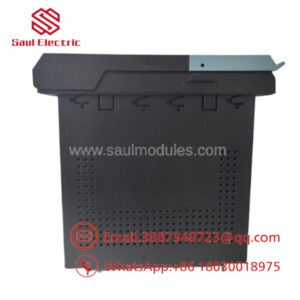
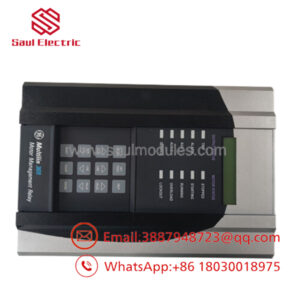
The GE IS200TRTDH1C functions as a Simplex RTD Terminal Board (TRTD) within the GE Speedtronic Mark VI gas and steam turbine control systems. Designed to monitor critical thermal conditions across power generation equipment, the TRTD board acts as the direct physical interface for up to 16 field-installed resistance temperature detectors (RTDs).
The IS200TRTDH1C provides precision multiplexed excitation currents to 3-wire RTD sensor loops, reading accurate millivolt voltage drops across generator stator windings, bearing metal sensors, and lube oil reservoirs. Signals are conditioned, filtered for high-frequency noise, and transmitted directly to the primary VRTD processor board via a multi-pin JR1 cable connector.
Key Technical Specifications
| Parameter | Specification |
| Manufacturer | General Electric (GE) |
| Part Number | IS200TRTDH1C |
| System Line | Speedtronic Mark VI Turbine Control |
| Functional Acronym | TRTD (RTD Terminal Board) |
| Configuration Mode | Simplex Mode (Group 1 / Revision H1C) |
| Input Channels | 16 independent 3-wire RTD input channels |
| Supported RTD Types | Pt 100Ω, Cu 10Ω, Ni 120Ω, Cu 10Ω (compensated) |
| Excitation Currents | Onboard multiplexed constant-current generators (~10 mA Pt / ~2.5 mA Cu) |
| Field Terminals | Two barrier-type terminal blocks (24 screw terminals each) |
| Processor Interface | Single JR1 D-type connector to VRTD I/O board |
| Primary Manual | GEH-6421 (Mark VI System Guide) |
Application Scenarios & The “Trench” Experience
During turbine startup, an operator notices open-circuit temperature faults on two generator stator RTD channels, causing false alarm flags on the HMI. Signal tracing reveals damaged terminal screws and trace micro-fractures on an aging TRTD board. Maintenance isolates the cabinet, replaces the board with a bench-verified IS200TRTDH1C, and reconnects the 3-wire RTD leads. Upon restoring power, the VRTD processor immediately acquires stable resistance readings across all 16 channels, clearing the trip hazards.
- Generator Stator Winding Monitoring – Thermal Limit Safeguards – Processes 10Ω/100Ω RTD inputs to prevent generator stator insulation burnout.
- Bearing Metal & Lube Oil Temperature – Mechanical Protection – Continuously tracks thrust bearing and oil header temperatures during full-speed operation.
- Compressor & Auxiliary System Telemetry – Process Feedback – Provides multiplexed temperature data to the primary controller logic for safety interlocks.
Transparency SOP: Quality Assurance & Testing
- Visual & Structural Audit: High-magnification check for terminal block thread damage, trace erosion, solder fatigue, and connector pin alignment.
- Excitation Current Loop Test: Bench-testing internal constant-current excitation sources to confirm steady milliamp output across all 16 channels.
- 16-Channel Resistance Linearity Audit: Injecting calibrated decade box resistance steps (10Ω to 400Ω) across input terminals to verify VRTD feedback accuracy.
- Noise Suppression & Filter Check: Verifying onboard low-pass filter networks and surge suppression components against voltage spikes.
- Anti-Static ESD Packaging: Encapsulated in heavy-duty ESD static-shielding bags with fresh desiccant packages prior to protective foam packaging.
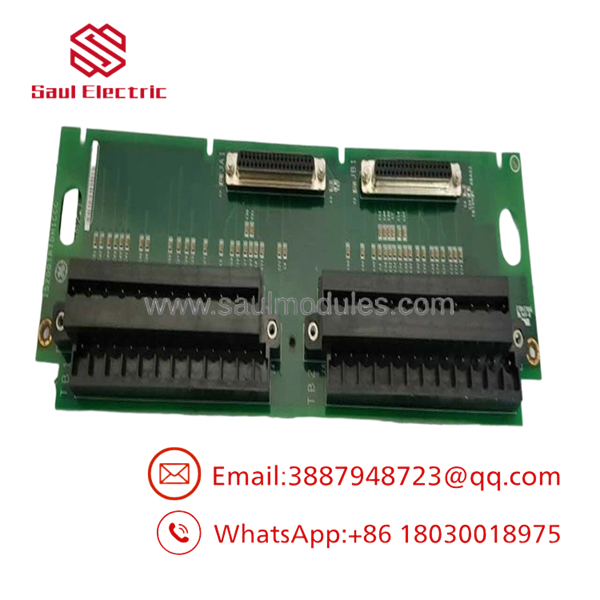
IS200TRTDH1C
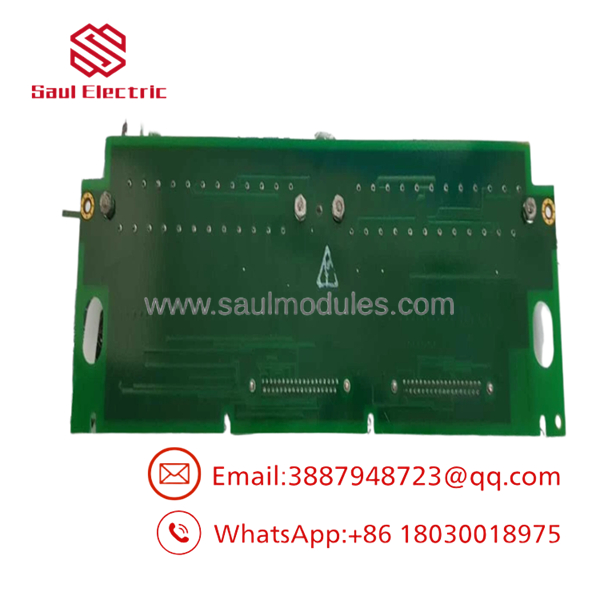
IS200TRTDH1C
The Veteran’s Tech Trap Guide (Crucial Value-Add)
- ⚠️ DO NOT CONFUSE TRTDH1 AND TRTDH2 BOARDS: Group 1 (
TRTDH1C) is built for Simplex systems using a single JR1 connector. Group 2 (TRTDH2) is designed for TMR (Triple Modular Redundant) systems and features three cable connectors (JR1, JS1, JT1). Installing an H1 board in a TMR cabinet will cause missing channel votes. - ❗ VERIFY RTD TYPE IN TOOLBOX6: The hardware supports multiple RTD curves (Pt100, Cu10, Ni120), but channel selection is configured via GE Toolbox6 software. Always match hardware wiring to your software configuration file.
- ⚠️ MIND THE 3-WIRE RTD LEAD RESISTANCE: Ensure all three leads of each RTD have matching wire resistance. Imbalanced lead resistance introduces constant offset errors in temperature calculations.
- ❗ DISCONNECT CABLES BEFORE RE-WIRING: Always unplug the JR1 connector to the VRTD board before loosening or tightening field terminal screws to prevent static or ground shorts from damaging the main processor card.
Frequently Asked Questions (FAQ for Conversion)
Q: What is the primary function of the IS200TRTDH1C board?
A: It provides terminal points, field excitation, and signal conditioning for up to 16 RTD inputs in Speedtronic Mark VI Simplex systems.
Q: Which I/O processor card connects to this terminal board?
A: The IS200TRTDH1C connects directly to the VRTD (RTD I/O Processor Board) in the Mark VI VME rack via a JR1 cable.
Q: Can this board handle both Pt100 and Cu10 RTDs simultaneously?
A: Yes. The board hardware supports mixed RTD types across its 16 channels, provided each channel’s type is properly assigned in Toolbox6 software.
Q: Does replacing this board require firmware flashing?
A: No. The TRTD module is a passive/analog terminal board; all system software and calibration parameters reside on the VRTD processor board.
Q: What warranty is provided with this module?
A: Every unit comes backed by a full 12-month replacement warranty covering excitation current stability, terminal continuity, and channel accuracy.

 Start Chat


