





Description
Product Introduction & Engineering Value
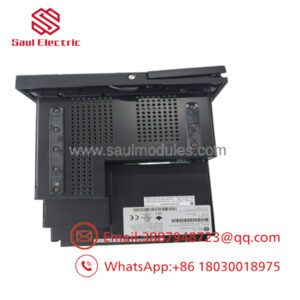
The VAIC is a high-density analog interface between Mark VI control electronics and field instrumentation. It digitizes incoming analog signals and passes the resulting data toward the VCMI/controller path; its output channels convert digital commands back into analog current signals for the customer circuit.
The H1DAA configuration deserves particular attention. This version is associated with TBAIH1C or STAI terminal boards, rather than the DTAI/TBAH1B combinations used with some other VAIC variants. That terminal-board compatibility should be checked before approving a replacement.
Technical Specifications
| Parameter | Specification |
|---|---|
| Manufacturer | General Electric (GE) |
| Part Number | IS200VAICH1DAA |
| Alternate Model Reference | IS200VAICH1D |
| Series | Mark VI |
| Functional Acronym | VAIC |
| Product Type | Analog Input/Output Board |
| Analog Inputs | 20 |
| Analog Outputs | 4 |
| Standard Analog Output | 4–20 mA |
| High-Current Output Capability | 0–200 mA, application-dependent |
| Rack Interface | VME |
| Terminal Board Compatibility | TBAIH1C or STAI revisions |
| System Configurations | Simplex and TMR |
Each compatible terminal-board arrangement provides 10 analog inputs and 2 analog outputs, giving the complete VAIC configuration its 20-input/4-output capacity.
The board can also support both Simplex and Triple Modular Redundant (TMR) Mark VI architectures. In a TMR arrangement, analog inputs can be fanned to the R, S, and T control racks.
Specification caution: Some secondary-market listings incorrectly describe the channel count as 24. The more detailed VAIC documentation specifies 20 analog inputs and 4 analog outputs, which is the configuration used above.
Field Application & the “Trench” Experience
A gas-turbine control cabinet begins reporting an intermittent analog-channel fault. The field transmitter checks correctly, but the Mark VI controller occasionally sees an input outside its expected range.
The maintenance engineer isolates the channel at the terminal board first. After confirming the field wiring and transmitter, attention turns to the IS200VAICH1DAA. The technician records the installed board revision, terminal-board type, cable connections, and channel assignments before replacing anything.
That matters with VAIC boards. The board is part of an end-to-end analog signal chain involving the field device, terminal board, VME rack, VAIC, VCMI, and controller. Replacing the PCB without checking the complete path can easily send the troubleshooting effort in the wrong direction.
Specific application scenarios:
- Gas-turbine compressor instrumentation and stall detection
- Mark VI turbine analog process-variable acquisition
- 4–20 mA control-loop output to field actuators
- TMR analog input distribution across R/S/T control racks
- Legacy Mark VI I/O cabinet refurbishment
Transparency SOP: QA & Testing
For IS200VAICH1DAA, a meaningful QA process should verify both the PCB and its terminal-board interface.
- Identity verification — Confirm the complete
IS200VAICH1DAAmarking and hardware revision. - Physical inspection — Examine the VME connector, terminal-board interface connectors, PCB traces, components, solder joints, and retaining hardware.
- Configuration verification — Confirm compatibility with the installed TBAIH1C or STAI terminal-board arrangement.
- Analog input testing — Apply controlled input signals across representative channels and verify conversion/diagnostic behavior.
- Analog output testing — Verify applicable 4–20 mA output behavior and current-drive performance.
- Diagnostic testing — Where the correct GE test environment is available, verify I/O-chip, input-limit, output-current, relay, and scaling diagnostics.
- Final QA record — Document actual-unit photographs, revision, test conditions, measured results, and stock classification.
For New Surplus, request confirmation that the actual board has never been installed or energized. For Refurbished, ask for the repair scope and channel-level functional-test report.
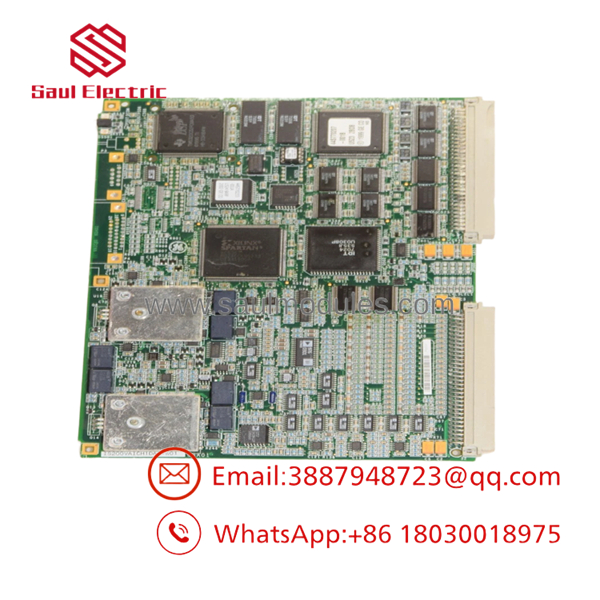
IS200VAICH1DAA
The Veteran’s Tech Trap Guide
⚠️ Trap #1 — Terminal-board mismatch.
Do not assume every VAIC board accepts the same terminal hardware. The H1DAA configuration is specifically associated with TBAIH1C or STAI terminal boards.
⚠️ Trap #2 — Don’t confuse 20 inputs + 4 outputs with 24 analog channels.
Some vendor listings simply state “24 channels.” The engineering configuration is better understood as 20 analog inputs plus 4 analog outputs.
⚠️ Trap #3 — TMR changes the troubleshooting path.
In TMR service, the analog inputs can be distributed to three control racks. A single-board fault therefore needs to be distinguished from a field-device or terminal-board problem before replacing the VAIC.
PRO TIP: Record the VAIC board number and terminal-board part number as one spare-parts record. For Mark VI analog I/O, that pairing is often more useful than the PCB number alone.
Dynamic FAQ
Q: What is the GE IS200VAICH1DAA?
A: It is a Mark VI VAIC Analog Input/Output Board with 20 analog inputs and 4 analog outputs.
Q: What terminal boards are compatible with the H1DAA version?
A: The available technical reference identifies TBAIH1C or any revision of STAI as the applicable terminal-board types.
Q: Can IS200VAICH1DAA operate in a TMR system?
A: Yes. The VAIC supports both Simplex and TMR configurations. In TMR, analog inputs can be distributed to the R, S, and T control racks.
Q: What analog output ranges are supported?
A: The documented output circuits include 4–20 mA, with a 0–200 mA high-current configuration also referenced. The exact application configuration should be verified from the system documentation.
Q: How should New Surplus authenticity be verified?
A: Request actual-unit photographs, complete part-number identification, confirmation that the board is unused, and information confirming whether it has ever been installed or energized.
Q: What should I request for Refurbished stock and warranty?
A: Request the refurbishment scope, analog channel testing performed, actual-unit photographs, test results, and written warranty/DOA terms. A current supplier listing, for example, advertises a 12-month warranty, but supplier warranty terms are not GE OEM warranty terms.

 Start Chat


