





Description
Key Technical Specifications
| Parameter | Value |
|---|---|
| Manufacturer | GE |
| Model | IS220PSVOH1A |
| Product Type | Servo Control I/O Pack |
| Platform | Mark VIe / Mark VIeS |
| Primary Function | Closed-loop electro-hydraulic servo valve control |
| Servo Outputs | 2 analog servo outputs (±10 VDC, ±120 mA max) |
| LVDT Inputs | 8 channels |
| Pulse Rate (Speed) Inputs | 2 channels |
| LVDT Excitation | 7 VAC nominal, 3.2 kHz |
| Ethernet | Dual 10/100Base-T IONet ports |
| Supply Voltage | 28 VDC nominal (27.4–28.6 VDC) |
| Maximum Current | 1.0 A |
| Speed Sensor Power Output | 24 VDC nominal, 40 mA |
| Compatible Terminal Board | IS200TSVCH2A |
| Compatible Servo Driver | IS210WSVOH1A |
| Diagnostics | Power, Fault, Ethernet, Enable LEDs with onboard diagnostics |
These specifications are documented in the GE Mark VIe hardware guide and hazardous-location certification for the approved hardware combination.
Product Introduction
The GE IS220PSVOH1A is a Servo Control I/O Pack developed for the GE Mark VIe and Mark VIeS Speedtronic turbine control platform. It provides closed-loop positioning of hydraulic servo valves used to regulate fuel, steam, or inlet guide vane actuators in gas and steam turbine applications.
The module combines a local processor, dual IONet Ethernet interfaces, and precision analog circuitry to control two independent servo loops while monitoring eight LVDT feedback channels. Installed with the IS200TSVCH2A terminal board and IS210WSVOH1A servo driver, it delivers the fast response and diagnostic coverage required for critical turbine control systems.
Troubleshooting Quick Reference
| Symptom | Possible Cause | Relevance to this Part | Quick Check Method | Recommendation |
|---|---|---|---|---|
| Servo valve not responding | Servo output fault | ✅ High | Measure ±10 V output while commanding valve movement | Verify servo driver before replacing PSVO |
| LVDT feedback unstable | Failed LVDT or wiring | ✅ High | Measure excitation voltage and LVDT return signals | Inspect sensor and cabling |
| I/O Pack offline | IONet communication failure | ✅ High | Check both Ethernet link LEDs and network diagnostics | Verify network switch and cables |
| ATTN or FAULT LED ON | Internal diagnostic alarm | ✅ High | Read ToolboxST diagnostics | Replace module only after confirming hardware fault |
| Valve hunts or oscillates | Servo tuning or hydraulic issue | ⚠️ Medium | Trend command versus feedback position | Check hydraulic system before replacing electronics |
| Multiple servo loops unavailable | 28 VDC power loss | ⚠️ Medium | Measure supply voltage at the terminal board | Restore power before replacing module |
| Module not recognized | Terminal board mismatch | ⚠️ Medium | Verify IS200TSVCH2A compatibility | Install approved hardware combination |
Field Tip: A servo control pack is often blamed when the real problem is a sticking hydraulic actuator or a failed LVDT. Before replacing the IS220PSVOH1A, verify the 28 VDC supply, confirm the 7 VAC LVDT excitation, check the hydraulic pressure, and trend the commanded versus actual valve position in ToolboxST. Those checks usually identify the root cause more quickly than swapping hardware.
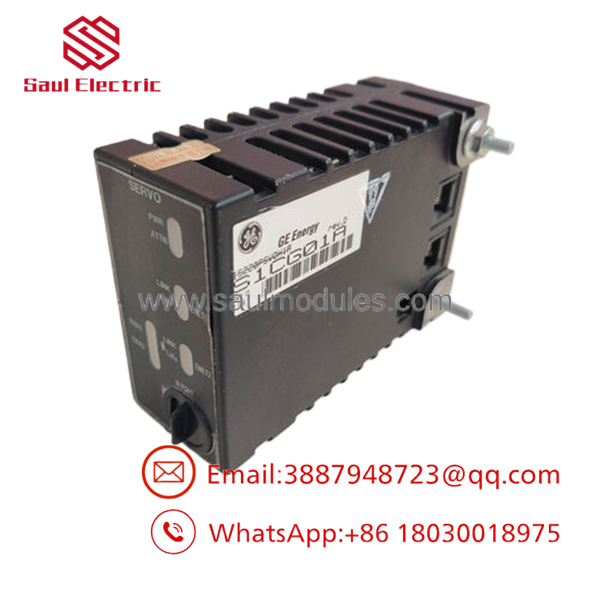
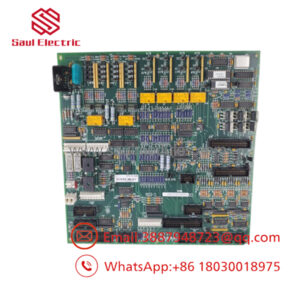
- IS220PSVOH1A
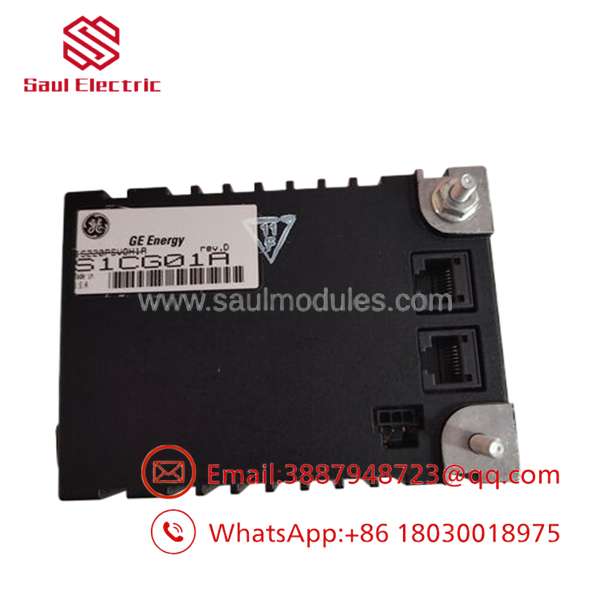
- IS220PSVOH1A
Frequently Asked Questions (FAQ)
Q1. What is the primary function of the IS220PSVOH1A?
It controls two electro-hydraulic servo valve position loops, receives LVDT feedback, and exchanges real-time data with the Mark VIe controller over the redundant IONet Ethernet network.
Q2. Which hardware works with this I/O Pack?
The approved hardware combination consists of:
- Servo Control I/O Pack
- IS200TSVCH2A Servo Terminal Board
- IS210WSVOH1A Servo Driver
This is the GE-approved configuration for hazardous-location installations.
Q3. How many servo loops does the module support?
The independently controls two servo valve position loops while monitoring eight LVDT feedback inputs and two pulse-rate inputs.
Q4. Can I replace the I/O Pack without recalibrating the servo system?
Not always. Although the replacement may be electrically compatible, you should verify valve calibration, LVDT scaling, and control parameters in ToolboxST before returning the turbine to service.
Q5. Can the be hot-swapped?
Follow the GE maintenance procedure for your installation. Because this module controls critical turbine actuators, replacement is normally performed with the control cabinet safely isolated unless the official maintenance documentation specifically authorizes another procedure.
Q6. Why are New Surplus units widely used?
The is a mature Mark VIe product. Many replacement units come from genuine unused surplus inventory, providing a practical option for maintaining existing turbine control systems when OEM production is limited.
Q7. What should I verify before installation?
Experienced turbine control engineers recommend checking:
- Complete model number ()
- Hardware revision
- IS200TSVCH2A terminal board compatibility
- IS210WSVOH1A servo driver compatibility
- 28 VDC input power
- Ethernet (IONet) communication
- LVDT wiring and calibration
- Hydraulic actuator condition
- ESD protection during installation
Performing these checks before startup helps eliminate the majority of commissioning issues and avoids unnecessary replacement of a functioning servo control pack.


 Start Chat


