





Description
Product Introduction
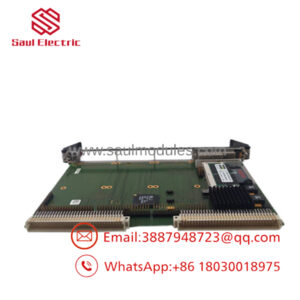
The GE PWMC3 (along with its hardware revs PWMC3B through PWMC3G) is the foundational servo control board designed for General Electric’s legacy Model 2 High-Performance DC PWM Servo Drives. Commonly deployed across CNC turret punch presses, heavy-duty metal fabrication machinery (such as Strippit equipment), and early automated positioning axes, the PWMC3 governs precise motor response by processing tachometer feedback and current loop commands.
Unlike generic off-the-shelf servo controllers, the PWMC3 architecture utilizes dedicated component mounting posts directly on the board to customize axis dynamics. This allows field engineers to tailor closed-loop gain, high-frequency attenuation, and current limit thresholds specifically to the driven mechanical load. While newer UL-rated revisions like the PWMC3F/PWMC4 incorporated secondary power feeds, the core PWMC3 card remains an essential direct-replacement component for keeping classic industrial motion systems operational.
Key Technical Specifications
| Parameter | Value / Specification |
| Part Number | PWMC3 / 44A398795-G03 (Series covers PWMC3 thru PWMC3G) |
| Drive System Compatibility | GE Model 2 PWM DC Servo Drive Chassis |
| Interface Connections | 5PL, 6PL Card Edge Connectors (16PL added on UL/F-revisions) |
| Compensation Network | 10 Screw-Terminals or Solder Posts (R1, R2, R3, C5, RL, CL) |
| Factory Default Components | R_1: 2.2 MΩ, R_2: 47 kΩ, R_3: 10 Ω, C_5: 0.47 µF |
| Current Limiting Protection | Zener Diode clamping network (1N5231 5.1V / 1N753B 6.2V typical) |
| Feedback Loop Type | Analog Velocity / Current Loop Interfacing |
| Form Factor | Open-frame PCB module with aluminum heatsink mount integration |
Application Scenarios & The “Trench” Experience
Picture this: It’s 1:45 AM on a critical production run, and your high-speed CNC turret punch press drops out on an X-axis servo fault. The machine refuses to home, and the control cabinet throws a drives-inhibited error. You trace it down to a blown analog current control stage on the original 1980s GE PWMC3 board. The OEM machine builder retired decades ago, and upgrading the entire machine to digital AC servos will take six weeks and cost $40,000. Having a drop-in, pre-tuned PWMC3 board on the shelf lets you swap cards, move the custom axis compensation parts over, and re-establish punch accuracy in under an hour.
- CNC Metal Stamping & Turret Punching (e.g., Strippit FC Series): – Axis Motion Drives (X, Y, Turret) – Manages high-acceleration step-and-repeat positioning without mechanical axis chatter.
- Legacy Machine Tool Retrofits: – DC Servo Velocity Loops – Serves as the analog driver interface between custom CNC controls and GE Model 2 power slice modules.
- Industrial Gantry & Material Handling: – Heavy DC Motor Control – Regulates power delivery and thermal current clamping to prevent motor armature burnouts during rapid reversals.
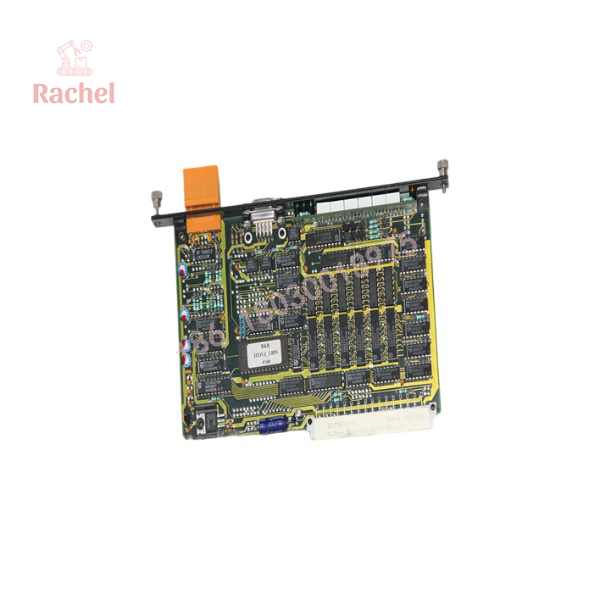
PWMC3
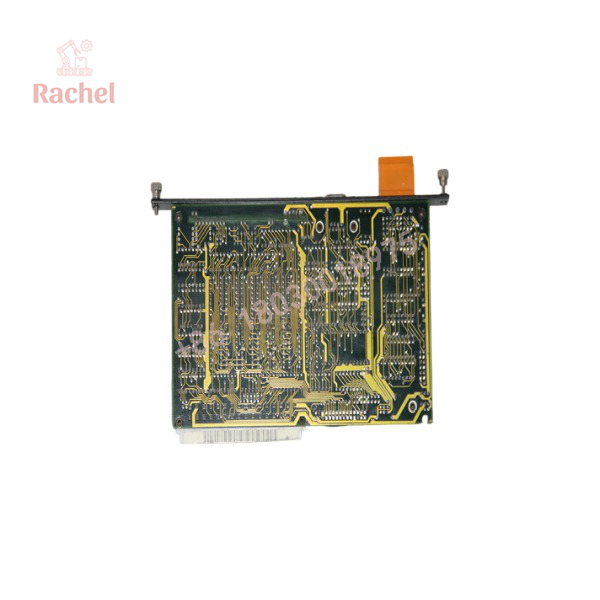
PWMC3
Transparency SOP: Quality Assurance & Testing
We don’t just ship boxes; we test them on actual GE Model 2 drive chassis. Every PWMC3 card passes a rigorous bench test before shipping:
- Inbound Visual & Component Inspection: Verification of trace integrity, connector pin condition, solder-post physical health, and checks for historic thermal fatigue.
- Cold-Resistance & Short Checks: Bench testing of power rails and feedback loops using high-precision multimeters to verify passive component values.
- Live Rig Power-On: Card installation into a powered GE Model 2 chassis with 5PL/6PL backplane mating to confirm DC voltage rail distribution.
- Closed-Loop Signal Handshake: Injection of analog speed commands to verify clean PWM signal output and tachometer feedback tracking across simulated motor loads.
- Anti-Static (ESD) Packaging: Sealed in static-shielding bags with custom foam encapsulation to safeguard sensitive analog silicon during transport.
The Veteran’s Tech Trap Guide (Crucial Value-Add)
- ⚠️ Do Not Leave Default GE Factory Test Comps on Machine Drives! The PWMC3 leaves the GE factory with standard test values (R_2=47k\Omega, C_5=0.47\muF). These are not universal running values. If you plug a raw factory board straight into an X or Y axis without desoldering or adjusting the R_2/R_3/C_5 network to match your machine builder’s tuning spec, your axis will violently oscillate or buzz.
- ❗ Watch Out for Revision Mismatches (PWMC3 vs. PWMC3F/4): Later revision boards like the PWMC3F introduced 10 solder-posts instead of screw-terminals and used a 3rd connector (16PL) for UL power delivery. If you are installing a PWMC3F into an older non-UL chassis, you must manually solder 4 jumper wires across 8 specific posts to pull DC power back from connectors 5PL and 6PL.
- ⚠️ Swap the Zener Diodes from the Old Board: Machine OEMs installed specific Zener diodes (like 5.1V 1N5231 or 6.2V 1N753B) across the compensation posts to limit maximum drive current. Take a high-resolution photo of the old card’s terminal strip before pulling it out, and ensure those exact diodes and dampening RC components (R_L/C_L) transfer to the replacement board.
Frequently Asked Questions (FAQ)
Q: Are the different letter revisions (PWMC3, PWMC3B, PWMC3C, PWMC3G) interchangeable?
A: To be honest, mostly yes, but with caveats. Newer versions are evolutionary improvements of the original layout. However, pay close attention to terminal styling (screw terminals vs. solder posts) and whether your board relies on external jumpers to route power through the 5PL/6PL edge connectors.
Q: Can I hot-swap a PWMC3 board while the drive chassis is powered?
A: No. Pulling an analog card out of a GE Model 2 chassis under power will cause massive current spikes across the backplane edge connectors, likely blowing the main power transistors on the associated power slice boards. Always kill main 3-phase power and control DC before servicing.
Q: Why does my servo axis make a high-pitched “buzzing” or oscillating sound after replacing the PWMC3?
A: High-frequency oscillation indicates that the RC compensation network (R_L / C_L) is missing or improperly tuned for your motor’s inductance. You must transfer the damping resistor and capacitor values from your old board to the 10-terminal posts of the replacement card.
Q: Can a PWMC3 board replace a newer PWMC7 or PWMC8 card?
A: No. The PWMC3 series is strictly designed for GE Model 2 drive architecture. PWMC7 and PWMC8 cards belong to the GE Model 3 / 3A drive ecosystem, which utilizes different chassis backplanes, higher bus voltages (150VDC), and modular power blocks.
Q: Why source refurbished or surplus PWMC3 cards instead of upgrading the drive?
A: A full drive and motor retrofit on a legacy machine tool often requires changing CNC controllers, running new encoder cabling, and re-engineering mounting brackets. Sourcing a fully tested surplus PWMC3 card provides immediate plug-and-play restoration at a fraction of modern retrofit costs.

 Start Chat


