





Description
Key Technical Specifications
| Parameter | Value |
|---|---|
| Brand | GE |
| Model | SR469-P5-HI-A20-E |
| Series | Multilin SR469 |
| Product Type | Motor management relay |
| Phase CT Input | 5 A secondary |
| Control Power | 70–265 VAC, 90–300 VDC |
| Analog Outputs | 4 x 4–20 mA configurable outputs |
| Communications | RS-232 front port; RS-485 options vary by build |
| Display | Enhanced front panel with 40-character LCD |
| Application | Medium and large motor protection |
| Mounting | Panel mount / drawout chassis style |
| Lifecycle Status | Obsolete / EOL |
| Procurement Priority | High; critical spare for motor reliability |
Product Introduction & Supply Chain Strategy
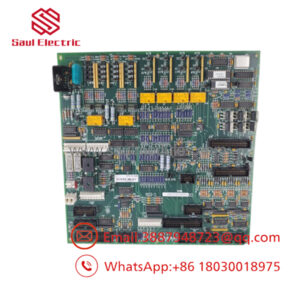
GE SR469-P5-HI-A20-E is a motor management relay used to protect and monitor industrial motors. It handles overload, stall, unbalance, ground fault, and temperature-related protection while also supporting local indication and remote integration.
Buying this as New Surplus is a practical supply-chain decision when the installed base is still active. It improves TCO, reduces exposure to lead time variability, and gives you a safer path than uncertain refurbished stock for a critical protection device.
Installation & Configuration Guide
Stage 1: Pre-Installation
Perform lock-out/tag-out and verify the motor circuit is fully de-energized. Use an ESD strap, insulated tools, and a camera to document wiring, settings, and any jumpers or DIP positions. Confirm the exact model suffix before opening the replacement unit.
Stage 2: Removal
Remove the relay carefully from the drawout case or panel mount without forcing the connector interface. Label every wire before disconnection if documentation is incomplete. Inspect the backplane, terminals, and case for heat damage, looseness, or contamination.
Stage 3: Installation
Copy the original CT ratio, RTD, relay, and communication settings before seating the new unit. Install the relay evenly and fully latch it into position. Reconnect all conductors exactly as recorded, especially the CT inputs and trip circuit wiring.
Stage 4: Power-On & Testing
Restore control power and verify the relay boots normally. Check the display, LEDs, alarm status, and measured values, then confirm communications to the PLC, DCS, or SCADA layer. Test trip logic, status inputs, and any analog outputs before returning the motor to service.
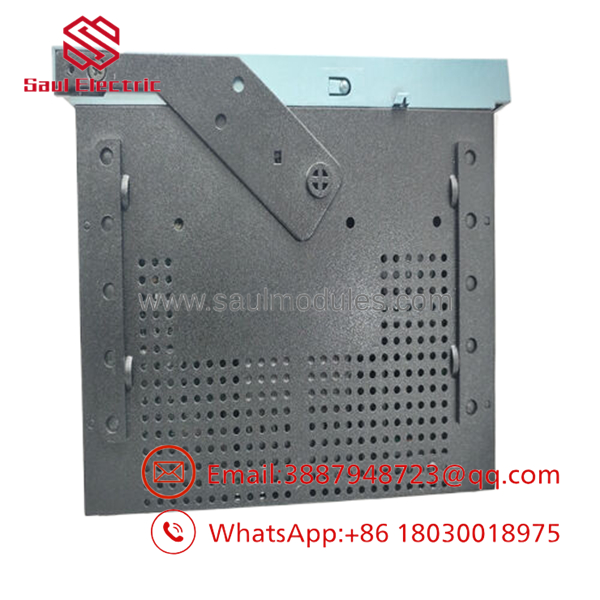
- SR469-P5-HI-A20-E
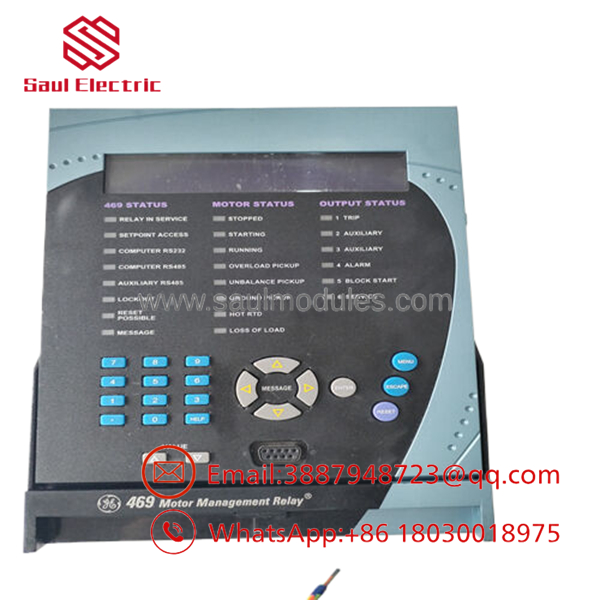
- SR469-P5-HI-A20-E
Firmware/Software Versions & Upgrade Notes
The exact firmware version should be matched to the site’s existing standard before replacement. Version differences can affect communications, event handling, and how the relay interprets configuration files.
Avoid firmware changes during a swap unless the maintenance plan specifically requires it. A straight hardware replacement with matched settings is the lowest-risk path and avoids unnecessary commissioning delays.
Frequently Asked Questions
Q: Is this really New Surplus?
Yes, the correct target is New Surplus original inventory. That means OEM-origin hardware with lower risk than repaired or reworked supply.
Q: Why is it cheaper than factory new but still not as cheap as repaired stock?
Because New Surplus comes from excess OEM inventory, not from the repair channel. You pay less than list price, but you avoid the hidden reliability penalty of uncertain internal wear.
Q: Is SR469-P5-HI-A20-E obsolete?
Yes, it should be treated as an EOL or at-risk spare. For critical motors, keep buffer stock and consider last-time-buy planning.
Q: Can I hot-swap this relay?
Do not assume hot-swap capability unless the plant documentation explicitly allows it. For protection relays, controlled shutdown and restart are usually the safer choice.
Q: Will the settings and programming be retained?
Not automatically. Always save the configuration, record CT and RTD settings, and replicate the original parameters before energizing the replacement.
Q: What warranty should I expect?
Warranty depends on the supplier and traceability package, but New Surplus generally carries stronger terms than repaired stock. For procurement, serial verification and QC records matter as much as the warranty period.
Q: How should I stock it?
For a critical motor line, keep 1–2 units on-site as insurance against stock-outs. For slower demand, use vendor consolidation, consignment, or cross-site sharing to protect capital.

 Start Chat


