





Description
Key Technical Specifications
| Parameter | Value |
|---|---|
| Manufacturer | GE Multilin |
| Model | UR1HH (UR-1HH) |
| Product Type | Power Supply Module |
| Series | UR Universal Relay |
| Input Voltage (DC) | 125–250 VDC |
| Input Voltage (AC) | 100–240 VAC, 50/60 Hz |
| Input Power | Approximately 35 W / 35 VA |
| Installation | Plug-in module inside UR relay |
| Compatibility | GE Multilin UR Series Universal Relays |
| Module Type | First-generation High-Voltage Power Supply |
| Approximate Weight | 1.15 kg (2.5 lb) |
| Typical Applications | Generator, Transformer, Feeder, Bus, and Motor Protection Relays |
The UR1HH is a first-generation high-voltage power supply module for the GE Multilin UR Universal Relay platform. It provides operating power to the relay and is designed for installations using 125–250 VDC or 100–240 VAC control power.
Product Introduction
The GE UR1HH is a high-voltage power supply module used within the GE Multilin UR Universal Relay family. Rather than being a standalone protection relay, it is an internal plug-in module that supplies operating power to the relay’s CPU, communication modules, protection functions, and I/O circuitry. It is commonly installed in protection systems for generators, transformers, motors, feeders, and transmission lines.
The module is designed for applications with high-voltage control power, accepting 125–250 VDC or 100–240 VAC. It is field-replaceable, allowing maintenance personnel to restore relay operation without replacing the complete Universal Relay chassis. As a first-generation module, it has since been succeeded by newer power supply versions, but it remains compatible with many existing UR installations.
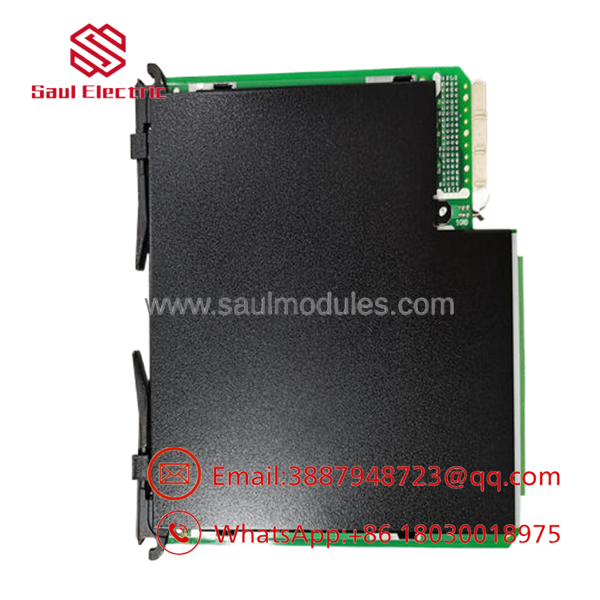
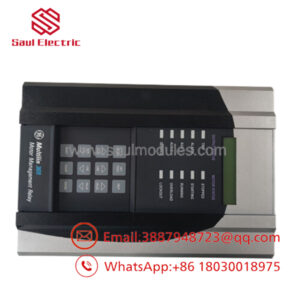
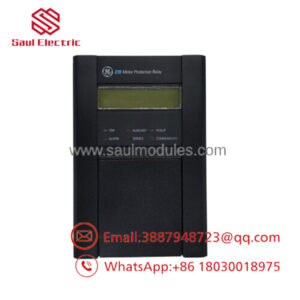
- UR1HH
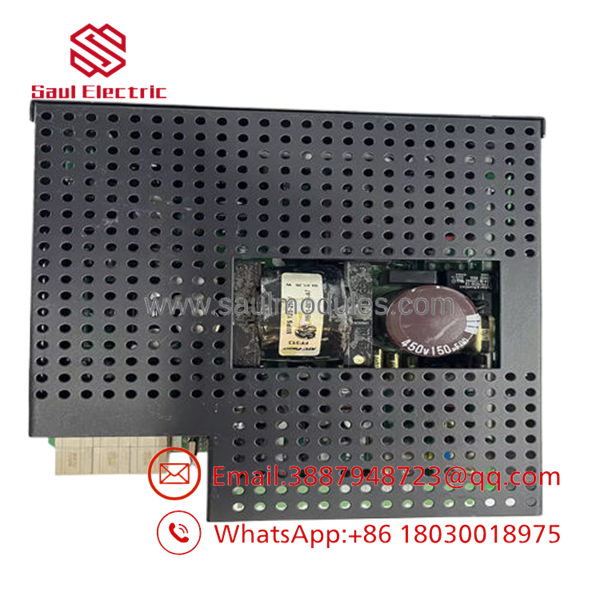
- UR1HH
Troubleshooting Quick Reference
| Symptom | Possible Cause | Relevance | Quick Check | Recommendation |
|---|---|---|---|---|
| Relay display is blank | No control power reaching UR1HH | ✅ High | Measure input voltage at the power terminals | Verify external control power first |
| Relay repeatedly restarts | Unstable control voltage | ✅ High | Monitor AC/DC input under load | Correct supply fluctuations before replacing the module |
| Relay completely dead | Internal power supply failure | ✅ High | Verify input voltage and inspect module LEDs | Replace the after confirming supply voltage |
| Self-test power alarm | Internal power rail fault | ✅ High | Review relay diagnostics | Replace the power supply module if confirmed |
| Relay powers intermittently | Loose module installation | ⚠️ Medium | Remove and reseat the module | Clean connectors and reinstall |
| Relay shuts down during switching | Control power dips below operating range | ⚠️ Medium | Monitor transient voltage | Improve control power stability |
Field Tip: Many apparent failures are actually caused by blown control fuses, weak station batteries, degraded DC power supplies, or loose module seating. Before replacing the module, verify the incoming control voltage under load, inspect fuse continuity, and reseat the power supply. These checks frequently resolve the issue without replacing the hardware.
Frequently Asked Questions (FAQ)
Q1. What is the primary function of the ?
The is the high-voltage power supply module for GE Multilin UR Series Universal Relays. It converts the incoming AC or DC control power into the regulated internal voltages required by the relay electronics.
Q2. What input voltage does the accept?
The module supports:
- 125–250 VDC
- 100–240 VAC (50/60 Hz)
making it suitable for most utility and industrial control power systems.
Q3. Which relays are compatible with the ?
The is compatible with the GE Multilin UR Universal Relay family, including generator, transformer, feeder, motor, and bus protection relays that use the first-generation high-voltage power supply module.
Q4. Can the be replaced while the relay is energized?
No. Remove all control power before replacing the module. GE recommends de-energizing the relay and following ESD precautions to prevent equipment damage or unintended operation.
Q5. Is this product supplied as new or refurbished?
This listing refers to New Original (New Surplus) inventory unless otherwise specified. Each module should undergo visual inspection, identification verification, power verification, and ESD-safe packaging before shipment.
Q6. What inspections should be completed before shipment?
Recommended quality inspections include:
- OEM part number verification
- Visual inspection for physical damage or corrosion
- Input voltage functional verification
- Connector and contact inspection
- Power output verification
- ESD-safe packaging with QC documentation
Q7. What is the most common installation mistake?
The most common mistake is installing a into an application designed for a low-voltage power supply module, or vice versa. Always verify the station control power voltage and ensure the replacement module matches the original power supply type before installation.

 Start Chat


