





Description
Technical Specifications Matrix
| Parameter | Specification Detail |
|---|---|
| System Compatibility | GE Mark VIe, EX2100 Exciter Systems, Innovation Series Drives |
| Ordering Part Number | IS215UCCAH3A |
| Board Assembly Code | VMICPCI-7632-03310 |
| Factory Production Number | 350-657362-003310J (Revision J) |
| Microprocessor | Intel Ultra-Low Voltage Celeron running at 650 MHz |
| System Volatile Memory | 128 MB high-reliability DDR SDRAM |
| Operating System | QNX Neutrino Real-Time Operating System (RTOS) |
| Backplane Interconnect | P1 connector array (4 rows, 128 pins) CompactPCI structural interface |
| Network Support | Unit Data Highway (UDH) and triple-redundant (R,S,T) IONet layers |
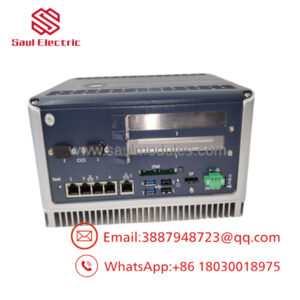
| Hardware Expandability | 2 × onboard PCI Mezzanine Card (PMC) sites |
| Diagnostics / Safety | Integrated hardware watchdog timer and real-time LED array |
| Timing Accuracy | IEEE 1588 Precision Time Protocol compliance (synchronized within 100 µs) |
| Operating Temperature | 0 to 60°C (32 to 140°F) continuous structural cabinet limits |
Product Introduction
The GE IS215UCCAH3A is a high-availability single-slot CompactPCI (cPCI) Application Control Layer (ACL) processor board engineered for GE Mark VIe gas/steam turbine controls, EX2100 excitation networks, and Innovation Series heavy industrial drives. This module is built around an underlying industrial processing board designated as VMICPCI-7632-03310 (factory part tracking string 350-657362-003310J). It functions as the primary computational hub for the system database, running real-time application control blocks, safety sequences, and process calculations.
Running the deterministic QNX Neutrino RTOS, the IS215UCCAH3A handles critical process loops with sub-millisecond predictability. For network communications, the card contains high-speed Ethernet ports mapped to the plant-wide Unit Data Highway (UDH) for seamless human-machine interface (HMI) integration. It also handles distributed real-time scanning across the triple-redundant (R,S,T) I/O networks (IONet), utilizing the IEEE 1588 time synchronization standard to align distributed system clocks to within 100 microseconds.
Installation & Configuration Guide
Stage 1: Pre-Installation Preparation (Estimated Time: 15 minutes)
- ⚠️ Safety First: The UCCAH3A module serves as the primary master control engine for critical turbine automation or generator excitation zones. Never insert, unseat, or extract this board while the cPCI enclosure rack is energized. Bring the process loop to a verified stop, isolate fuel headers, and execute a complete lock out/tag out (LOTO) on the master DC and AC power supply distribution feeding the target card cage.
- Tools Required: Grounded static-prevention wrist strap, medium cross-head screwdriver, flat-point tool, engineering workstation laptop running the correct deployment layer of GE ToolboxST software.
- Data Backup: Establish an online connection to the card via the primary network line before shutting down. Export and save a complete snapshot backup of the current application runtime, memory-mapped I/O parameters, and network IP settings to local backup media.
Stage 2: Removing the Old Card (Estimated Time: 5 minutes)
- Affix your anti-static wrist strap to a bare metal structural frame point on the cPCI enclosure rack.
- Label and carefully detach the RJ-45 network patch cables and serial setup lines from the front faceplate.
- Loosen the upper and lower faceplate retaining screws completely using your screwdriver.
- Locate the high-leverage mechanical injector/ejector handles on the top and bottom of the module faceplate.
world of controls
- Tilt the top ejector handle upward while simultaneously tilting the bottom ejector handle downward. This double lever action breaks the friction seal of the high-density 128-pin rear connector array from the cPCI backplane.
world of controls
- Slide the controller board smoothly straight out along its guide tracks. Place the board into an ESD shielding protective storage bag.
Stage 3: Installing the New Card (Estimated Time: 10 minutes)
- Extract the new replacement board from its factory anti-static sleeve, keeping hands away from the rear P1 connector pins.
- ⚠️ Visual Verification: Inspect the 4 rows of the 128-pin rear P1 connector to ensure all pins are straight, parallel, and free of dust or manufacturing oxidation.
- Position the card edges into the guide channels of the designated chassis slot (Note: Main controller must always reside in the primary Slot 1 position).
- Slide the card smoothly inward until the ejector levers contact the frame lip.
- Press the top ejector handle downward while pulling the bottom ejector handle upward to inject the module completely into the backplane seat. Tighten both retaining plate screws snugly.
Stage 4: Power-On & Commissioning (Estimated Time: 20 minutes)
- Re-engage the master power distribution switches or re-insert the power supply modules into the cPCI rack framework.
- Observe the initial boot diagnostics via the front panel status LEDs:
- The system power indicators should register stable green.
- The boot cycle will engage, and network communication lights should initiate rapid flashing sequences.
- ⚠️ Troubleshooting: If an amber or red hardware configuration/fault light remains locked, launch ToolboxST to verify if an electronic signature mismatch or memory initialization error is blocking configuration execution.
- Connect your engineering laptop to the controller, run an auto-discovery scan to verify the new physical card ID signature, and download your archived application configuration package to bring the replacement processor fully into active operation.
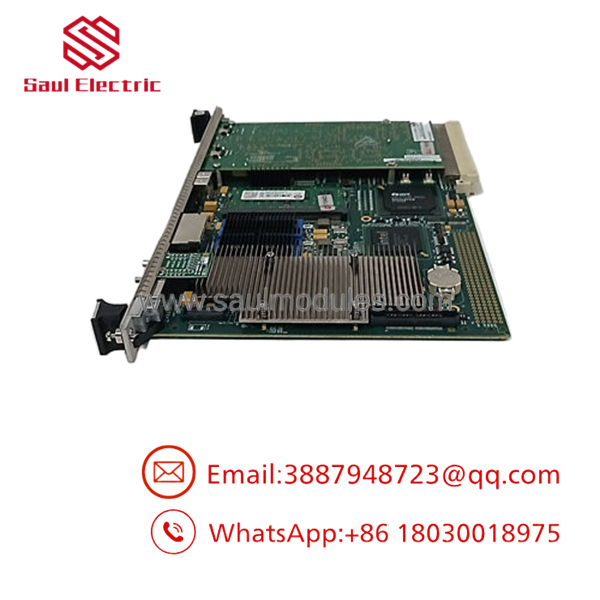
- VMICPCI-7632-03310 350-657362-003310J
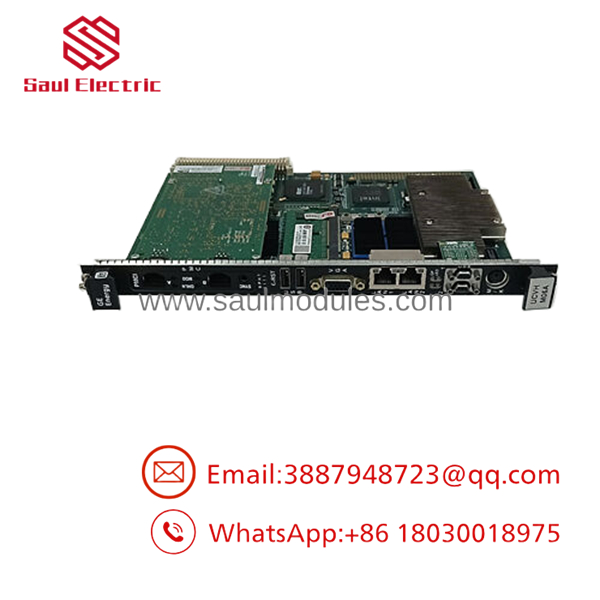
- VMICPCI-7632-03310 350-657362-003310J
Frequently Asked Questions (FAQ)
What is the distinction between the three codes listed on this module?
- IS215UCCAH3A: This is General Electric’s system level ordering catalog string, identifying the unit as a Mark VIe/EX2100 CompactPCI Control Processor Board, Revision H3A.
- VMICPCI-7632-03310: This is the structural single-board computer designator code indicating the exact underlying physical architecture version used for this industrial card assembly.
- 350-657362-003310J: This is the technical hardware factory manufacturing number and internal board tracking string, with the trailing “J” indicating the precise PCB engineering revision level.
Does this processor module support hot-swapping while the control system is live?
No, the IS215UCCAH3A does not support live hot-swapping. Pulling the module while power is applied disrupts the shared internal data highways of the CompactPCI backplane bus. In a simplex architecture, this will cause an immediate loss of system data routing, a complete breakdown of the IONet control loop, and an emergency shutdown of the turbine or excitation system.
How do I configure the IP addresses on this replacement controller card?
The IS215UCCAH3A does not use physical, manual DIP switches or onboard hardware jumpers to assign network nodes. The network configuration, TCP/IP parameters, and Ethernet Global Data (EGD) settings are defined entirely electronically within the GE ToolboxST engineering software suite. The configuration parameters are downloaded to the module during initial installation via a local configuration link.
What are the two integrated PMC slots on the face of the board used for?
The dual PCI Mezzanine Card (PMC) sites are specialized hardware expansion slots. They allow the module to ingest additional daughterboard options, such as reflective memory networks, custom high-speed fiber-optic linkages, or fieldbus expansion interfaces, without expanding the processor’s primary single-slot 6U structural footprint.
Why is this hardware configuration sourced as “New Surplus”?
As industrial control lifecycles transition toward next-generation processing platforms, older CompactPCI module variations can face extended factory lead times. Our stock consists of New Original / New Surplus parts—unused factory spares preserved from project overstocks, canceled upgrades, or plant reserves. This gives operators direct access to authentic replacement parts, avoiding the long lead times of special factory manufacturing orders.

 Start Chat


