





Description
Key Technical Specifications
| Parameter | Value |
|---|---|
| Manufacturer | GE VMIC / GE Fanuc Embedded Systems |
| Model | VMIVME-1150-123L |
| Product Type | Digital Input Board |
| Bus Interface | VMEbus |
| Digital Inputs | 64 Optically Isolated Channels |
| Input Organization | 8 ports × 8 bits |
| Isolation Resistance | 10 MΩ minimum |
| Isolation Voltage | 1,000 V continuous, 7,500 V for 1 second |
| Input Filtering | 2 µs, 10 µs, or 5 ms (configuration dependent) |
| Addressing | A16 Short I/O Space |
| Data Transfer | 8-bit or 16-bit VME transfers |
| Supply Voltage | +5 VDC |
| Power Consumption | 1.1 A typical, 2.2 A maximum |
| Operating Temperature | 0 °C to +55 °C |
| Form Factor | Double-height 6U Eurocard |
| Typical Applications | Factory Automation, Test Systems, Process Control, Defense Electronics |
The VMIVME-1150-123L is part of the VMIVME-1150 family of VMEbus digital input modules, providing 64 optically isolated input channels, configurable filtering, and high-noise immunity for industrial and embedded applications.
Product Introduction
The GE VMIVME-1150-123L is a 64-channel optically isolated digital input board designed for VMEbus-based industrial and embedded control systems. It acquires external digital signals while providing high electrical isolation between field devices and the VME backplane, helping protect the host system from electrical noise and transient voltages.
Each of the 64 input channels can be configured for different input signal types, including voltage-source, contact-sense, and logic-level inputs. The module supports programmable input filtering to suppress switch bounce and electrical noise, making it suitable for process automation, factory control, defense electronics, laboratory instrumentation, and test equipment.
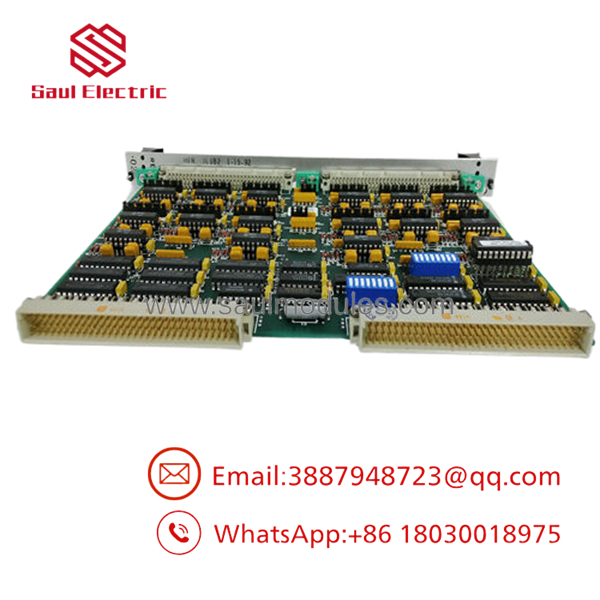
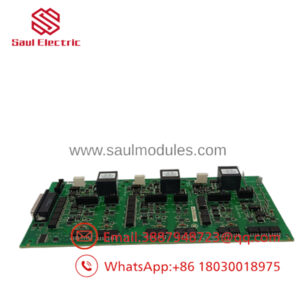
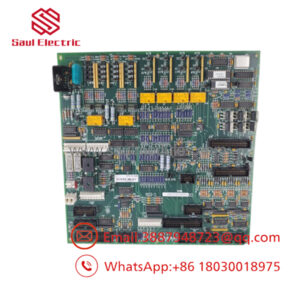
- VMIVME-1150-123L
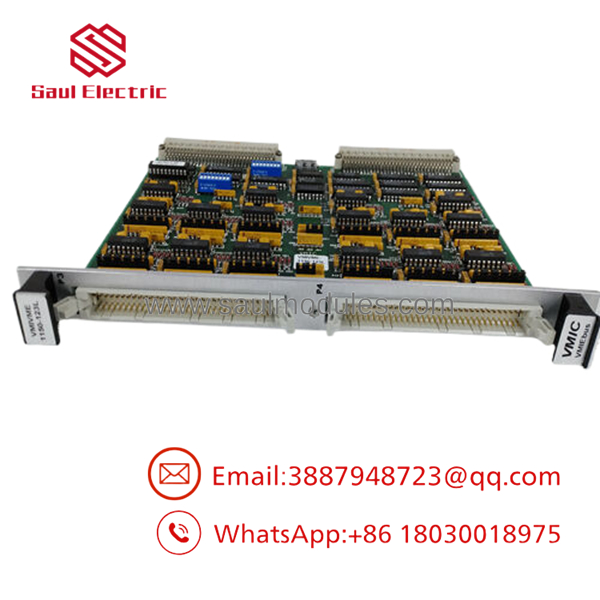
- VMIVME-1150-123L
Troubleshooting Quick Reference
| Symptom | Possible Cause | Relevance | Quick Check | Recommendation |
|---|---|---|---|---|
| No input channels detected | Missing +5 VDC backplane power | ✅ High | Measure VME +5 V supply | Verify chassis power before replacing the board |
| Multiple inputs remain inactive | Incorrect field wiring | ✅ High | Measure input voltage at terminal connector | Verify field wiring and signal source |
| False input transitions | Electrical noise or insufficient filtering | ✅ High | Review input filter configuration | Increase filter time if appropriate |
| Board not recognized by CPU | Address conflict or DIP switch setting | ✅ High | Verify VME address switches | Correct board addressing |
| Intermittent communication | Poor VME connector contact | ⚠️ Medium | Reseat the board and inspect connectors | Clean contacts and reinstall |
| Isolation fault alarm | Excessive field voltage or damaged isolator | ✅ High | Measure field voltage and insulation | Inspect wiring before replacing the module |
Field Tip: Most VMIVME-1150 failures are caused by incorrect VME addressing, loose backplane connections, field wiring issues, or improper input configuration rather than board failure. Before replacing the -123L, verify the VME slot configuration, inspect the optical isolation inputs, and confirm the input filter settings.
Frequently Asked Questions (FAQ)
Q1. What is the primary the ?
The is a 64-channel optically isolated digital input module that acquires field signals and transfers them to a VMEbus controller while providing electrical isolation and high noise immunity.
Q2. How many digital inputs does this module provide?
The board provides 64 optically isolated digital input channels, organized as eight 8-bit input ports that can be individually addressed through the VMEbus interface.
Q3. What types of input signals are supported?
Depending on the configured input option, the module supports:
- Voltage-source inputs
- Voltage-source contact sensing
- Logic-level inputs
It also offers selectable hardware input filtering to improve signal integrity.
Q4. What are the power requirements?
The module operates from the VME backplane +5 VDC supply, drawing approximately 1.1 A typical and up to 2.2 A maximum, depending on the application.
Q5. Is this product supplied as new or refurbished?
Unless otherwise specified, this listing refers to New Original (New Surplus) inventory. Each board should undergo visual inspection, power-on verification, connector inspection, and ESD-safe packaging before shipment.
Q6. What quality inspections should be completed before shipment?
Recommended quality inspections include:
- OEM part number verification
- PCB visual inspection
- VME connector inspection
- +5 V power-on verification
- Digital input functional testing
- Optical isolation verification
- Anti-static packaging with QC documentation
Q7. What is the most common installation mistake?
The most common installation issue is configuring the board with the wrong input option or VME address, or installing it in an incompatible VME slot. Before replacing the module, verify the DIP switch settings, confirm the field input type, and ensure the backplane configuration matches the original installation.

 Start Chat


