





Description
Key Technical Specifications
| Parameter | Value |
|---|---|
| Brand | GE |
| Model | VMIVME-4150 |
| Series | VMIVME / GE Fanuc VMIC |
| Product Type | VME analog output board |
| Form Factor | Single 6U VMEbus board |
| Channel Count | Up to 12 isolated outputs |
| Resolution | 12-bit |
| Output Ranges | ±2.5 V, ±5 V, ±10 V, 4–20 mA, 0–20 mA, 5–25 mA |
| Isolation | Channel-to-channel and channel-to-bus isolation |
| Isolation Rating | 1,000 VDC standard, up to 1,500 VDC depending on build |
| Accuracy | 0.05% voltage outputs, 0.08% current loop outputs |
| Throughput | DC to 1 kHz |
| Condition | New Surplus, original OEM inventory |
| Lifecycle Status | Obsolete / EOL |
| Procurement Priority | High for legacy VME control systems |
Product Introduction & Supply Chain Strategy
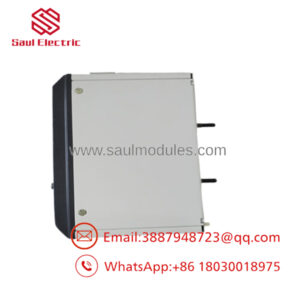
GE VMIVME-4150 is a 6U VMEbus isolated analog output board used in industrial control systems. It converts digital commands into stable analog voltage or current signals for actuators, valves, drives, and process loops.
Buying it as New Surplus is the right move for aging VME fleets where the installed base is still critical but the OEM platform is no longer current. It reduces Total Cost of Ownership, lowers lead time variability, and avoids the hidden reliability risk of uncertain rebuilt stock.
Installation & Configuration Guide
Stage 1: Pre-Installation
Perform lock-out/tag-out before any rack work. Use an ESD strap, insulated tools, and a camera to document the original module position, cabling, and any software or jumper settings. Confirm the exact suffix and board revision before opening the replacement package.
Stage 2: Removal
Shut down the system and verify the backplane is de-energized. Remove the board straight from the VME slot without twisting or rocking it, because backplane damage can create intermittent faults that are hard to diagnose. Inspect the connector fingers and guide rails before installing the new board.
Stage 3: Installation
Insert the new board into the correct VME slot and seat it evenly. Restore all rear I/O cables, field wiring, and any associated carrier or transition hardware exactly as documented. If the system uses software scaling or calibration tables, reload them before commissioning.
Stage 4: Power-On & Testing
Restore power and verify normal board initialization. Check each analog output with a meter or loop calibrator, then confirm the control system sees the expected values. Validate full-scale response, zero trim, and downstream actuator behavior before returning the loop to service.
Firmware/Software Versions & Upgrade Notes
The board itself is hardware-driven, but the host VME application and driver stack must remain compatible with the installed board revision. Preserve the current software image, calibration data, and output mapping before replacement.
Avoid unnecessary firmware or system-image changes during the swap. For legacy VME hardware, the safest approach is to match the existing configuration and change only the failed board.
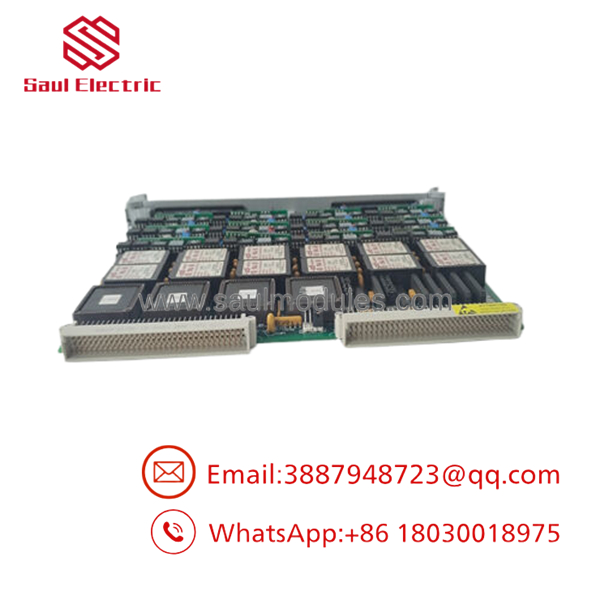
- VMIVME-4150
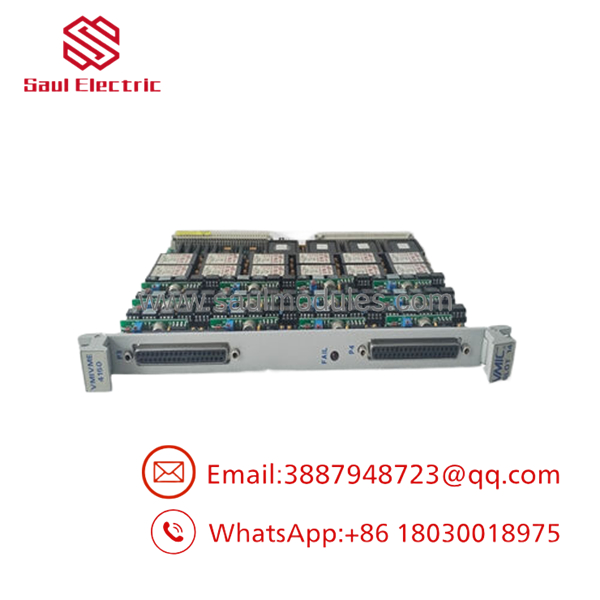
- VMIVME-4150
Frequently Asked Questions
Q: Is VMIVME-4150 really New Surplus?
Yes, the preferred procurement target is New Surplus original inventory. That gives you OEM-origin hardware without the uncertainty of repaired stock.
Q: Why is it cheaper than factory new but still more expensive than questionable supply?
Because New Surplus comes from excess inventory, not from repair channels. You pay less than list pricing, but you still get traceability and lower failure risk.
Q: Is this part obsolete?
Yes, it should be treated as an EOL or at-risk spare. For critical VME systems, keep buffer stock and consider a last-time-buy plan.
Q: Can I hot-swap this board?
Do not assume hot-swap support unless the specific system documentation explicitly allows it. For VME analog output boards, controlled shutdown is usually the safer choice.
Q: Will calibration or programming be retained?
Not automatically. Always record output ranges, scaling, and calibration data before removal, then verify every channel after installation.
Q: What warranty should I expect?
Warranty depends on supplier traceability and condition documentation, but New Surplus typically carries stronger terms than repaired stock. The most important procurement control is verifiable serial data and QC records.
Q: How should I stock it?
For a critical loop, keep 1–2 units on-site as buffer stock. For slower demand, use vendor consolidation, consignment, or cross-site sharing to protect capital while maintaining availability.

 Start Chat


