





Description
Product Introduction & Engineering Value
Open-path gas detection becomes particularly valuable when a conventional point detector cannot provide sufficient coverage across a large hazardous area. The Honeywell 2104B2131 receives the infrared beam used by the Searchline Excel system and is designed for medium optical paths from 40 to 120 meters. Its ATEX configuration makes the exact certification and system pairing important during replacement.
This is a safety-instrumentation component, so replacing it is not simply a matter of matching voltage and connector style. The receiver must be compatible with the transmitter, optical path, termination arrangement, and hazardous-area installation requirements already established at the site.
Technical Specifications
| Specification | 2104B2131 |
|---|---|
| Manufacturer | Honeywell Analytics |
| Product Family | Searchline Excel |
| Device | Medium Range Receiver |
| Configuration | Source |
| Hazardous-Area Approval | ATEX |
| Measurement Range | 0–5 LEL·m |
| Medium Optical Path | 40–120 m |
| Response Time | T90 < 3 seconds under normal conditions |
| Recommended Low Alarm | 1.0 LEL·m |
| Recommended High Alarm | 3.0 LEL·m |
| Power Supply | 18–32 VDC |
| Maximum Transmitter/Receiver Power | 10/13 W, depending on configuration |
| Operating Pressure | 91.5–105.5 kPa, non-compensated |
| Humidity | 0–99% RH, non-condensing |
| Repeatability | ±0.4 LEL·m |
| Operational Warm-Up | <5 minutes |
| Full Stabilization | <1 hour |
| Approx. Weight | 7 kg |
The published specifications also identify combustible gases including methane, ethane, propane, butane, pentane, ethylene, propylene, ethanol, and methanol.
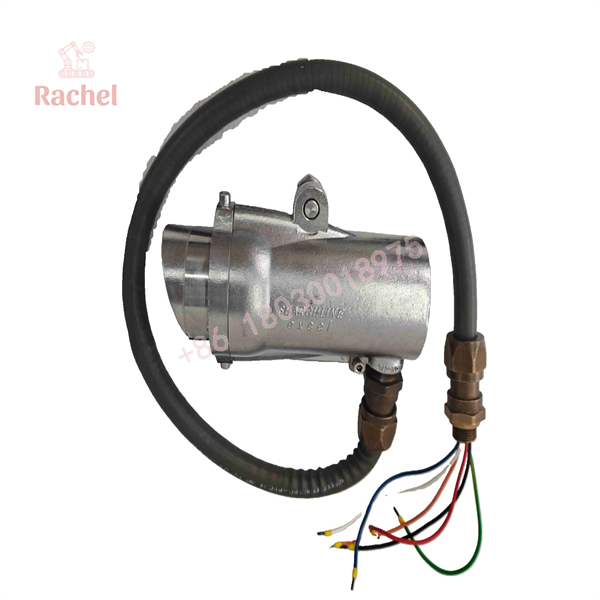
2104B2131
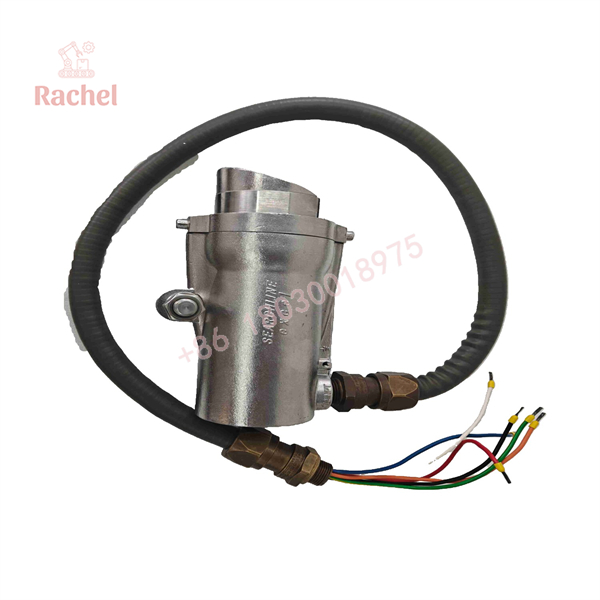
2104B2131
Field Application & the “Trench” Experience
A plausible refinery maintenance scenario is a Searchline Excel installation covering a long pipe-rack corridor. During a planned shutdown, the receiver begins producing unstable readings after years of exposure to the process environment. The maintenance team already has the transmitter, termination equipment, cabling, and safety logic in place. Rather than redesigning the detection zone, they identify the failed receiver as 2104B2131 and verify the replacement against the existing medium-range ATEX configuration.
The critical point is optical alignment. A replacement receiver can power up correctly and still fail the actual application if the transmitter-receiver geometry, path length, alignment, or commissioning procedure is wrong.
Specific applications include:
- Refinery hydrocarbon pipe-rack leak detection across 40–120 m optical paths.
- LNG or gas-processing perimeter monitoring around equipment with broad potential leak zones.
- Tank-farm vapor detection where open-path infrared monitoring can cover a long corridor rather than relying on individual point detectors.
Transparency SOP: QA & Testing
For New Surplus or Refurbished 2104B2131 inventory, a meaningful QA process should go beyond a visual inspection.
Receiving inspection: Confirm the exact part number, nameplate information, enclosure condition, connectors, optical assembly, and certification markings.
Electrical evaluation: Verify appropriate power-up behavior using controlled 18–32 VDC test equipment.
Functional verification: Where the appropriate Searchline Excel test equipment is available, verify receiver operation, communications/signaling, optical response, and diagnostic behavior.
Configuration check: Confirm that the receiver is the Medium Range / Source / ATEX variant rather than a visually similar sink, short-range, long-range, UL, or CSA variant.
Honeywell’s own handbook distinguishes 2104B2131 from numerous closely related receiver variants, including 2104B2132 (medium-range sink ATEX) and different UL/CSA configurations.
The Veteran’s Tech Trap Guide
⚠️ Trap #1 — Confusing Source and Sink versions.
The 2104B2131 is a Source configuration. Honeywell lists 2104B2132 separately as the Medium Range Receiver Sink ATEX version. Do not substitute one based solely on the mechanical appearance.
⚠️ Trap #2 — Ignoring the optical path.
This is a medium-range 40–120 m receiver. If the installed system uses a different optical range, verify the complete Searchline Excel configuration before purchasing a replacement.
PRO TIP: Record the existing transmitter model, receiver model, path distance, termination unit, approval type, and commissioning parameters before removing the old receiver. That information can prevent a surprisingly expensive wrong-part installation.
⚠️ Trap #3 — Treating it like ordinary instrumentation.
This equipment participates in combustible-gas detection. After replacement, alignment and functional testing are part of the engineering task; a simple power-on test is not sufficient evidence that the detection system is ready for service.
Dynamic FAQ
Q: What is Honeywell 2104B2131?
It is a Searchline Excel Medium Range Receiver, Source configuration, with ATEX designation for open-path infrared combustible-gas detection.
Q: What optical distance does 2104B2131 support?
The documented medium-range path is 40–120 m (130–390 ft).
Q: What power supply does it use?
Published specifications specify 18–32 VDC.
Q: Is 2104B2131 the same as 2104B2132?
No. Both are medium-range ATEX receiver variants, but 2104B2131 is Source while 2104B2132 is Sink.
Q: Is 2104B2131 a PLC or DCS module?
No. It is a gas-detection receiver within the Honeywell Searchline Excel open-path infrared detection system.
Q: What should I verify when buying New Surplus 2104B2131?
Verify the exact 2104B2131 part number, ATEX configuration, physical condition, storage history, certification/nameplate information, and supplier warranty. A seller currently advertising the item as new with a one-year warranty does not by itself establish OEM-new status, so request traceability or inspection documentation when certification matters.



 Start Chat


