





Description
Product Introduction & Engineering Value
The 51303940-250 is cabinet-level thermal-management hardware rather than a PLC or DCS processing module. Its purpose is to move cooling air through the control cabinet while providing an alarm contact that can be monitored by the control system. This makes the assembly relevant to Honeywell legacy control cabinets where maintaining airflow is part of the equipment-protection strategy.
The part number is particularly important because Honeywell’s related 51303940 series contains different voltage variants. The -250 version is associated with 240 VAC, while the -150 version is associated with 120 VAC. They should not be treated as interchangeable merely because the mechanical assembly looks similar.
Technical Specifications
| Specification | 51303940-250 |
|---|---|
| Manufacturer | Honeywell |
| Part Number | 51303940-250 |
| Model | MC-FAN511 |
| Product Type | Cabinet Fan Assembly with Alarm |
| Nominal Supply | 240 VAC |
| Published Frequency | 47–63 Hz |
| Published Current | 0.5 A |
| Alarm Interface | Fan-status alarm contact |
| Intended Function | Control-cabinet forced-air cooling |
| Approx. Weight | Supplier listings vary; approximately 1.9–3.2 kg |
| Related 120 VAC Version | 51303940-150 / MC-FAN611 |
| System Context | Honeywell HPM / process-control cabinet hardware |
Honeywell’s planning documentation provides the strongest identification of the part as MC-FAN511 / 240 Vac. A supplier description further specifies an alarm contact available at terminal strip TB1 and states that the assembly can be monitored by a 24 VDC digital input FTA.
Electrical-data caution
Some supplier pages publish 170–264 VAC as the operating range, while others simply state 240 VAC. There are also conflicting listings for current and dimensions. Because these values are not consistently corroborated by the Honeywell planning document, the installed nameplate and applicable Honeywell cabinet documentation should take precedence when determining actual operating limits.
How the Alarm Function Fits the Cabinet
The alarm circuit is an important part of this assembly. One published technical description states that an LED indicates normal operation of both fans and that the alarm signal uses normally open contacts at TB1; those contacts close when the cabinet fan assembly is operating normally. It also describes monitoring through a 24 VDC digital input FTA.
That means a cooling problem does not have to remain a purely local mechanical fault. The cabinet can provide a discrete status indication to the control system, allowing maintenance personnel to investigate loss of airflow before cabinet temperature becomes a larger equipment problem.
Field Application & Trench Experience
A common maintenance scenario is a Honeywell process-control cabinet generating a fan alarm while the DCS itself continues operating normally. Replacing the controller or I/O hardware in this situation can be unnecessary. The first checks should be cabinet airflow, fan operation, alarm-contact state, supply voltage, connector condition, and the cabinet’s alarm input.
For the 51303940-250, technicians should pay particular attention to the distinction between 240 VAC and 120 VAC variants. The corresponding Honeywell documentation identifies:
- 51303940-250 / MC-FAN511 — 240 VAC
- 51303940-150 / MC-FAN611 — 120 VAC
Typical Application Scenarios
1. Honeywell HPM control cabinets
Used to provide forced-air cooling for cabinet-mounted process-control electronics.
2. Legacy DCS cabinet maintenance
Maintained as a replacement spare where the installed cabinet uses the MC-FAN511 configuration.
3. Preventive-maintenance inventory
Useful as a stocked spare because a failed cabinet fan can create a thermal-management problem even when the control system has not yet experienced an immediate functional failure.
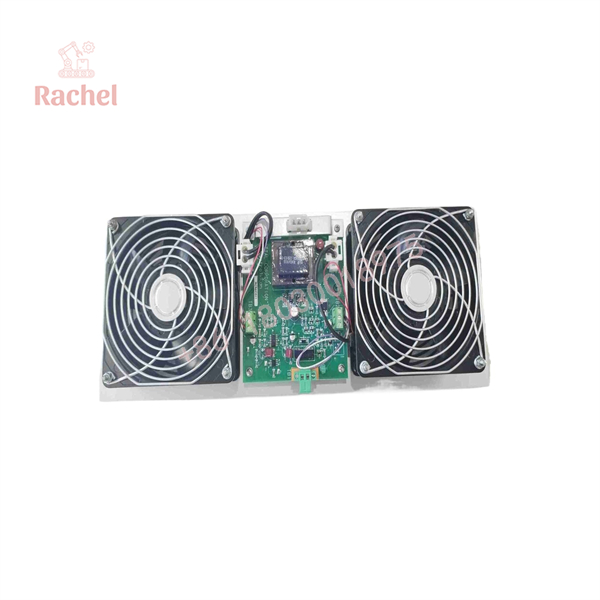
51303940-250
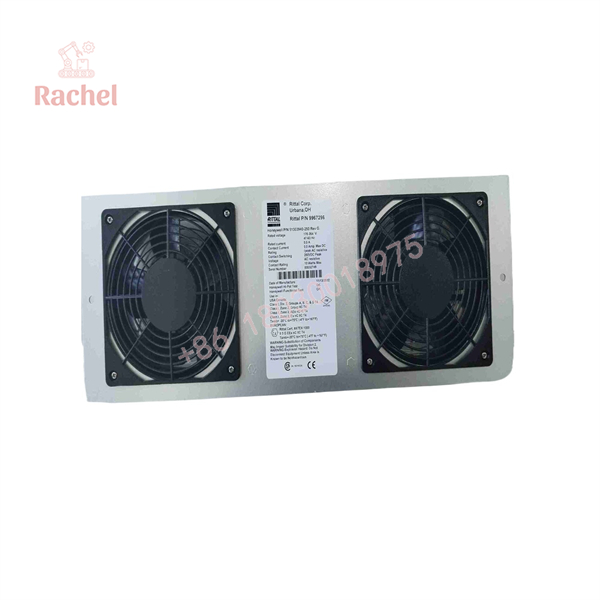
51303940-250
QA & Testing SOP
For a New Surplus or refurbished 51303940-250, a practical inspection sequence is:
- Part-number check — verify the complete
51303940-250marking and MC-FAN511 identification. - Voltage verification — confirm that the replacement is intended for the cabinet’s 240 VAC supply.
- Mechanical inspection — inspect fan blades, bearings, frame, mounting points, connectors, wiring, and terminal hardware.
- Fan operation test — apply the appropriate controlled AC supply and verify fan startup and stable rotation.
- Alarm test — verify the alarm/status contact changes state correctly with the fan operating and under the applicable fault/test condition.
- Indicator check — verify the operating-status indication where fitted.
- Final documentation — record part number, condition, test voltage, alarm behavior, and inspection date.
Do not perform an energized test unless the test setup, personnel, protective equipment, and applicable electrical procedures are appropriate for the AC voltage involved.
Veteran’s Tech Trap Guide
⚠️ Trap #1 — Don’t substitute the -150 and -250 versions casually.
The Honeywell documentation explicitly separates the 120 VAC 51303940-150 / MC-FAN611 from the 240 VAC 51303940-250 / MC-FAN511. Check the cabinet supply before ordering.
⚠️ Trap #2 — A running fan does not automatically mean the assembly is healthy.
The alarm/status circuit is part of the assembly’s function. A fan can physically rotate while its monitoring circuit, wiring, connector, or alarm contact has a problem.
PRO TIP: When troubleshooting a cabinet alarm, verify both sides of the problem: air movement and alarm feedback. Checking only whether the blades turn can miss a failed status circuit.
⚠️ Trap #3 — Don’t copy an unverified supplier specification into an engineering drawing.
Online listings disagree on operating range, dimensions, current, and other details. For engineering acceptance, use the Honeywell cabinet documentation and the actual nameplate of the 51303940-250 being installed.
FAQ
What is Honeywell 51303940-250?
It is the MC-FAN511 Cabinet Fan Assembly with Alarm, identified in Honeywell documentation as a 240 VAC cabinet fan assembly.
What is the difference between 51303940-250 and 51303940-150?
The Honeywell planning documentation identifies 51303940-250 / MC-FAN511 as 240 VAC and 51303940-150 / MC-FAN611 as 120 VAC.
Does the 51303940-250 provide an alarm output?
Yes. It is specifically documented as a cabinet fan assembly with alarm. A supplier technical description identifies an alarm contact at terminal strip TB1 for monitoring fan operating status.
Is 51303940-250 a DCS I/O module?
No. Its primary function is cabinet ventilation/cooling with fan-status monitoring. It should not be treated as a conventional Honeywell controller or I/O card.
Is a New Surplus 51303940-250 the same as refurbished?
No. New Surplus normally means unused inventory sold outside the manufacturer’s current standard production channel. Refurbished means the unit has undergone some form of inspection, repair, or reconditioning. The actual condition should be stated on the quotation.
What warranty applies?
Warranty depends on the supplier and the specific condition offered. A supplier’s warranty should not be represented as a Honeywell factory warranty unless that factory coverage is explicitly documented.
Can another 240 VAC cabinet fan replace 51303940-250?
Not automatically. Mechanical dimensions, airflow, mounting, electrical connection, alarm-contact behavior, and the Honeywell cabinet’s thermal design all need to be checked. For a legacy DCS cabinet, matching the documented MC-FAN511 / 51303940-250 configuration is preferable to selecting solely by voltage.

 Start Chat


