





Description
Product Introduction & Engineering Value
The CC-PDOD51 is designed to switch discrete 24 VDC loads from an Experion Series C control system. Unlike a relay-output card, it uses SINK/open-drain solid-state outputs, making the external field-power arrangement and common return particularly important during installation.
The module can operate with internally or externally supplied field power. When external field power is used, the field side can be galvanically isolated from the Series C system power. That distinction becomes important when troubleshooting ground potential differences or integrating separately powered field circuits.
Technical Specifications
| Parameter | Specification |
|---|---|
| Manufacturer | Honeywell |
| Model | CC-PDOD51 |
| Product Family | Experion Series C I/O |
| IOM Block | DO-24B / bussed low-voltage digital output |
| Output Channels | 32 |
| Output Type | SINK, open drain |
| Load Voltage | 15–30 VDC maximum |
| Load Current | 0.1 A per channel maximum |
| On-State Voltage | 0 VDC at 0.1 A maximum load |
| Off-State Voltage | 24 VDC typical |
| Off-State Leakage | 100 µA maximum |
| Turn-On / Turn-Off Time | 10 ms maximum |
| System-to-Field Isolation | 1000 VAC RMS |
| Non-Redundant IOTA | CC-TDOD51, 9-inch |
| Redundant IOTA | CC-TDOD61, 12-inch |
| Output Switchover Gap | 0 ms in redundant configuration |
| Protection | Electronic overcurrent protection |
| Fail-State | Configurable per channel |
Honeywell specifies the CC-PDOD51 as a field-isolated, bussed, coated 24 VDC digital-output module. The module’s outputs share a common return, while external field power can provide system-to-field galvanic isolation.
Field Application & the “Trench” Experience
A process skid was producing intermittent actuator alarms. The DCS logic looked correct, but one group of solenoid valves occasionally failed to energize. The maintenance team initially suspected the valves.
A closer check showed that several affected devices were connected to the same Series C digital-output module. The team measured the field supply at the IOTA, checked the common return, and then tested the CC-PDOD51 outputs under load. One channel exhibited abnormal behavior under actual load even though it appeared normal during a basic diagnostic check.
Replacing the module and validating the field power arrangement corrected the problem.
That is a useful lesson with solid-state outputs: test the complete load circuit, not just the controller diagnostic status.
Specific applications include:
- Solenoid-valve actuation on process skids
- Interposing-relay control for motor starters and auxiliary equipment
- Discrete actuator commands in continuous-process control
- Pump and compressor permissive/control circuits
- Process sequencing where multiple 24 VDC field devices are controlled from one DCS I/O group
Honeywell specifically describes the module as suitable for controlling process equipment, solenoid valves, and interposing relays.
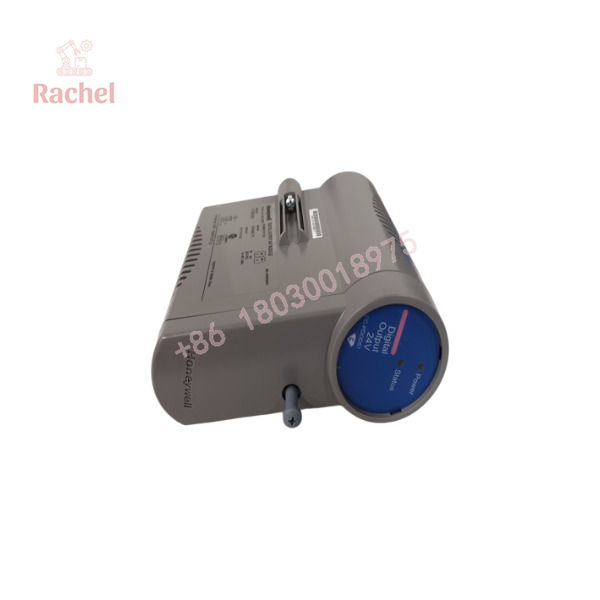
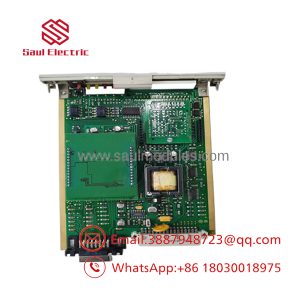
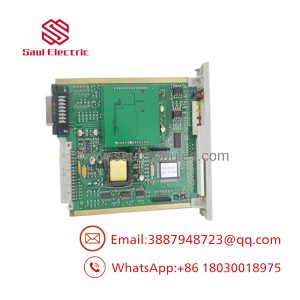
CC-PDOD51
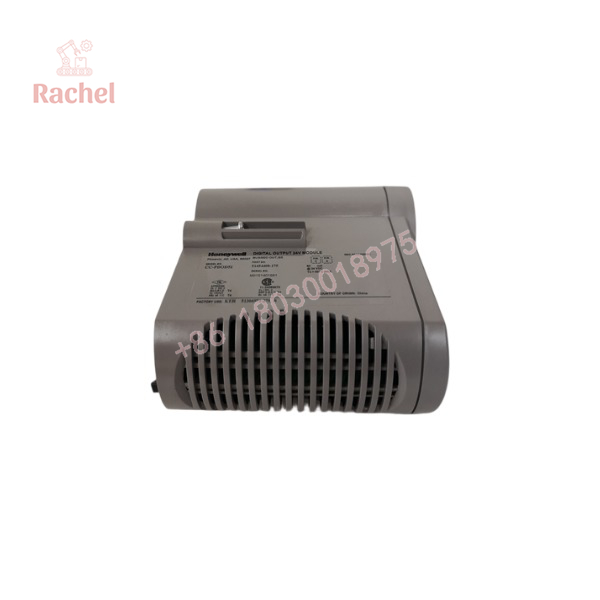
CC-PDOD51
Transparency SOP: QA & Testing
For New Surplus or Refurbished CC-PDOD51 inventory, the QA process should include:
- Part-number inspection — Verify CC-PDOD51 and the complete OEM identification marking.
- Board examination — Inspect the PCB, connector, housing, conformal coating, and terminal interface for damage or contamination.
- Power-up verification — Test the module using an appropriate Series C environment.
- Output simulation — Command representative channels ON and OFF and measure the resulting field-side switching behavior.
- Load testing — Test representative channels with an appropriate DC load rather than relying exclusively on an unloaded voltage measurement.
- Protection testing — Where the test fixture permits, verify expected electronic overcurrent behavior.
- Redundancy testing — For redundant applications, verify the module with the appropriate CC-TDOD61 IOTA configuration.
- Final documentation — Record serial number, revision, condition, test date, and test results.
The manufacturer’s specification also identifies latched, pulsed, and pulse-width-modulated output capability per channel, so a serious functional test should account for the actual application mode when applicable.
The Veteran’s Tech Trap Guide
⚠️ This is a SINK output.
Do not wire the CC-PDOD51 as though it were a sourcing output. The output transistor switches the load toward the common return. Incorrect polarity or field-power wiring can prevent the load from operating correctly.
PRO TIP: Draw the complete 24 VDC loop before commissioning:
Field +24 V → Load → CC-PDOD51 output → Common return
That simple diagram prevents a surprising number of commissioning mistakes.
⚠️ Do not overlook the 100 µA leakage specification.
The CC-PDOD51 is a solid-state output module. Its specified OFF-state leakage current is 100 µA maximum. High-impedance loads should therefore be evaluated carefully if even a small residual current could cause an unwanted indication or device response.
⚠️ The IOTA is not optional from a wiring standpoint.
Honeywell specifies CC-TDOD51 for non-redundant installations and CC-TDOD61 for redundant installations. The correct termination assembly must match the intended system architecture.
⚠️ Do not confuse CC-PDOD51 with another 24 VDC DO module.
Honeywell’s Series C documentation separately identifies CC-PDOB01 as another 32-channel bussed low-voltage digital-output module. Similar channel count and voltage do not establish interchangeability.
Dynamic FAQ
Q1. What is the Honeywell CC-PDOD51?
The CC-PDOD51 is a 32-channel, 24 VDC bussed digital-output module for Honeywell Experion Series C I/O. Its outputs are SINK/open-drain type.
Q2. What loads can CC-PDOD51 control?
Honeywell identifies applications including process equipment, solenoid valves, and interposing relays. Each channel is rated for up to 0.1 A with a maximum load voltage of 30 VDC.
Q3. Does CC-PDOD51 support redundancy?
Yes. Honeywell documents optional redundancy. The corresponding redundant IOTA is CC-TDOD61; the non-redundant IOTA is CC-TDOD51.
Q4. What does “bussed output” mean?
The 32 outputs share a common return. Field power can come from the Series C system or from an external 24 VDC source. With an external source, the field side can be galvanically isolated from Series C system power.
Q5. Does CC-PDOD51 have configurable fail behavior?
Yes. Honeywell’s FAILOPT function can be configured per channel so an output either holds its last value or transitions to a user-defined safe value following the applicable failure condition.
Q6. How should New Surplus CC-PDOD51 inventory be authenticated?
Verify the Honeywell part number, board/revision markings, physical condition, and IOTA compatibility. For functional verification, test multiple outputs under representative DC loads and, ideally, verify all 32 channels in a compatible Series C test environment.
Warranty: Warranty terms depend on supplier and stock condition. For refurbished CC-PDOD51 units, request documented output-channel testing and written functional warranty coverage before purchase.

 Start Chat


