





Description
Product Introduction & Engineering Value
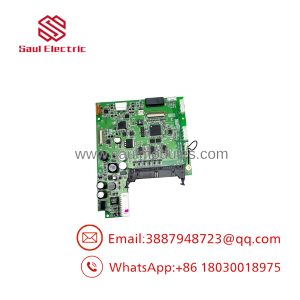
Kawasaki 30C61E-B026 is not a generic PLC module. Available equipment records identify it as an FI robot controller associated with Applied Materials semiconductor-processing equipment. The corresponding AMAT identifier is 0190-34968.
That AMAT cross-reference is important when sourcing a replacement. A supplier may list the Kawasaki number alone, while the fab’s maintenance documentation may use 0190-34968. Both identifiers should be included on the purchase request.
Technical Specifications
| Parameter | Specification |
|---|---|
| Manufacturer | Kawasaki |
| Kawasaki Part Number | 30C61E-B026 |
| AMAT Part Number | 0190-34968 |
| Product Type | FI robot controller |
| Robot Manufacturer | Kawasaki |
| Associated Robot | 3NS4-11B-F006 |
| Associated Robot AMAT P/N | 0190-34967 |
| Application | Semiconductor manufacturing equipment |
| Equipment Association | Applied Materials Reflexion |
| Controller Function | FI robot control |
| Input Power | Verify from controller nameplate/manual |
| Communication Interfaces | Verify against exact controller configuration |
| Firmware/Software | Application-dependent |
| Replacement Method | Exact part-number and system-configuration match |
The strongest available equipment-level evidence links 30C61E-B026 to the Kawasaki FI robot and identifies 0190-34968 as its AMAT part number.
A current marketplace listing also identifies 30C61E-B026 as a Kawasaki robot controller and gives the AMAT 0190-34968 cross-reference.
What should not be assumed
I would not publish an input-voltage rating, amperage, communication protocol, or firmware version as a confirmed specification without the controller’s original Kawasaki documentation or nameplate. The available sources establish the controller identity and application, but do not provide enough primary-source data for those parameters.
Field Application & the “Trench” Experience
This controller belongs to a very specific maintenance environment: semiconductor equipment.
A typical failure scenario is an AMAT tool reporting an FI robot fault while the Kawasaki robot itself remains mechanically serviceable. The maintenance team needs to determine whether the problem follows the robot, controller, cabling, or the tool-side interface.
This is where 30C61E-B026 / 0190-34968 becomes important. Replacing the controller with a generic Kawasaki controller is not an acceptable shortcut. The replacement must correspond to the AMAT tool configuration and the associated Kawasaki robot.
The published Reflexion configuration explicitly pairs 3NS4-11B-F006 / 0190-34967 with 30C61E-B026 / 0190-34968.
Niche application scenarios
- AMAT Reflexion wafer-processing equipment: FI robot control.
- Semiconductor wafer transfer: Kawasaki FI robot motion and equipment-interface control.
- Fab spare-parts recovery: replacement of a failed legacy robot controller without changing the installed robot/tool architecture.
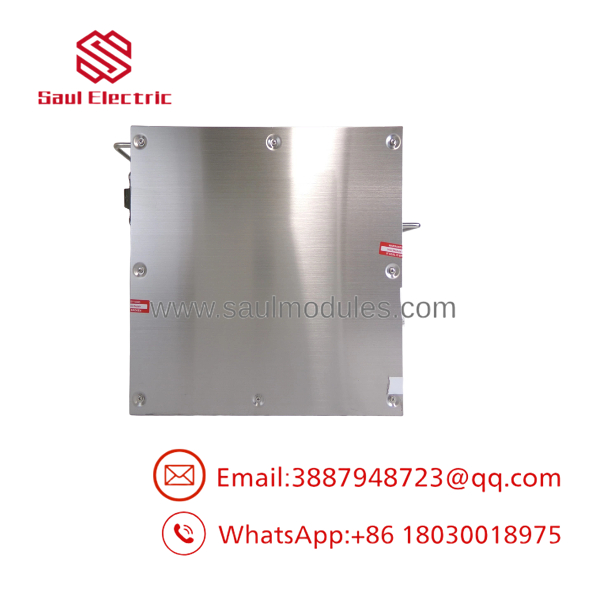
30C61E-B026
Transparency SOP: QA & Testing
For New Surplus or Refurbished 30C61E-, the test procedure should be controller-specific.
- Verify identification — Confirm
30C61E-and, where applicable, AMAT0190-34968. - Inspect the enclosure — Check connectors, cooling provisions, mounting hardware, and signs of previous overheating.
- Record revision information — Photograph all controller labels and revision markings.
- Power-up test — Use the correct Kawasaki controller test environment and specified input power.
- Diagnostic test — Check controller status and fault indications.
- Robot communication test — Connect to the corresponding Kawasaki FI robot under controlled conditions.
- Motion/interface verification — Confirm the appropriate controller-to-robot and equipment interfaces.
- Tool-level verification — Where possible, verify operation with the applicable AMAT equipment configuration.
Important: A controller that powers up is not necessarily a controller that can run the intended FI robot. The meaningful test is communication and functional operation with the correct robot/system.
The Veteran’s Tech Trap Guide
⚠️ Trap #1 — Searching only by Kawasaki’s number
For this component, search using both:
30C61E-
0190-34968
The second number is the AMAT identifier and appears in equipment configuration records.
PRO TIP: Put both numbers on the RFQ. It makes supplier cross-checking considerably easier.
⚠️ Trap #2 — Confusing the controller with the robot
The documented configuration separates the two:
- Kawasaki 3NS4-11B-F006 / AMAT 0190-34967 — FI robot
- Kawasaki 30C61E- / AMAT 0190-34968 — FI robot controller
⚠️ Trap #3 — Assuming another Kawasaki robot controller is interchangeable
A different Kawasaki controller may have similar physical characteristics but still be incompatible with the AMAT tool configuration, robot model, software, or interface wiring.
⚠️ Trap #4 — Accepting “tested” without asking what was tested
Ask the supplier whether the unit was merely powered on or actually tested with a compatible Kawasaki robot/controller configuration.
Dynamic FAQ
What is Kawasaki 30C61E-?
It is a Kawasaki FI robot controller used in semiconductor equipment. An AMAT Reflexion system configuration identifies 30C61E- as the FI robot controller.
What is the AMAT part number for 30C61E-?
The associated Applied Materials part number is 0190-34968.
Which robot is associated with this controller?
The documented AMAT configuration pairs the controller with Kawasaki 3NS4-11B-F006, identified as AMAT part 0190-34967.
Is 30C61E- a PLC?
No. Available equipment documentation identifies it specifically as an FI robot controller, not a general-purpose PLC.
What should I verify before purchasing a replacement?
Verify 30C61E-, AMAT 0190-34968, the associated Kawasaki robot model, controller revision, connector configuration, software/firmware compatibility, and the exact AMAT tool configuration.
Can New Surplus 30C61E- be used as a replacement?
Potentially, provided the hardware matches the installed system configuration and passes functional testing. For semiconductor equipment, I would require actual-unit photographs and controller-level test evidence rather than relying solely on a catalog description.
What does “New Surplus” mean for this controller?
It normally means previously manufactured OEM inventory that was not installed in the customer’s production system. It should still be verified by actual physical inspection, part-number matching, and functional testing rather than by condition description alone.
What warranty should I request?
For a critical robot controller, obtain a written warranty covering functional operation, not merely physical condition. Also clarify whether the supplier offers replacement, repair, or refund if the controller fails the agreed acceptance test.

 Start Chat


